

Basement Bathroom Build in Doylestown, PA — Built from Scratch, Gold Fixtures, Recessed Lighting
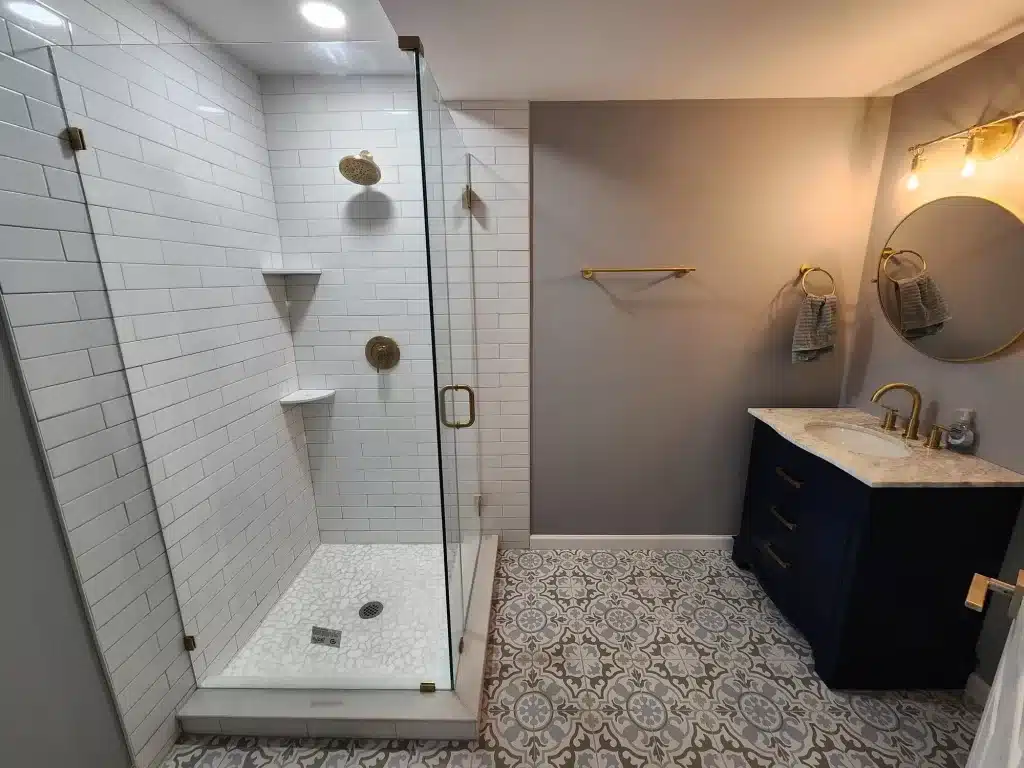
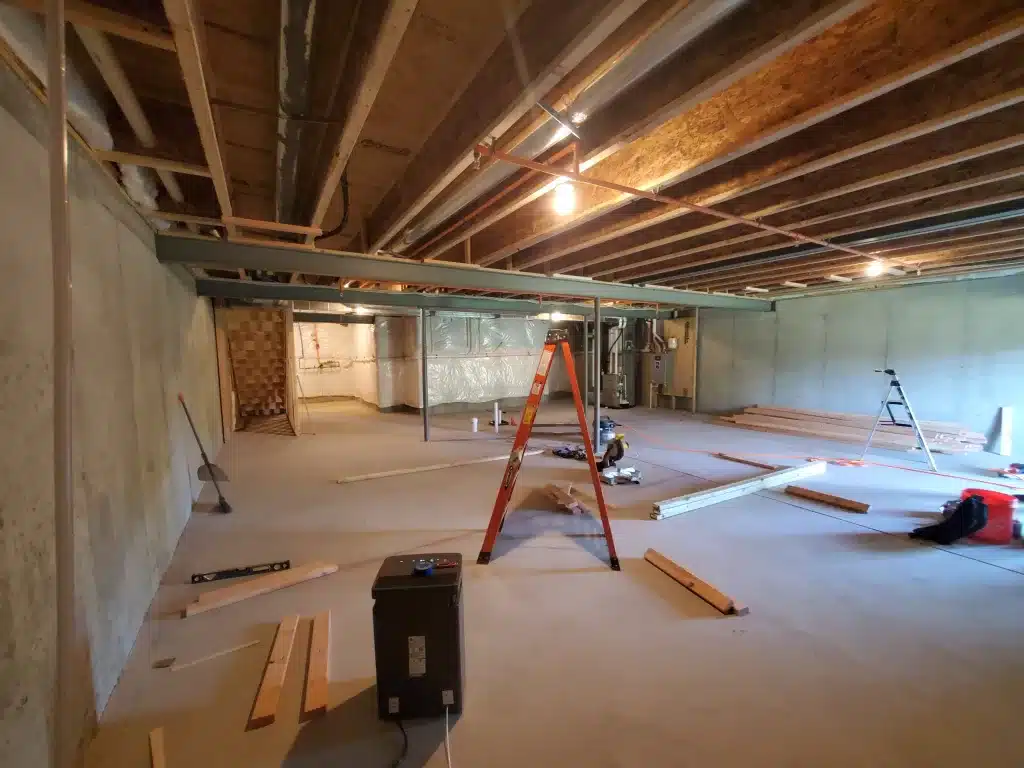
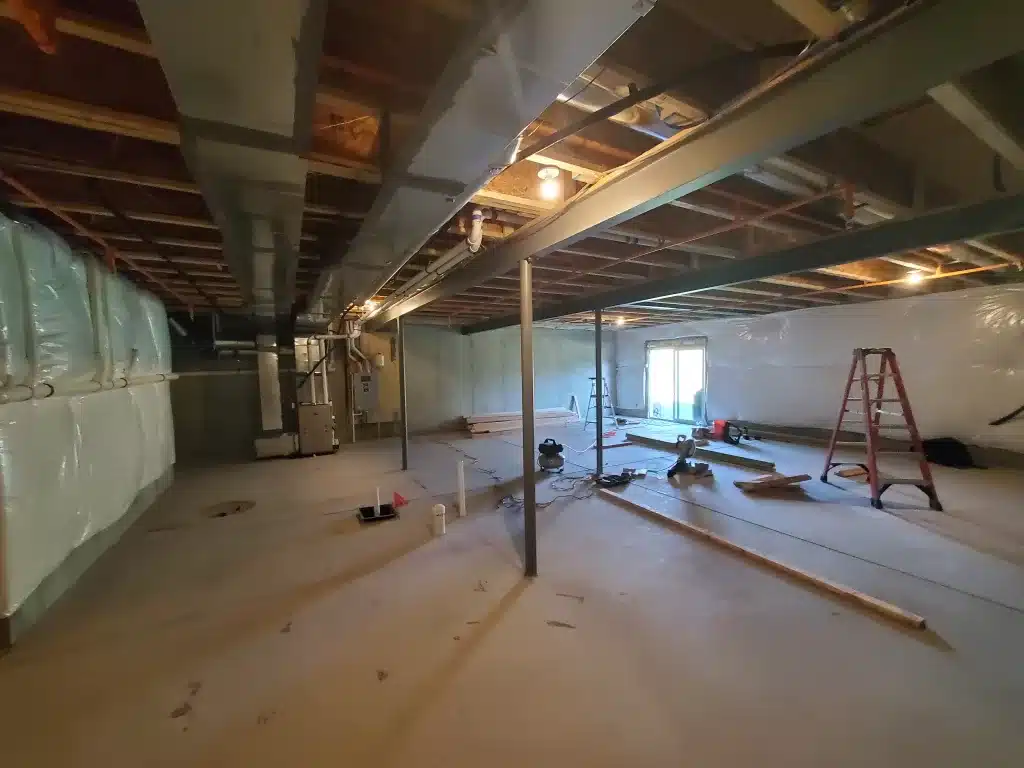
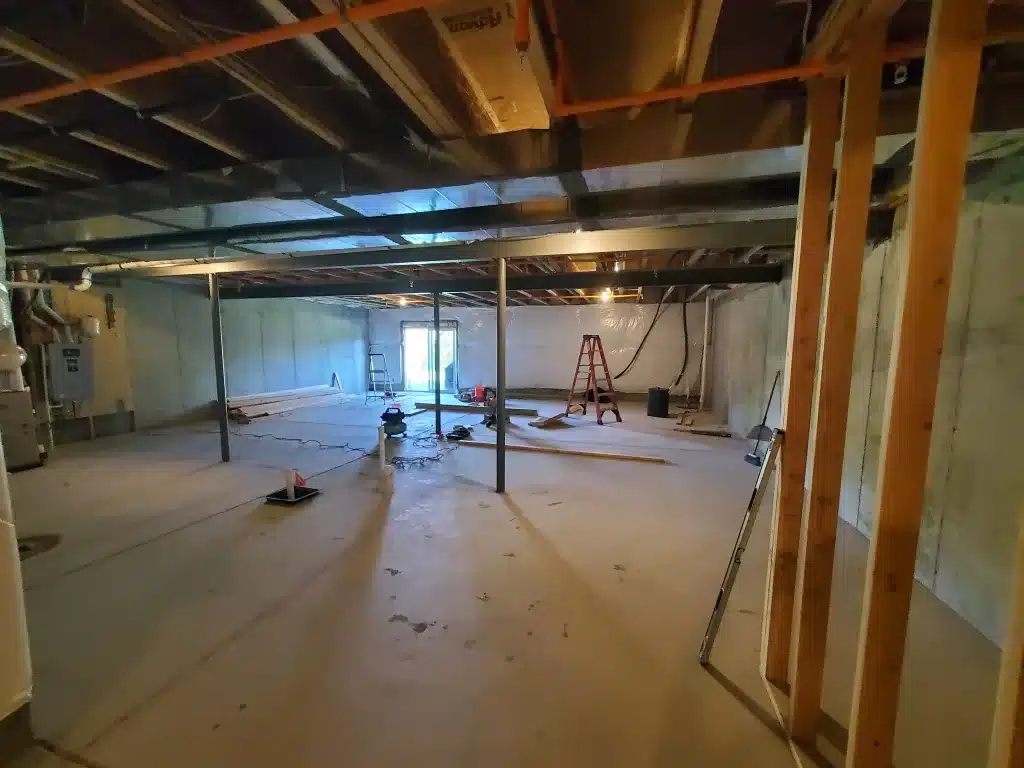
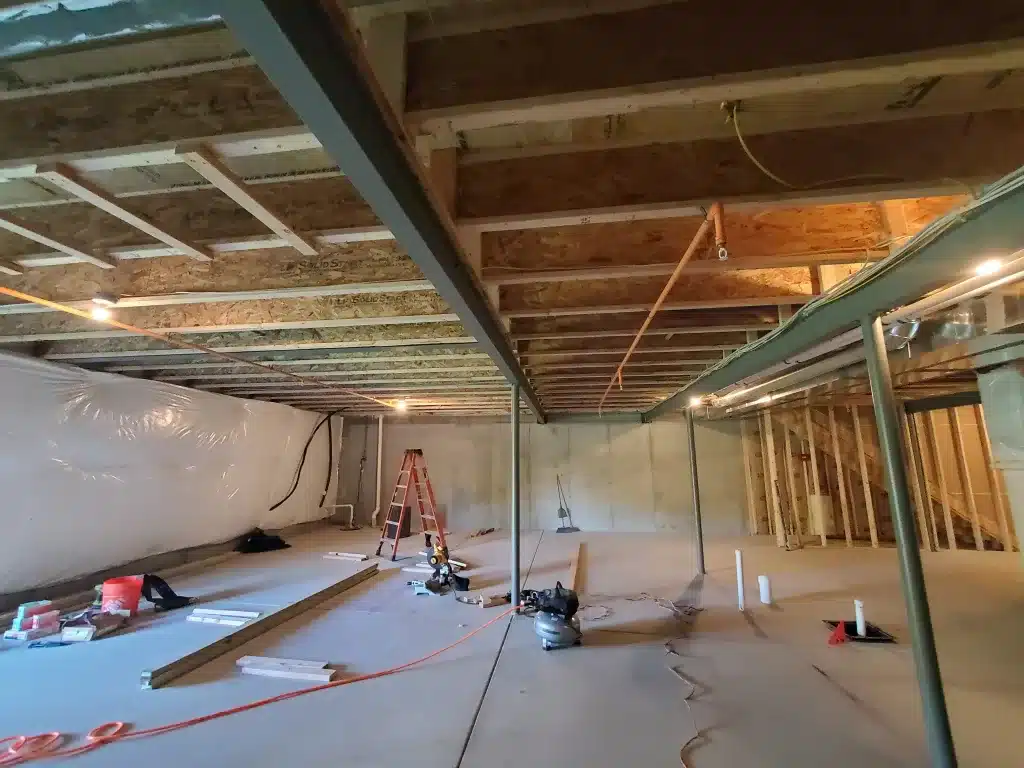
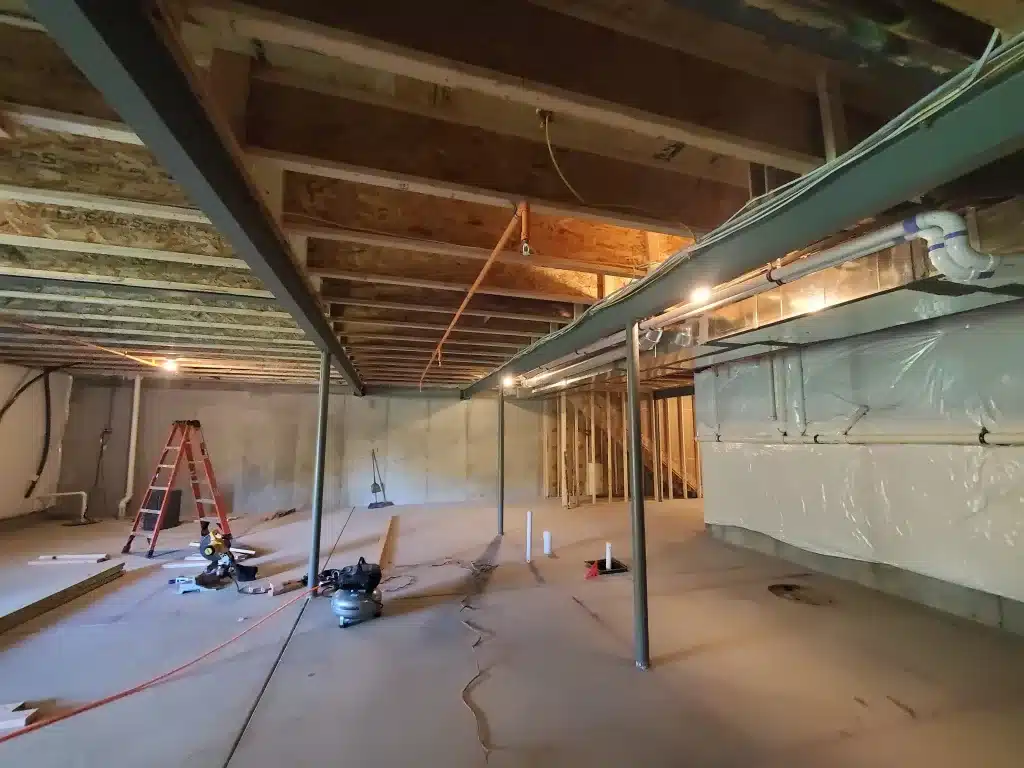
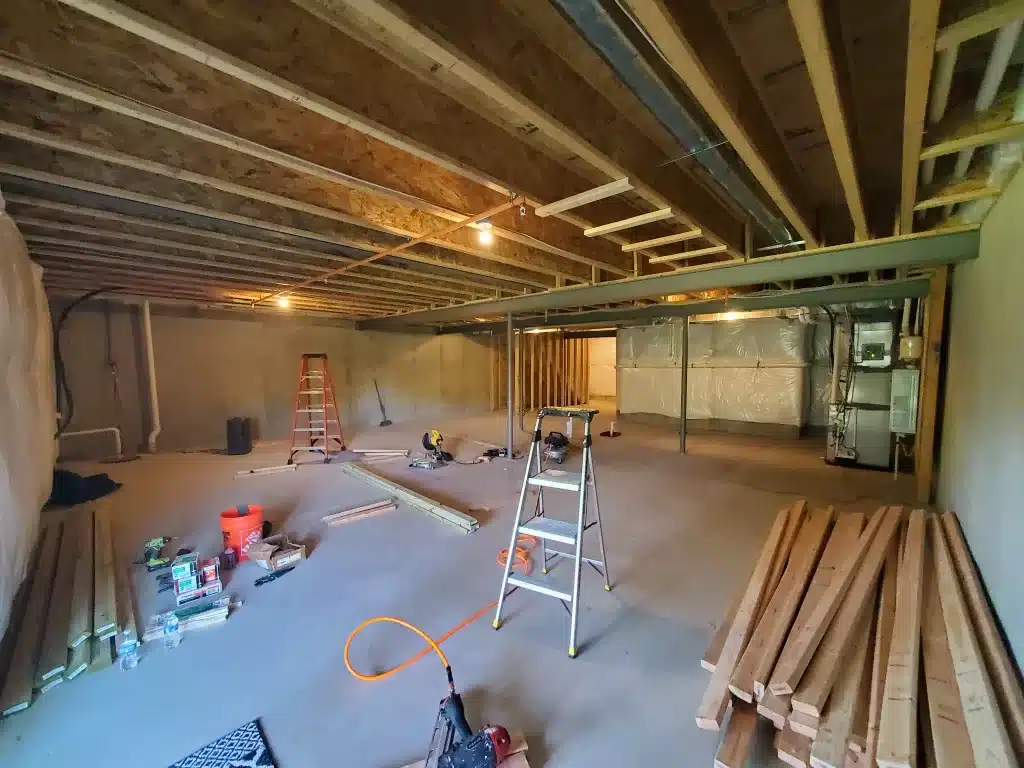
A basement bathroom built from scratch is a different scope than a bathroom remodel. There’s no existing layout to work around, but there’s also no existing plumbing, no drain in place, and no electrical in the walls. Everything — the drain line, the supply rough-in, the subfloor waterproofing, the framing, the tile substrate, and the finish work — starts from zero. In this Doylestown project, BMR Belmax Remodeling built a full basement bathroom from the ground up: tile walls and floor, a modern vanity, gold-finish plumbing fixtures, recessed lighting, and a glass shower door.
Scope of Work
- Basement bathroom built from scratch — no prior plumbing or electrical in space
- Drain line installed below slab level (concrete cut, trench, drain set, concrete patched)
- Supply plumbing roughed in — hot and cold to shower and vanity
- Shower constructed — waterproofing membrane, shower bed, tile surround
- Tile installed on walls throughout
- Tile installed on floor throughout
- Modern vanity installed
- Gold-finish plumbing fixtures throughout — faucet, shower valve, drain hardware
- Recessed lighting installed
- Glass shower door installed
- Electrical rough-in — circuits, outlets, switches, exhaust fan
The Real Starting Point: Getting the Drain Below the Slab
The most technically demanding part of adding a bathroom to an existing basement is the drain. Gravity drainage requires the drain line to slope downhill to the main sewer or septic connection — typically 1/4 inch of drop per linear foot of pipe run. In a basement that already has a poured concrete slab, the drain line has to run below that slab level, which means cutting the concrete, trenching to the required depth, setting the drain pipe at the correct slope, connecting to the existing drain stack or main line, and then patching the concrete back.
If the basement floor is already at or near the depth of the main drain line, gravity drainage may not work without a macerating toilet or an ejector pump system. In this project, gravity drainage was achievable — the concrete was cut, the trench was dug and graded, the drain was set, and the slab was patched before any framing or finish work began. The supply lines (hot and cold) run up from the mechanical room or through the wall framing and don’t require slab work.
Waterproofing a Below-Grade Bathroom
A basement bathroom has a moisture dynamic that above-grade bathrooms don’t: the walls are at or below grade, which means exterior ground moisture can migrate through the foundation wall even when the shower isn’t running. The waterproofing approach for a basement shower has to address both the shower water (which any bathroom shower generates) and the potential for exterior moisture intrusion through the wall behind the tile.
The shower walls in this build were waterproofed with a membrane system applied to the substrate before tile was set — typically a sheet membrane or a liquid-applied product like RedGard, which bonds to the cement board and creates a continuous moisture barrier. This membrane is the last line of defense if grout or caulk joints ever develop hairline cracks over time. Without it, water that gets through the grout migrates into the wall framing and causes rot and mold that may not be visible until it’s already a significant problem.
Gold Fixtures in a Tile Bathroom: The Finish Decision
Gold-finish plumbing fixtures — brushed gold or polished brass — were chosen throughout this bathroom. Against a tile surround (the specific tile color isn’t noted in the project record, but gold works against both light and dark tile), gold fixtures provide warm contrast that reads differently from chrome or matte black. Chrome is cool-toned and neutral; matte black is stark; gold is warm and has more visual weight without being heavy.
In a basement bathroom, where natural light is absent and the room’s warmth depends entirely on artificial light and material choices, warm-finish fixtures contribute meaningfully to how the room feels at night under recessed lighting. A chrome fixture under warm recessed light looks slightly greenish; a gold fixture under the same light reads as intended. The material choice and the lighting choice reinforce each other.
Recessed Lighting Below Grade
Basement ceilings are often lower than above-grade rooms — 7 to 8 feet is typical in Bucks County residential basements built before 2000. Recessed lights in a low ceiling have less visual intrusion than surface-mounted fixtures, which at 7 feet hang close enough to feel imposing. Recessed cans sit flush with the ceiling plane and direct light downward without occupying vertical space.
The positioning in a basement bathroom follows the same logic as above grade: fixtures placed above the primary work surfaces (vanity, shower) rather than centered in the room. A light centered in a small bathroom illuminates the middle of the floor well and leaves the vanity mirror in shadow. Recessed lights positioned 18–24 inches from the vanity wall provide front-facing light that actually illuminates the mirror zone.
Glass Shower Door in a New Build
The glass shower door in this project was a frameless or semi-frameless panel — the same functional argument applies here as in any bathroom where the shower is enclosed. A frameless door eliminates the bottom track that accumulates soap scum in framed systems and reduces the visual weight of the shower enclosure. In a basement bathroom where the room may be compact, minimizing visual mass in the shower enclosure keeps the space from feeling smaller than it is.
The door was set after tile work was complete. Frameless door hardware mounts to the tile wall and the shower curb, so the tile has to be finished and cured before the hinges and sweep are installed. Attempting to set a frameless door before tile is fully cured risks cracking grout at the hinge anchor points.
Doylestown Context
Doylestown Borough is the Bucks County seat — a historic community with a dense residential stock of Victorian-era homes, colonials, and 20th-century single-family houses, many of which have unfinished or partially finished basements that owners are converting to usable living space. Adding a bathroom to a basement finish project is one of the most common scope additions BMR Belmax Remodeling handles in this market. The Doylestown bathroom remodeling services cover both full above-grade remodels and below-grade new builds like this one.
Cost Range and Next Steps
New basement bathroom builds — including concrete cutting for drain lines, full waterproofing, tile, vanity, fixtures, and electrical — typically run $12,000–$22,000 depending on size, tile selection, and whether an ejector pump is needed for drainage. The concrete cutting and drain installation work adds $1,500–$3,500 to the cost compared to an above-grade bathroom of the same finish level. To get a project-specific number, visit the free estimate page.
See the full bathroom remodeling service overview at the bathroom remodeling page.