
Kitchen Remodel in Yardley, PA — Grey Cabinets, White Quartz, Built-In Oven, New Windows and Doors
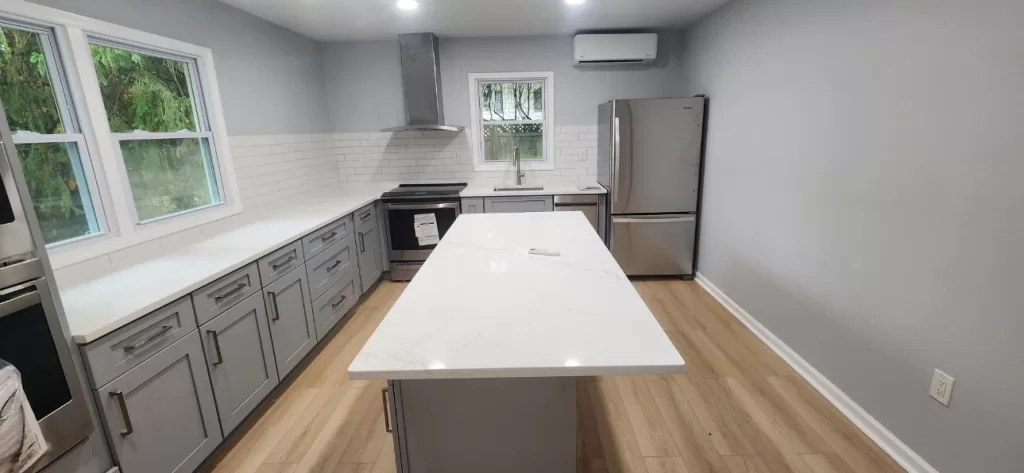
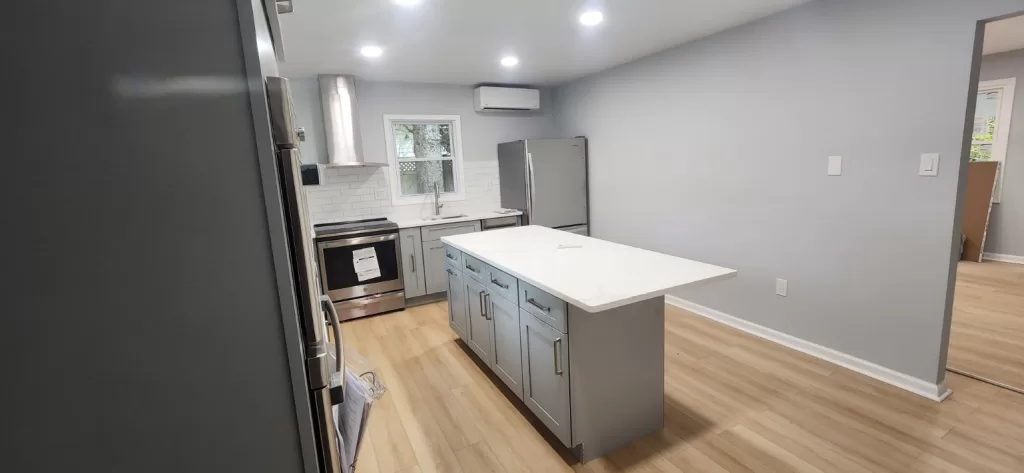
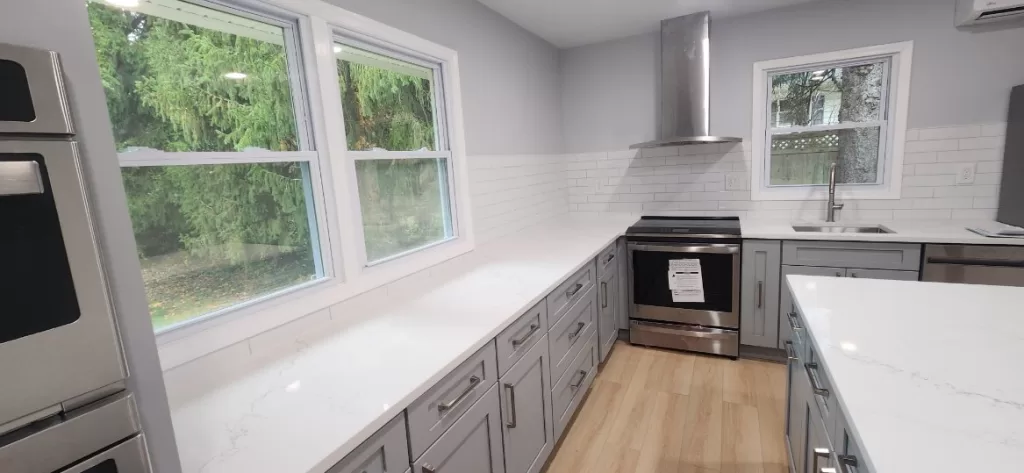
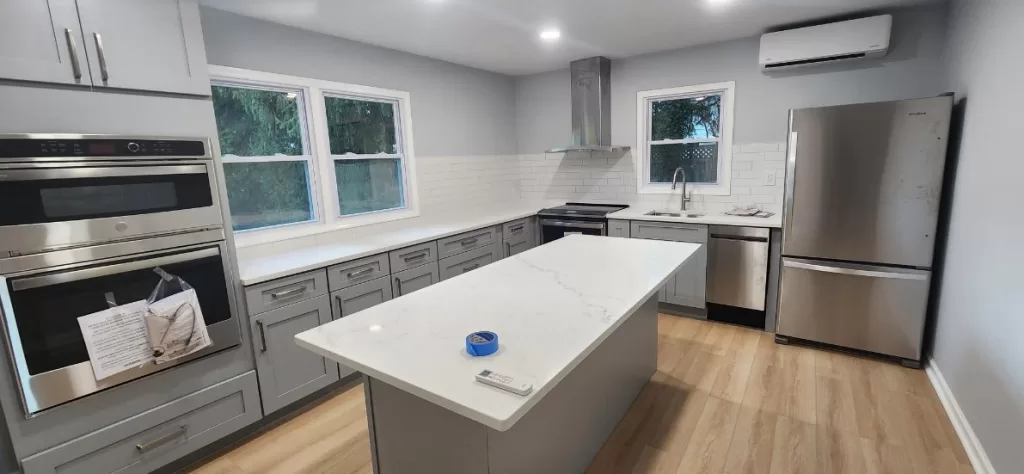
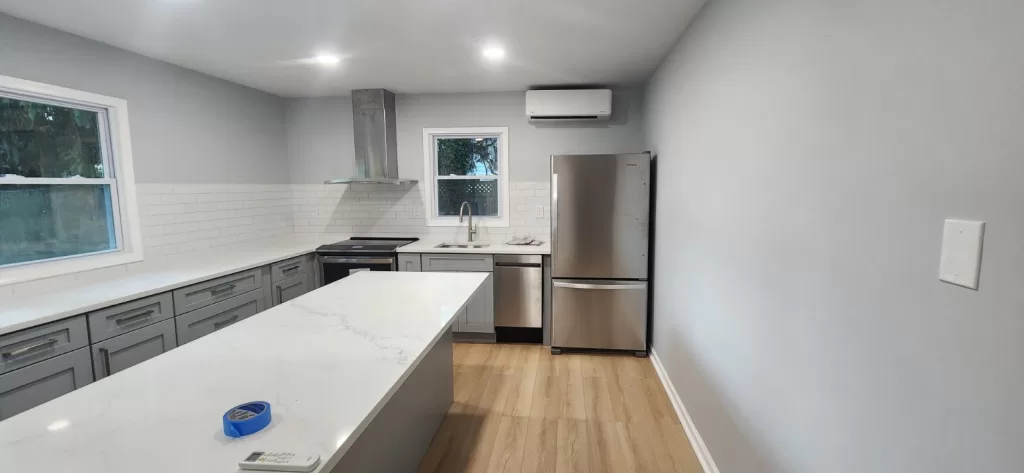
This Yardley kitchen remodel was a full replacement: grey shaker cabinets, white quartz countertops, LVP flooring, built-in microwave and oven integrated into the cabinet run, recessed lighting throughout, and new windows and doors to increase natural light. The combination of grey cabinets against white quartz is one of the more reliable material pairings in kitchen design — it works because the contrast is significant enough to read clearly without requiring a bold color commitment. The built-in appliance integration and the new window placement are the decisions that affect daily use the most.
Scope of Work
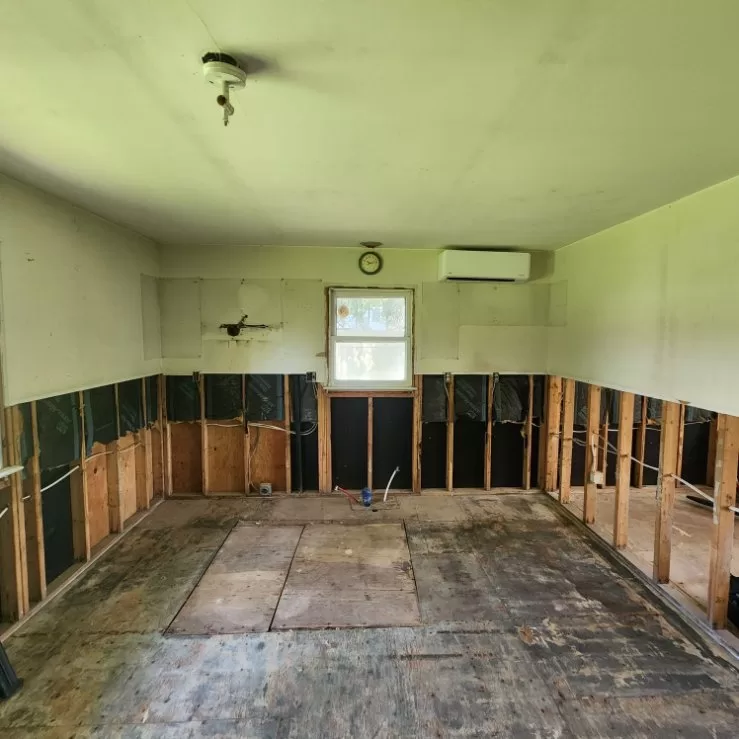
- Full demo — existing cabinets, countertops, flooring removed
- Grey shaker cabinets installed — full upper and lower run
- White quartz countertop installed
- Built-in oven integrated into cabinetry
- Built-in microwave integrated into cabinetry
- Modern appliances installed throughout
- Luxury Vinyl Plank flooring installed
- Recessed lighting installed throughout
- New windows installed
- New exterior/interior doors installed
Grey Cabinets and White Quartz: Why This Pairing Works
Grey cabinet finishes — whether a warm greige or a cooler slate — work against white quartz countertops because the contrast is legible without being stark. A white cabinet paired with white quartz reads as one continuous surface; the countertop doesn’t register as a distinct element. A very dark cabinet against white quartz creates high contrast that can feel heavy in a smaller kitchen. Grey sits in the middle: the countertop reads clearly as a separate surface, the cabinet color provides visual grounding, and neither competes with the other for attention.
White quartz specifically — rather than granite or a patterned quartz — keeps the upper field of the kitchen light. In Yardley homes where kitchens often have lower ceilings or limited window placement, keeping the countertop surface bright helps the room feel larger. Quartz is also non-porous and doesn’t require sealing, which matters in a surface that sees daily food prep, acidic liquids, and cleaning products. Granite needs annual sealing to maintain its stain resistance; quartz does not.
Built-In Appliances: The Cabinet Integration Requirement
Built-in ovens and microwaves are wall-mounted or column-mounted units that fit into a dedicated cabinet opening rather than sitting on a counter or sliding in as a freestanding range. The benefit is ergonomic: a wall oven positioned at counter height or slightly above puts the interior cavity at a working level — you’re not bending to pull a hot rack from an oven at knee height. A microwave at upper cabinet height stays accessible without occupying counter space.
The installation requirement is that the cabinet opening has to be sized to the exact appliance dimensions before the cabinets are ordered or built. Unlike a freestanding range where you select the appliance and then fill in cabinets around it, built-in appliances require the cabinet manufacturer to know the model number and cut dimensions during the design phase. Changing the appliance after cabinets are installed typically means a new cabinet panel or a custom filler piece — which is why this decision is locked in early in the project.
Both units were wired on dedicated circuits: a 240V circuit for the oven, a standard 120V 20A circuit for the microwave. These circuits were roughed in during the demo phase before any new cabinets or drywall went up.
New Windows and Doors: Natural Light as a Design Tool
Kitchen lighting in older Yardley homes — which often face inward or have limited south-facing exposure — relies heavily on artificial light because the original window placement wasn’t designed with cooking in mind. A single window over the sink was standard; it provides light directly above the sink but leaves the rest of the counter run in shadow during daytime hours.
New windows added as part of this remodel were positioned to address that imbalance — bringing natural light into the primary prep zone rather than only the sink area. New doors, whether interior passage doors or an exterior door with glass, supplement this by adding another light source and improving the visual connection between the kitchen and adjacent spaces.
The practical benefit of more natural light in a kitchen is reduced reliance on artificial lighting during daylight hours, which also means less heat generated by light fixtures in a room that already generates heat from cooking. In a Bucks County kitchen used heavily in the morning and midday, this is a real quality-of-life improvement.
LVP Flooring in a Yardley Kitchen
Luxury Vinyl Plank was chosen over tile or hardwood for reasons specific to the Yardley housing stock. Many Yardley homes sit near the Delaware Canal and have basement or crawl space construction that can introduce minor moisture variation in the subfloor over seasons. LVP is fully waterproof and dimensionally stable — it doesn’t cup, warp, or separate at seams when the subfloor moves slightly with humidity changes. Hardwood in the same environment would require more careful moisture management and acclimatization before installation.
LVP also installs faster than tile, which keeps the kitchen out of commission for a shorter time during construction. For a family using the kitchen daily, a two-day floor installation vs. a four-day tile installation (including cure time) is a meaningful difference in disruption.
Recessed Lighting Throughout
Seven or more recessed lights distributed across a kitchen ceiling provide even, shadowless illumination regardless of where work is happening. The common mistake in kitchen lighting is positioning all recessed lights in the center of the room, which illuminates the floor and island well but leaves the countertop — where actual prep happens — in shadow from the upper cabinet boxes. Proper recessed light layout places fixtures roughly 18–24 inches from the cabinet face, aimed at the countertop zone. This project’s lighting layout followed that principle, ensuring the primary work surfaces are well-lit during both day and evening cooking.
Yardley Context
Yardley Borough sits at the eastern edge of Bucks County on the Delaware River, about five miles north of Trenton. The residential housing stock is a mix of Victorian-era borough homes and mid-century single-family houses in the surrounding Lower Makefield Township. Kitchen remodels in this market frequently involve homes where the original kitchen was designed for a different era of cooking — closed layouts, minimal counter space, and outdated electrical. BMR Belmax Remodeling’s Yardley kitchen remodeling services address these original-construction limitations with full-scope remodels that bring the kitchen up to current function and finish standards.
Cost Range and Next Steps
Full kitchen remodels in Yardley with grey cabinets, quartz countertops, built-in appliances, LVP flooring, new windows, and recessed lighting typically run $22,000–$38,000 depending on cabinet grade, appliance selection, and window count. Built-in wall ovens and microwaves add cost over a standard freestanding range setup — budget approximately $2,000–$5,000 more for the appliance and cabinet integration work. To get a project-specific estimate, visit the free estimate page.
See the full kitchen remodeling service overview at the kitchen remodeling page.