
Master Bathroom Addition in Richboro, PA — Built from Scratch, Black Fixtures, Floor-to-Ceiling Tile
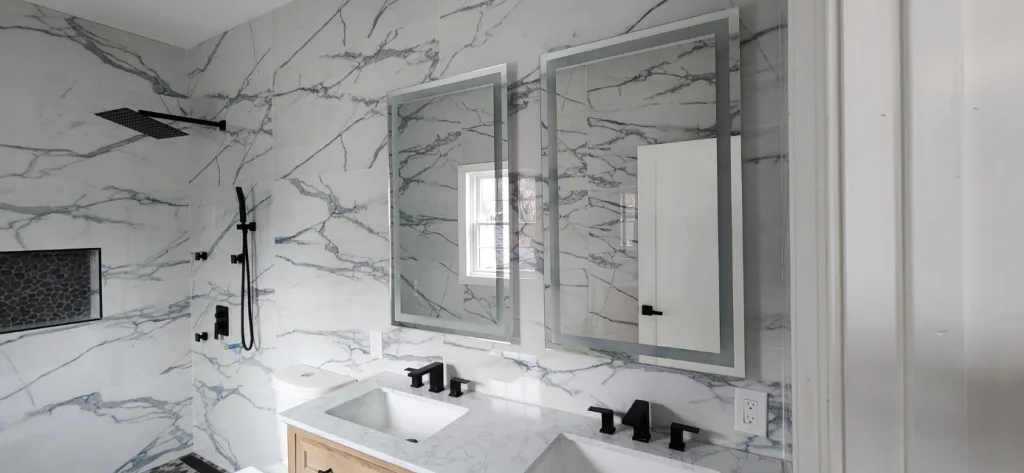
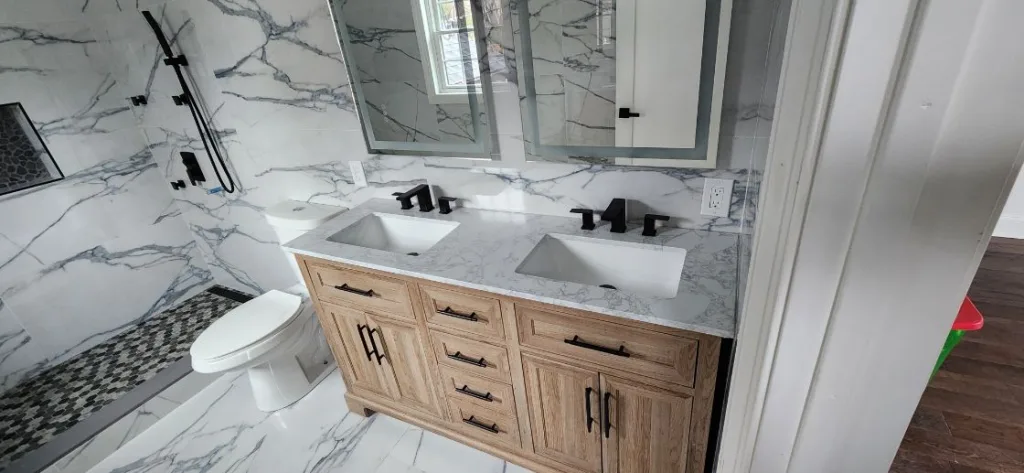
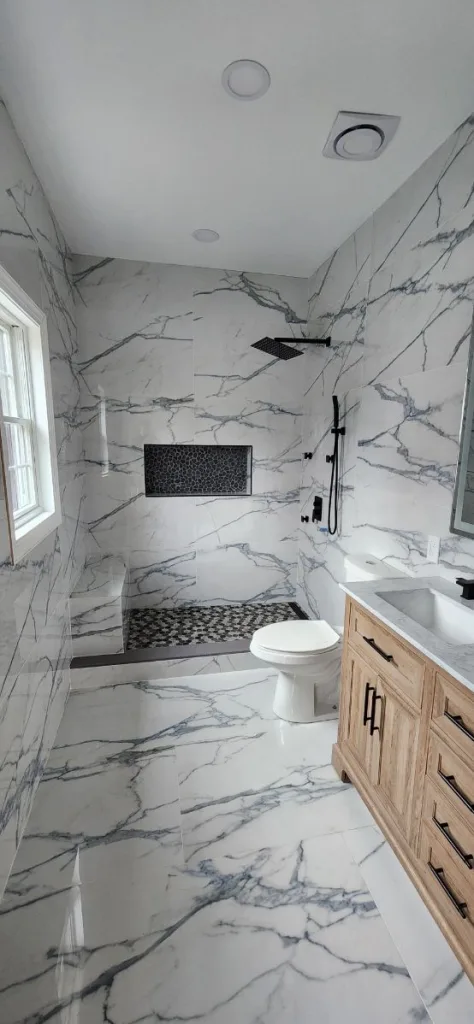
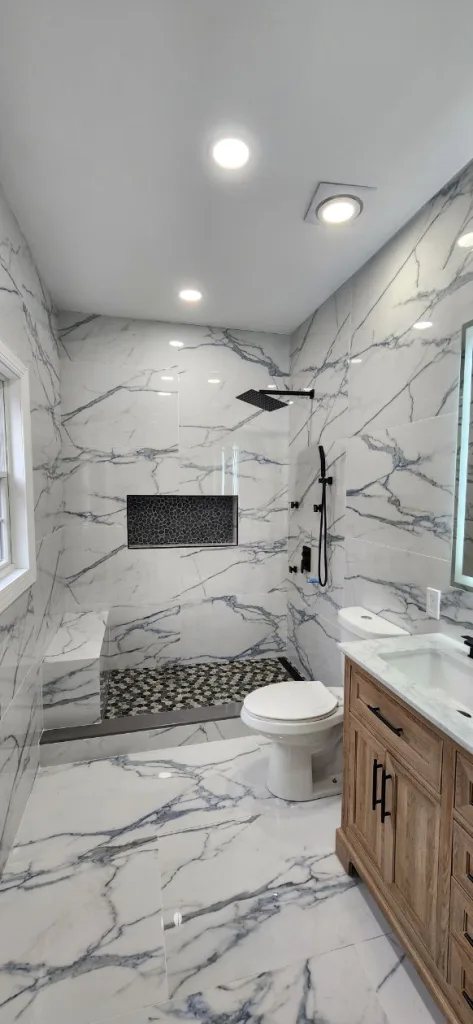
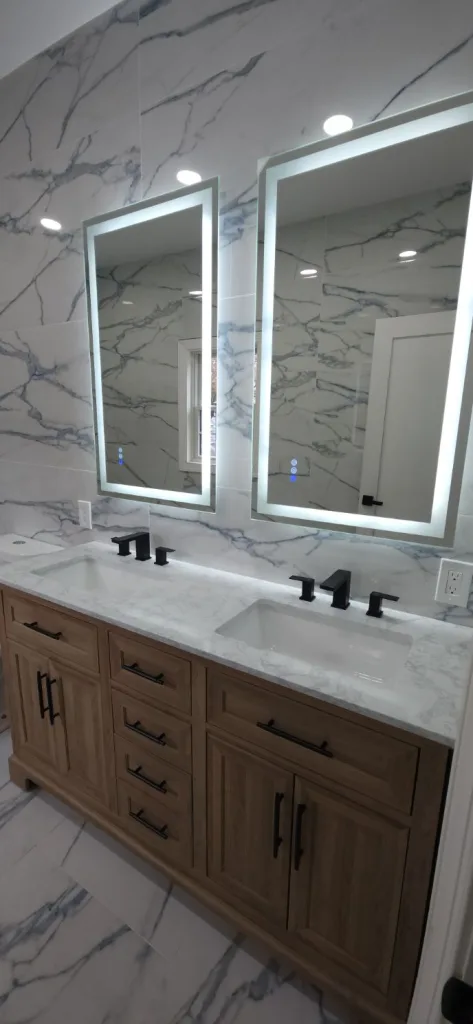
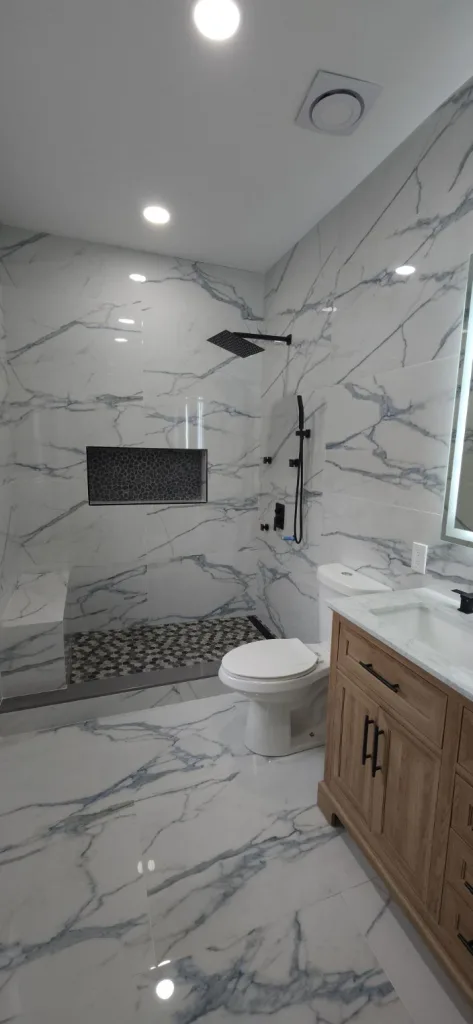
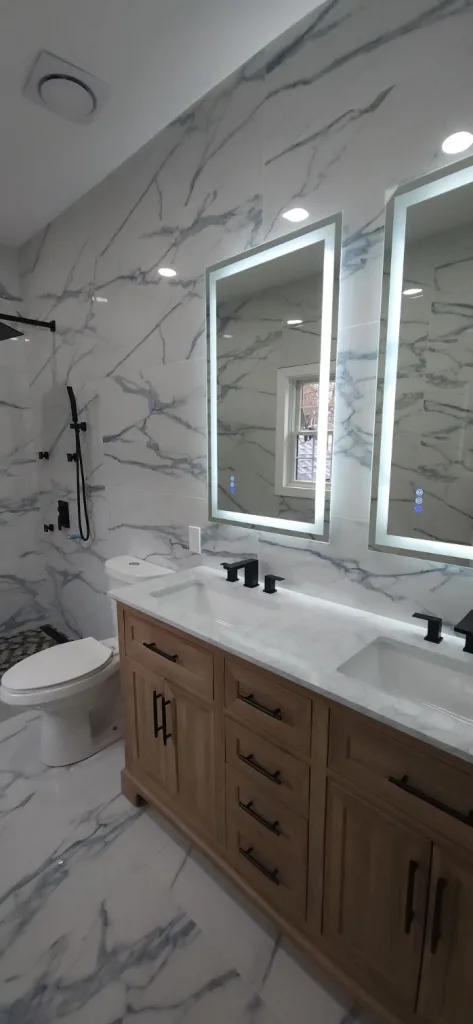
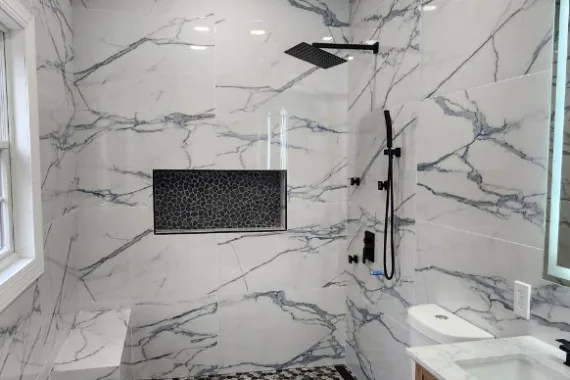
Adding a master bathroom to an existing house is a different category of work from remodeling one that already exists. There is no existing layout to work around, no fixtures to demo, and no tile to match. Instead, every decision — where the plumbing runs, how the shower drains, where the double vanity sits, how high the tile goes — gets made from scratch against a blank floor plan. In this Richboro project, BMR Belmax Remodeling built a new master bathroom as an addition to the house: a custom shower with bench and full floor-to-ceiling large-format tile, black plumbing fixtures throughout, a double vanity with two independent electric mirrors, recessed lighting, and a vented exhaust fan with integrated light.
Scope of Work
- New master bathroom built as house addition
- Custom shower constructed from subfloor up — shower bed, waterproofing, drain
- Built-in shower bench integrated into shower structure
- Large-format tile on all shower walls, extended floor-to-ceiling
- Black plumbing fixtures throughout — faucets, shower, drain hardware
- Double vanity installed with two sink basins
- Two electric mirrors installed, each on its own independent switch
- Recessed lighting installed throughout bathroom
- Exhaust fan with integrated light installed
- All new plumbing rough-in — supply and drain
- All new electrical rough-in — circuits, outlets, switches
Building a Bathroom Addition vs. Remodeling an Existing One
When a bathroom already exists, the remodel is constrained by the plumbing stack location, the drain line depth, the existing framing, and whatever mechanical systems are already running through the walls. The contractor works within those parameters. An addition removes most of those constraints — you’re framing new walls, setting new joists, and running all new rough-in before anything gets closed up.
The tradeoff is that an addition requires more coordination between trades. The plumber, electrician, and framer all need to be sequenced correctly: framing first, then rough plumbing and electrical through the open walls, then insulation, then drywall. If the tile contractor shows up before the plumber has set the shower drain at the right height relative to the finished floor, the drain has to come back out. Getting that sequence right on a new addition is the project management task, not the individual trade work.
Custom Shower Bed and Why It’s Built That Way
The shower floor in a tile shower isn’t flat — it slopes toward the drain at a minimum pitch of 1/4 inch per foot, on all four sides if it’s a center drain, or from the back wall to the front if it’s a linear drain. The shower bed is the mortar base that creates this slope before the tile goes down. It’s typically a mix of Portland cement and sand, packed and floated to the correct pitch, then cured before waterproofing membrane is applied.
Getting the slope right matters because low spots collect standing water, which accelerates grout deterioration and creates the conditions for mold growth at the grout joints. A properly sloped and drained shower floor stays dry between uses. This project’s shower bed was built from the subfloor up, meaning the drain height was set in relation to the finished floor thickness before the mortar was poured — the only way to ensure the final tile surface slopes cleanly to the drain.
Floor-to-Ceiling Tile: The Layout Decision
Large-format tile run floor-to-ceiling on all shower walls does two things. First, it reduces the number of horizontal grout joints across the wall height, which reduces the maintenance surface where mold and soap scum accumulate. A standard shower with 12×24 tiles stacked vertically has grout lines every 24 inches; large-format tile can span considerably more height per piece, with fewer joints.
Second, running tile to the ceiling instead of stopping at a paint line eliminates the transition zone at the top of the tile where moisture tends to collect and the caulk joint eventually fails. A floor-to-ceiling tile wall is one continuous waterproofed surface. Stopping at 7 feet and painting above it means the paint above is exposed to steam in every shower — it peels, it molds, and it has to be repainted every few years. Taking tile to the ceiling avoids that maintenance cycle entirely.
Black Plumbing Fixtures: Consistency and Practical Considerations
Matte black fixtures — faucets, shower valve trim, drain covers, towel bars — were used throughout this bathroom. The design logic is the same as any single-finish commitment in a bathroom: when every metal surface is the same finish, the room reads as intentional rather than assembled. Black fixtures against white or light-grey tile create strong contrast that photographs well and is easy to clean visually (no water spots show the way they do on chrome).
The practical note on matte black fixtures is that they require different cleaning than chrome. Abrasive cleaners scratch the matte surface. Soft cloths and mild soap preserve the finish. Owners who understand this maintain the look for the life of the fixtures; owners who don’t end up with scratched hardware within a year.
Double Vanity With Dual Independent Electric Mirrors
The double vanity has two sink basins — a standard configuration for a master bathroom serving two people. Each mirror above the vanity is an electric mirror: backlit, often with integrated defogger and touch controls for dimming. Installing two separate mirrors with independent switches rather than a single large mirror gives each user control over their own light level. It also makes the vanity wall look more purposeful — two mirrors centered over two sinks rather than one mirror spanning both.
Each mirror is on its own switch, which means the wiring runs are separate. This requires planning during the electrical rough-in stage — two switch boxes on the vanity wall, two runs to the mirror locations above. It’s a detail that sounds minor but has to be set before the wall closes.
Richboro Context
Richboro is an unincorporated community in Northampton Township, Bucks County — a suburban residential area with a mix of single-family homes from the 1970s through the 2000s. Many homes in this market were built with one full bathroom and one or two half baths; adding a dedicated master bathroom is a common project for owners who intend to stay in the home long-term and want a primary suite that functions properly. BMR Belmax Remodeling’s Richboro bathroom remodeling services cover both full remodels of existing bathrooms and new addition buildouts like this one.
Cost Range and Next Steps
New master bathroom additions — built from scratch rather than remodeled from existing space — carry higher costs than same-size remodels because of the full structural, plumbing, and electrical rough-in work involved. Projects comparable to this Richboro scope typically run $25,000–$45,000 depending on size, fixture grade, and tile selection. To get a specific number for an addition or remodel at your property, visit the free estimate page.
See the full bathroom remodeling service overview at the bathroom remodeling page.