
Third-Floor Bathroom Remodel – Newtown, PA
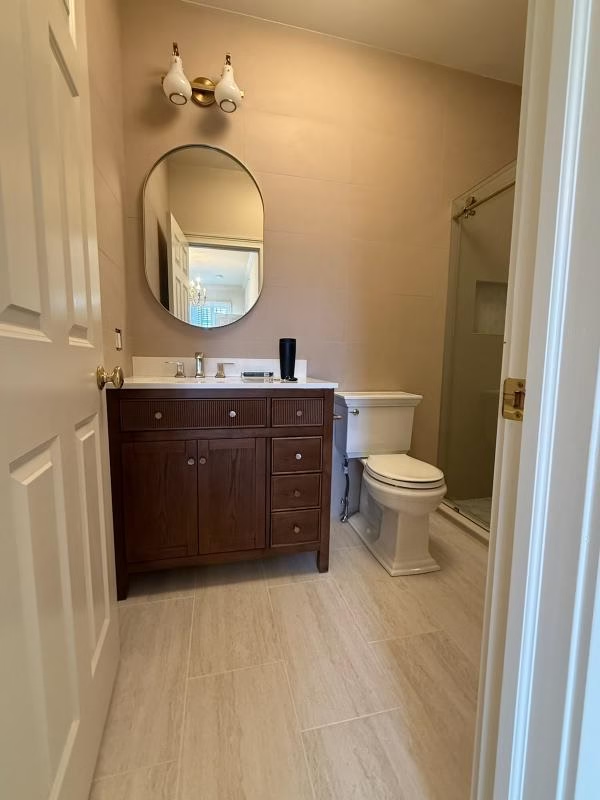
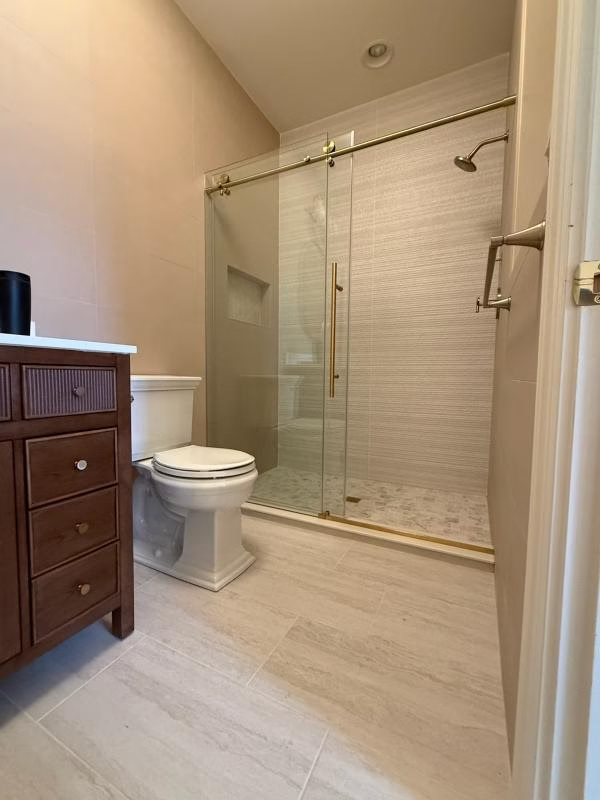
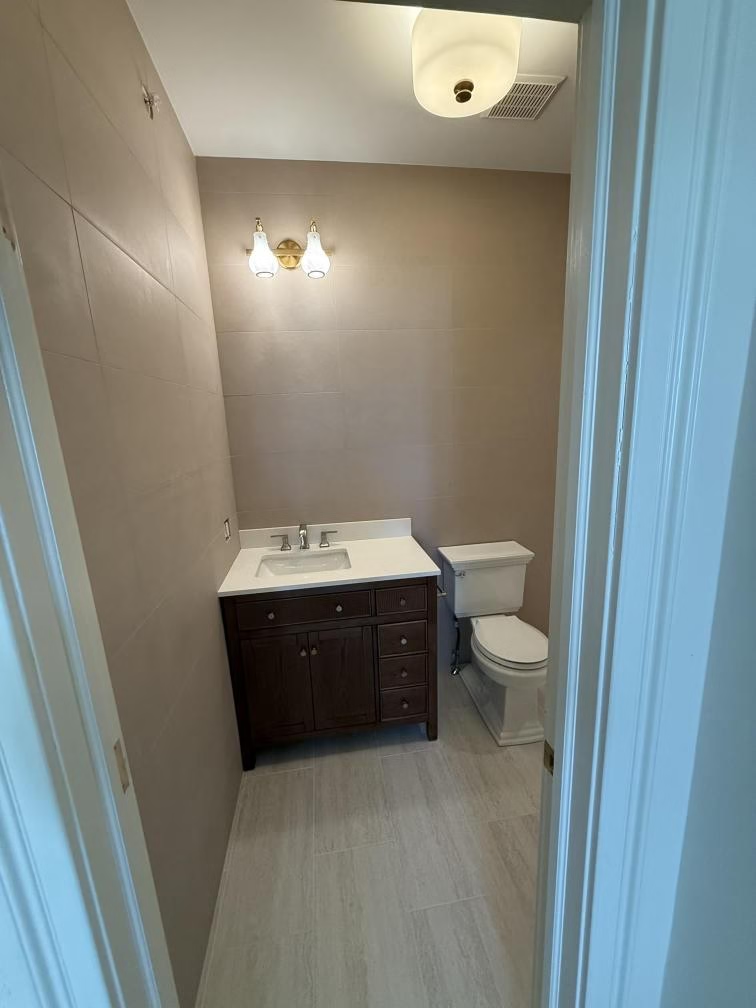
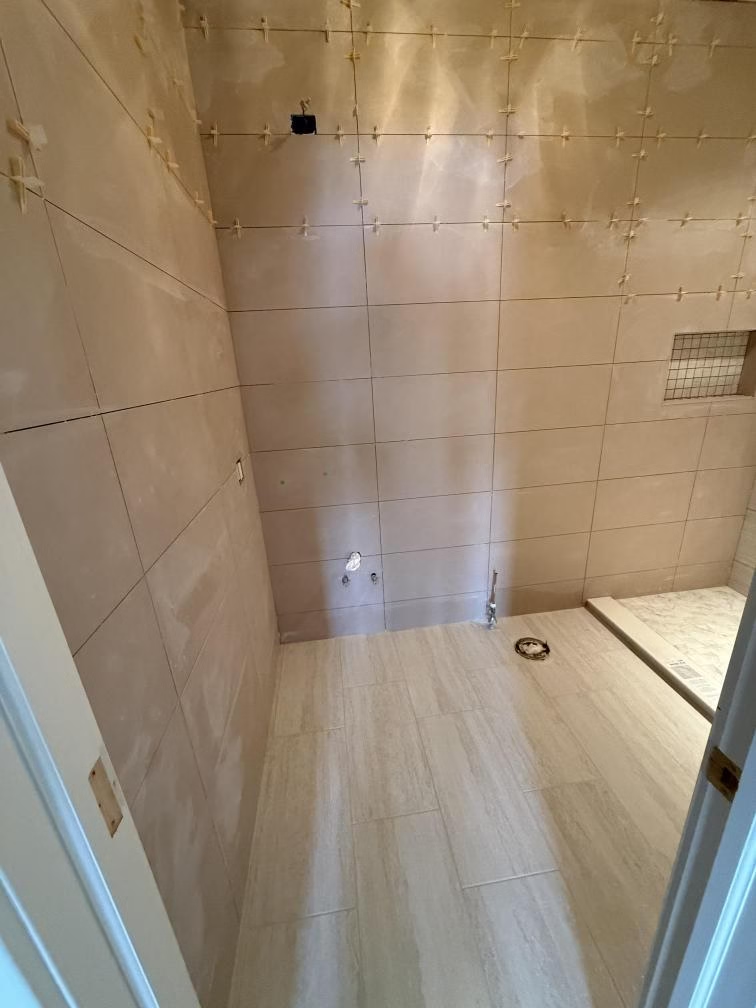
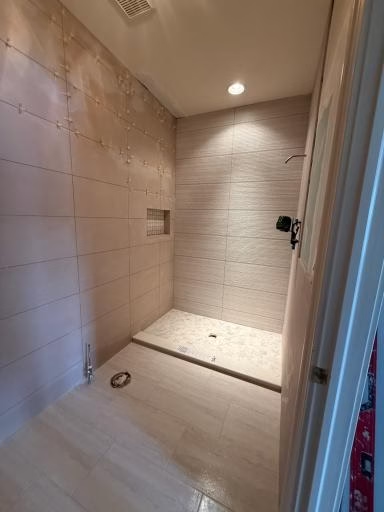
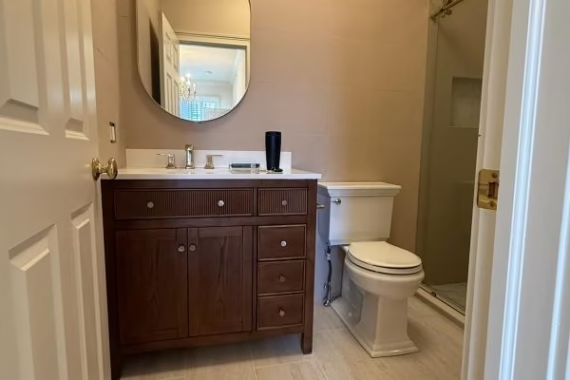
This third-floor bathroom in Newtown was a full gut-and-rebuild with a scope that extended beyond the bathroom itself. The door to the adjacent sitting room was removed and the opening was framed, drywalled, and painted — a structural change that redefined the room’s boundary before any tile work began. Inside, the shower was built with large-format tile to the ceiling, a mosaic tile base, a recessed niche, and a gold-hardware sliding glass door. Warm beige large-format tile was installed on 114 square feet of wall surface throughout the main bathroom. A dark wood single vanity with white quartz countertop, oval mirror, and gold sconce lighting complete the space.
Scope of Work
- Full demolition
- Green board on walls where needed; cement board in shower area and on floor
- New shower base built; new shower drain installed
- Floor-to-ceiling tile on shower walls (12×12 and larger)
- Mosaic tile on shower floor
- Recessed niche built into shower wall
- Homeowner-supplied sliding shower doors installed (gold hardware)
- Homeowner-supplied shower faucet installed
- Homeowner-supplied vanity, sink, medicine cabinet/mirror, and toilet installed
- New vanity faucet installed
- Large-format tile on bathroom floor
- 114 sq ft of tile installed on bathroom walls: front wall to ceiling, left side wall to ceiling, 42×42 in. section at former door opening
- Door to adjacent sitting room removed
- New framing, drywall, and paint at former door opening
- Sitting room wall painted
- Gold sconce light fixture installed above vanity
- Recessed light installed in shower area
- New baseboards installed
- Bathroom accessories: towel ring, towel bar, toilet paper holder
- Plumbing and electrical to code
Third-Floor Conditions: What Makes This Room Different
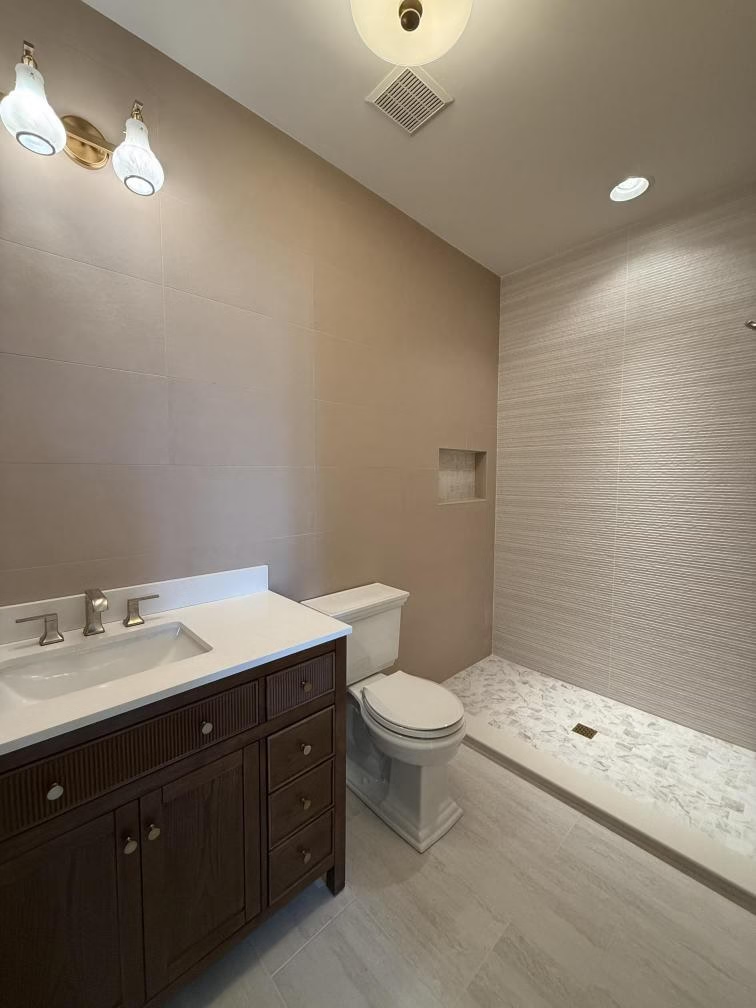
A bathroom on the third floor of a home presents specific constraints that ground-floor and second-floor projects do not. The ceiling follows the roofline in the shower area — visible in the finished photos as a sloped ceiling above the enclosure — which affects how tile is laid out on the upper walls and how fixtures are positioned and vented. Access for plumbing and electrical runs is also more involved than in bathrooms closer to the main stack. These are not obstacles that change the finished result, but they do affect how the rough-in work is sequenced and coordinated.
Removing the Door to the Sitting Room
The door between the bathroom and the adjacent sitting room was removed as part of this project. The rough opening left by that removal was framed to close it structurally, then drywalled on both the bathroom side and the sitting room side, and painted to match. On the bathroom side, a 42” × 42” section of the wall at the former door location was tiled as part of the 114-square-foot wall tile scope — so the closed opening is finished with tile consistent with the rest of the bathroom walls rather than a painted patch.
Doing this work during the remodel rather than as a separate project is the practical approach: the trades are already on-site, the walls are already open in the adjacent area, and tiling over the new drywall is part of the same tile installation sequence as the rest of the bathroom walls. The result is a bathroom with a clean, uninterrupted wall surface where a door used to be.
114 Square Feet of Wall Tile
The wall tile scope on this project is more extensive than a standard bathroom remodel. 114 square feet covers three surfaces: the front wall behind the vanity tiled to the ceiling, the side wall to the left of the vanity tiled to the ceiling, and the section of wall at the former door opening. This is a significant amount of tiled wall surface outside the shower enclosure — it gives the bathroom a cohesive, finished character across all four walls rather than tile only in the wet zone.
The warm beige large-format tile selected for the walls provides a continuous surface with minimal grout lines, which keeps the visual field clean across a large coverage area. Large-format tile on walls requires careful layout planning — the tile has to be positioned so the cuts at the ceiling, floor, and corners are balanced and symmetrical. In a room with a sloped ceiling section, that planning is more involved than in a room with a flat ceiling throughout.
The Shower: Tile, Niche, and Gold Hardware
The shower was built from a new custom base with a correctly sloped drain. Floor-to-ceiling tile on the shower walls — 12×12 and larger format — provides full moisture protection across the wet zone with a clean, contemporary surface. Mosaic tile on the shower floor provides the traction that large-format tile alone does not on a sloped wet surface.
A recessed niche was built into the shower wall before the cement board and tile phases began — framed during rough-in, waterproofed as part of the tile installation, and finished flush with the surrounding tile. The niche provides built-in storage without projecting into the shower space or requiring separate maintenance over time.
The homeowner supplied the sliding glass doors and shower faucet, both of which were installed once the tile work was complete. The gold hardware on the sliding doors connects visually to the gold sconce light fixture at the vanity, creating a consistent finish thread across the two zones of the bathroom.
Vanity, Mirror, and Lighting
The homeowner supplied the dark wood single vanity, which was installed with a new faucet and connected to the updated plumbing. The white quartz countertop on the vanity provides a strong contrast against the warm wood cabinet finish and the beige wall tile — a deliberate light-against-dark combination that gives the vanity wall a clean, defined appearance.
An oval mirror was mounted above the vanity. The gold two-bulb sconce light fixture positioned above the mirror provides vanity-level illumination from the correct direction — in front of the face rather than from overhead, which is the functional lighting position for daily grooming. In a bathroom with significant wall tile coverage, the oval mirror and sconce combination gives the vanity wall a visual anchor that reads as a considered design choice rather than a default installation.
A recessed light was installed inside the shower enclosure, providing dedicated illumination within the tiled enclosure rather than relying on ambient light from the main bathroom fixture to filter through the glass doors.
Bathroom Remodeling in Newtown
Newtown is a Bucks County borough with a mix of older colonial-era properties and more recent residential construction. Third-floor bathrooms in larger homes in this area are often underutilized — either original construction that has not been updated or spaces that were roughed in and never finished properly. A full remodel that addresses the substrate, plumbing, electrical, and tile from scratch is the approach that produces a room that functions correctly and holds up over time. Belmax Remodeling works throughout Newtown and the broader Bucks County area. For more on our bathroom work, see our bathroom remodeling service page. Homeowners in Newtown can also visit our Newtown bathroom remodeling page for more completed local projects.
Considering a Similar Project?
Full bathroom remodels with extensive wall tile coverage, a custom shower build, structural opening work, and homeowner-supplied fixtures span a range depending on tile selection, scope, and access conditions. To discuss what a project like this would involve for your bathroom, request a free estimate.