
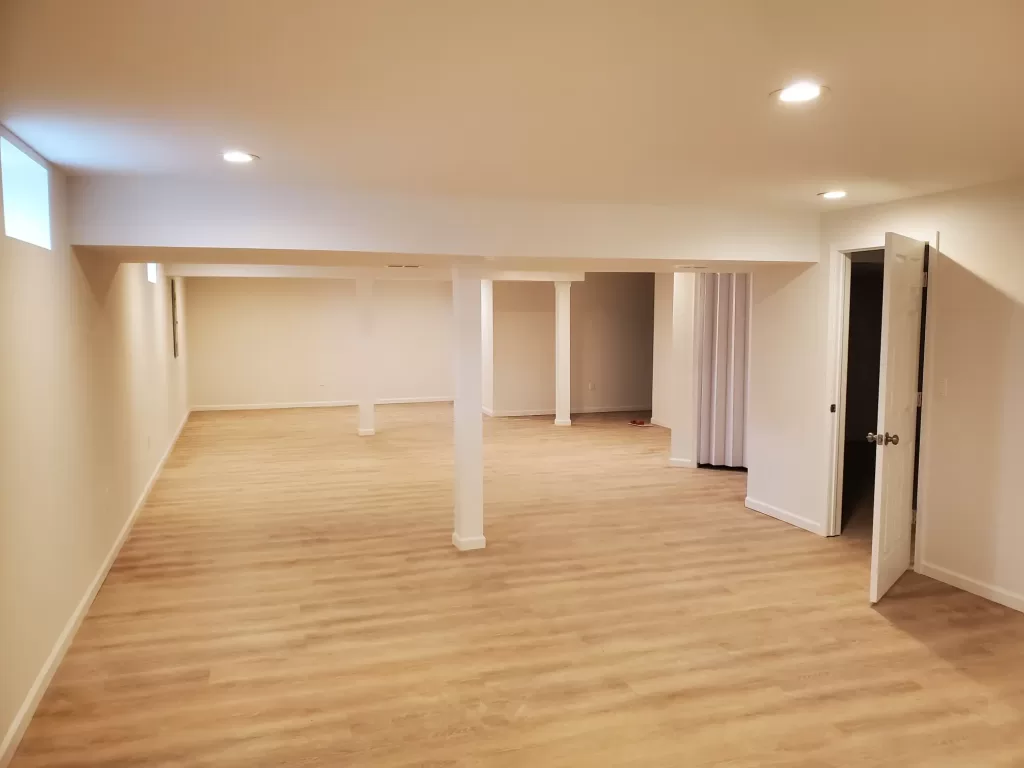
Basement Finish – Princeton, NJ
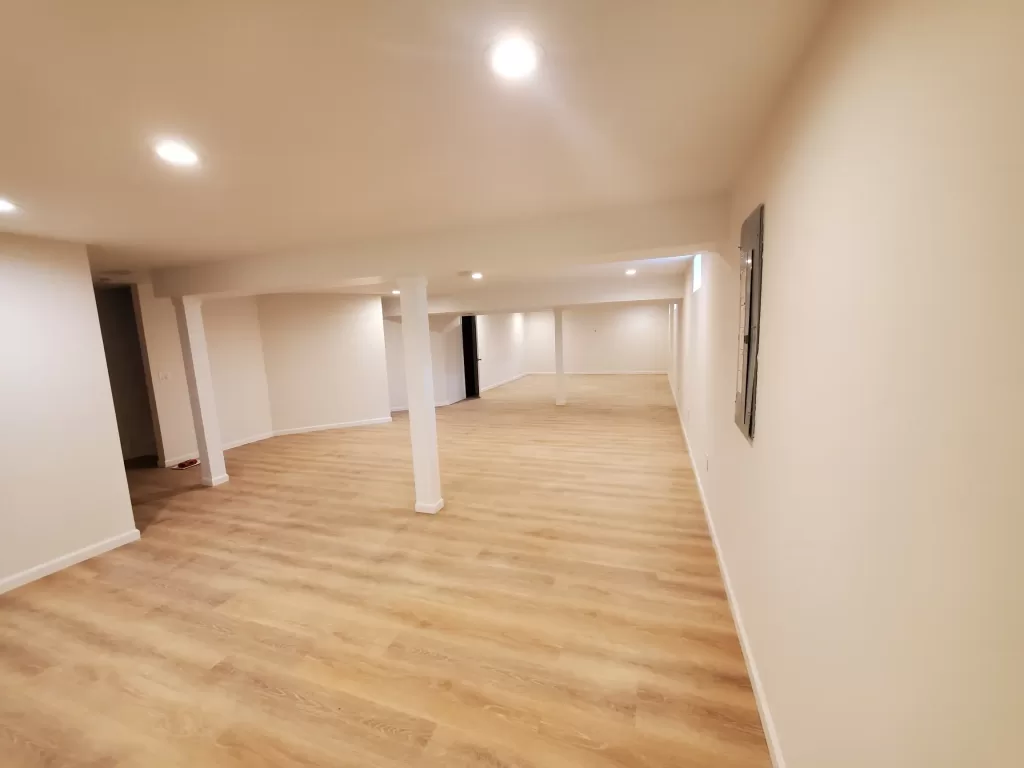
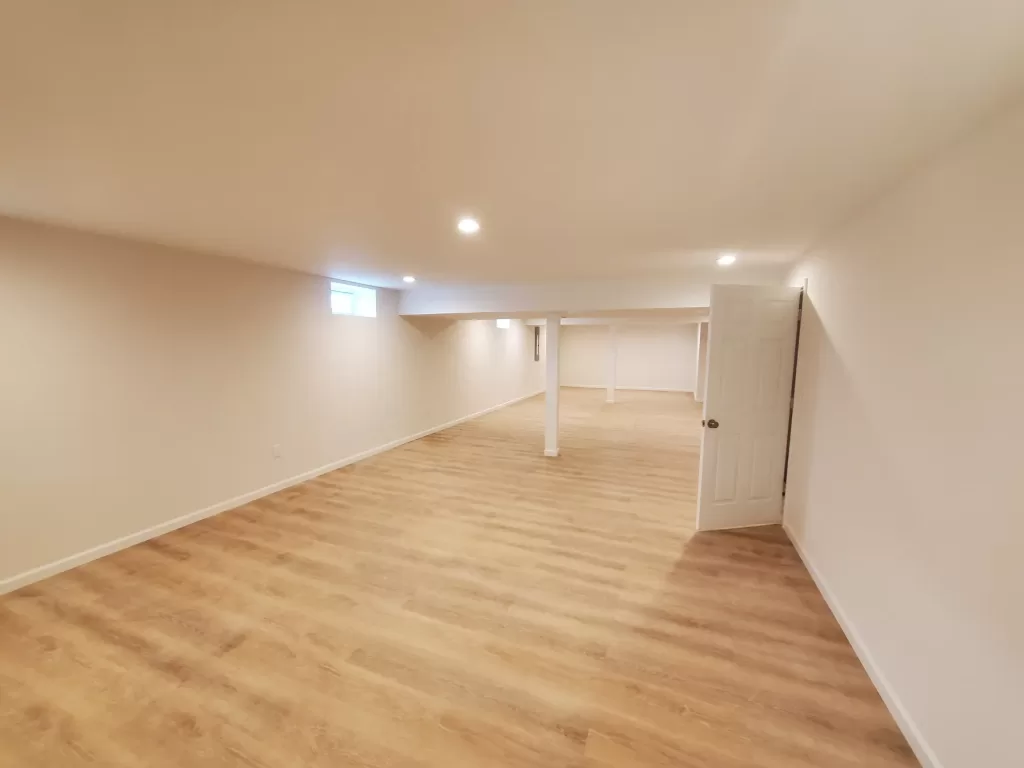
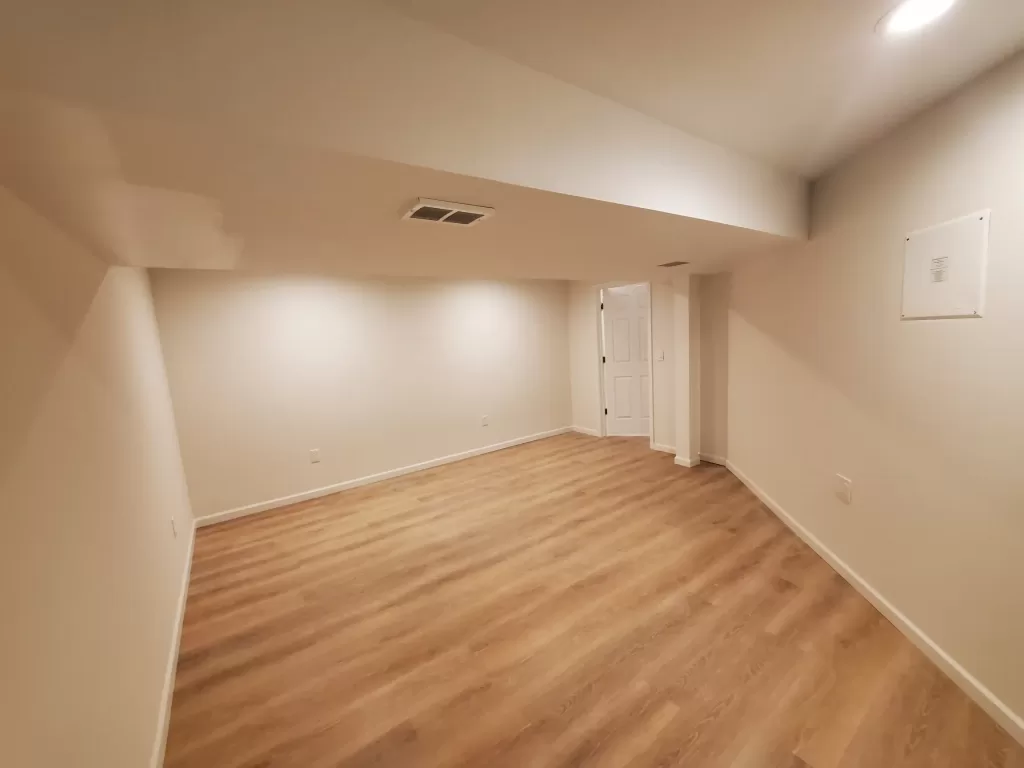
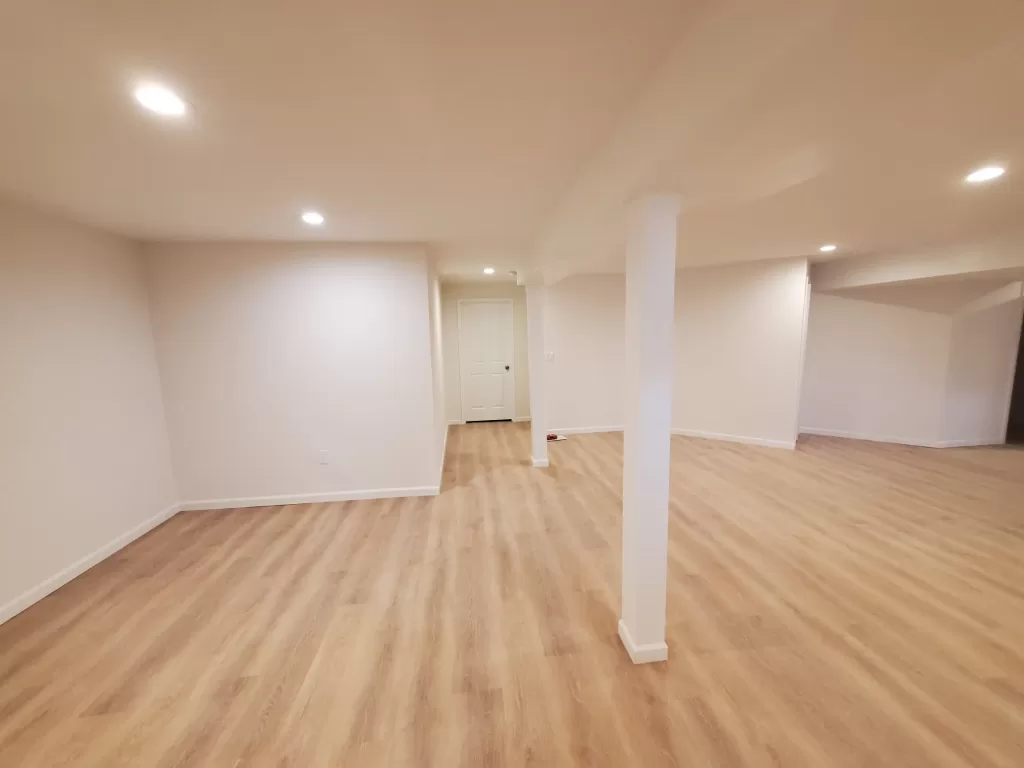
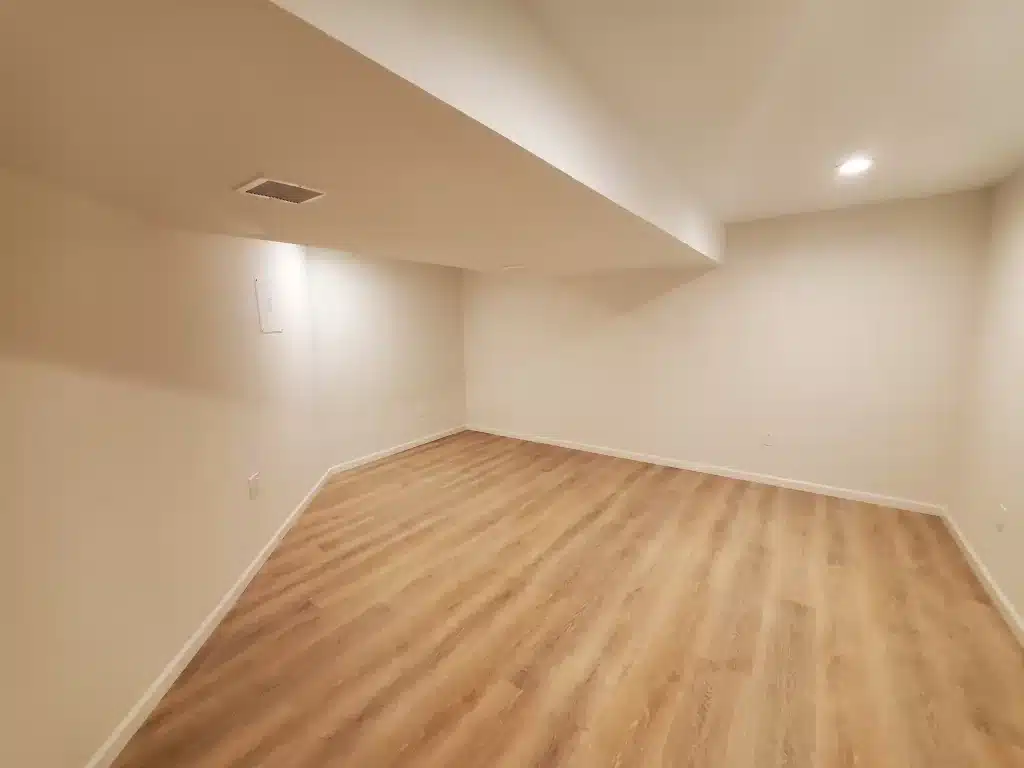
This 1,250-square-foot basement finish in Princeton converted a large unfinished basement into a defined, livable lower level. At this scale, the layout decisions — how many rooms to frame, where the partition walls land, how the utility zone is separated from the finished areas — carry more consequence than they do in a smaller space. The scope covered new walls with insulation, drywall, recessed lighting, new doors, LVP flooring across the full 1,250 square feet, and paint throughout.
Scope of Work
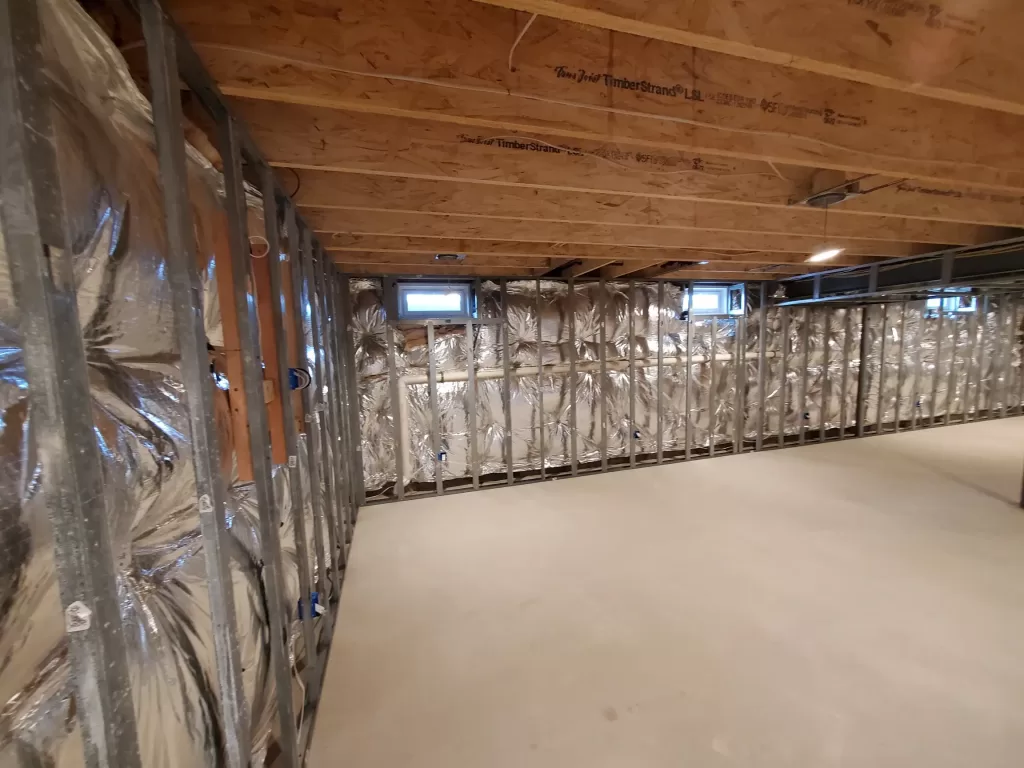
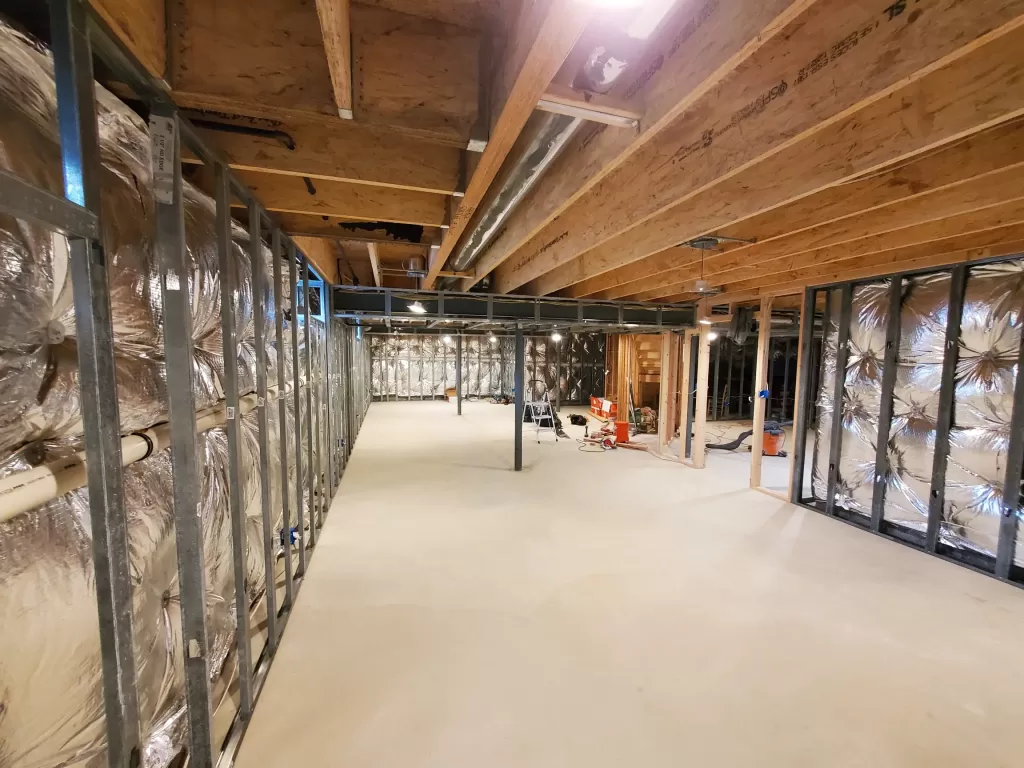
- New partition walls framed with insulation and drywall throughout
- Recessed lighting installed throughout ceiling
- New doors installed at room openings
- LVP flooring installed across full 1,250 sq ft
- Paint throughout
- Electrical to code
Finishing 1,250 Square Feet: What Scale Changes
A 1,250-square-foot basement is a significant amount of livable space — larger than many apartments and equivalent to a meaningful addition to the home’s usable square footage. At that scale, the basement finish is not just a project; it is a floor plan. The decisions about how many rooms to create, how to separate the finished living areas from the utility zone, and how the layout flows from room to room have a material effect on how useful the finished space actually is.
The layout has to account for what is already in the basement that cannot move: the HVAC unit, the water heater, the electrical panel. These mechanical elements stay in place and have to remain accessible for maintenance and service. The partition wall layout creates a utility room or mechanical chase around those elements, with the finished living areas occupying the remaining floor area. Getting that balance right — useful mechanical access without giving up disproportionate floor area to the utility zone — is the layout challenge in a basement of this size.
New Walls: Framing, Insulation, and Drywall
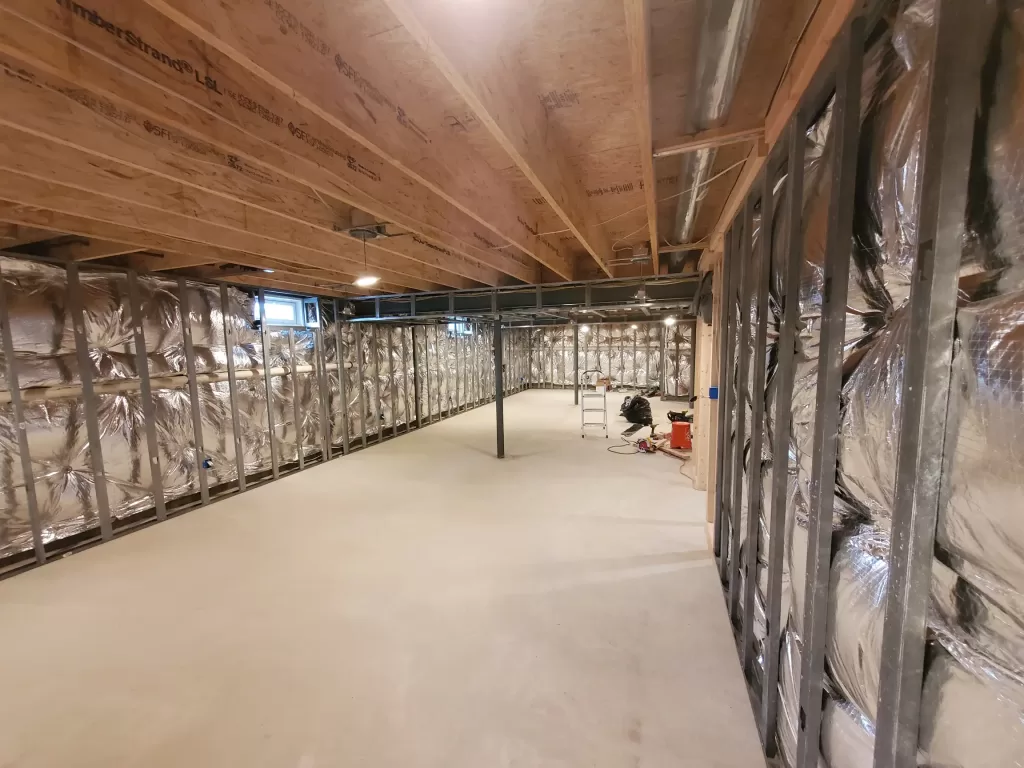
New partition walls were framed to define the room layout. In a basement finish, partition walls serve two functions: they divide the floor area into rooms, and they provide the surface on which insulation and drywall are applied to create finished wall surfaces. Framing against the exterior foundation walls also creates a stud cavity for insulation — filling that cavity with insulation is what separates the interior air from the cold mass of the concrete foundation wall and prevents condensation from forming on the interior wall surface in humid summer conditions.
Insulation in the wall cavities was followed by drywall installation across all new wall surfaces, creating smooth, paint-ready surfaces throughout. At 1,250 square feet, the drywall scope alone is substantial: the perimeter walls, the partition walls between rooms, and the ceiling framing all need board applied, taped, and finished before any painting or flooring can begin.
Recessed Lighting Throughout
Recessed lighting was installed throughout the basement ceiling. In a 1,250-square-foot space, the lighting layout has to cover multiple rooms and zones rather than a single open area. Each room requires its own fixture placement that provides adequate illumination at the work surfaces and in the center of the floor without dark zones at the perimeter.
All electrical work was performed to code, which in New Jersey means pulling the appropriate permits and having the work inspected at the rough-in stage before the ceiling is closed. In a basement of this size, the electrical scope includes multiple circuits for the new lighting load, outlet circuits for each room, and potentially dedicated circuits for entertainment equipment or other specific loads. The rough electrical is done before insulation and drywall, while full access to the framing bays is available.
LVP Flooring Across 1,250 Square Feet
Luxury Vinyl Plank flooring was installed across the full 1,250-square-foot floor area. At this scale, LVP has to be installed as a unified field that flows across all the finished rooms without visible transitions or height mismatches at the doorways between them. The flooring installation follows a planned layout that starts from a reference line and works outward, ensuring the pattern and joint staggering are consistent across the full area.
Before installation, the concrete slab had to be checked for levelness across the full 1,250-square-foot area. Basements of this size in Princeton homes built in the mid-20th century can have slabs with minor variation from one end to the other — a slab that is level in the main area may have settled slightly at the perimeter, or there may be a slope toward a floor drain that needs to be addressed before the flooring goes down. Self-leveling compound fills low spots; minor high points can be ground down. Getting the slab preparation right across a floor area this large is the step that determines whether the finished floor lies flat and stable or develops gaps and movement at the joints over time.
Doors and Paint
New doors were installed at each room opening. In a 1,250-square-foot basement with multiple rooms, the door count is significant — each room partition that needs a door requires its own rough opening in the framing, its own door unit and hardware, and its own casing trim on both sides. Consistent door styles and hardware across all the rooms give the basement a unified finish rather than a collection of different door units that read as separate decisions.
The basement was painted throughout after all the framing, drywall, flooring, and door work was complete. In a large basement, paint is the final finish that ties the ceiling, walls, and trim together. Color selection in a basement without natural light has a practical dimension: lighter colors reflect the recessed lighting back into the room, while darker colors absorb it. Across 1,250 square feet with multiple rooms, consistent paint color or a deliberate room-by-room color plan gives the level a cohesive character.
Basement Finishing in Princeton and Mercer County
Princeton is a Mercer County community with a mix of residential property types. Large unfinished basements in homes across the area represent a significant amount of unconverted square footage that owners are increasingly finishing into living space. A 1,250-square-foot basement finish adds more usable area than many above-grade room additions, without expanding the building footprint. Belmax Remodeling works throughout Princeton and the broader Mercer County area. For more on our basement work, see our basement remodeling service page. Homeowners in the Princeton area can also visit our Mercer County service area page for more completed regional projects.
Considering a Similar Project?
Basement finishes in the 1,000–1,500-square-foot range with partition walls, insulation, recessed lighting, LVP flooring, doors, and paint — without plumbing additions — typically fall in the $18,000–$28,000 range in Mercer County. This Princeton project came in at $21,300, completed May 2020. To discuss what your basement would involve, request a free estimate.