
Bathroom Remodel – Spring House, PA
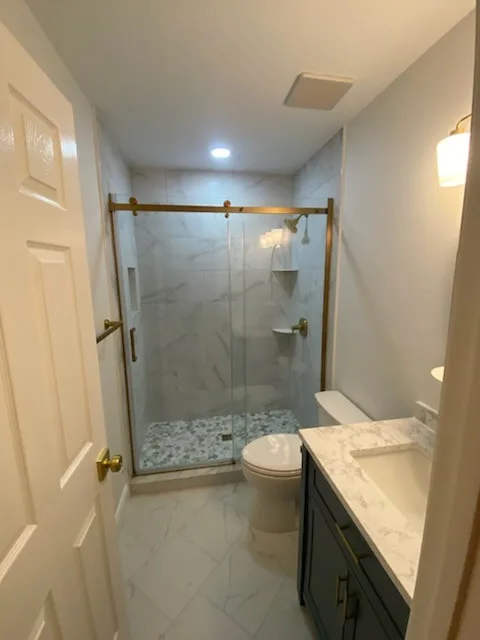
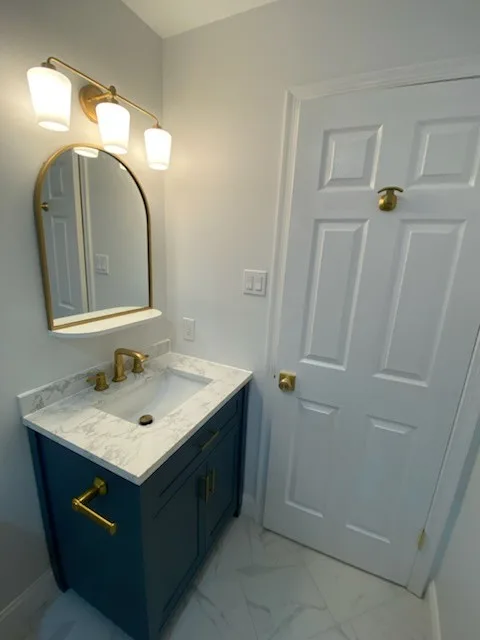
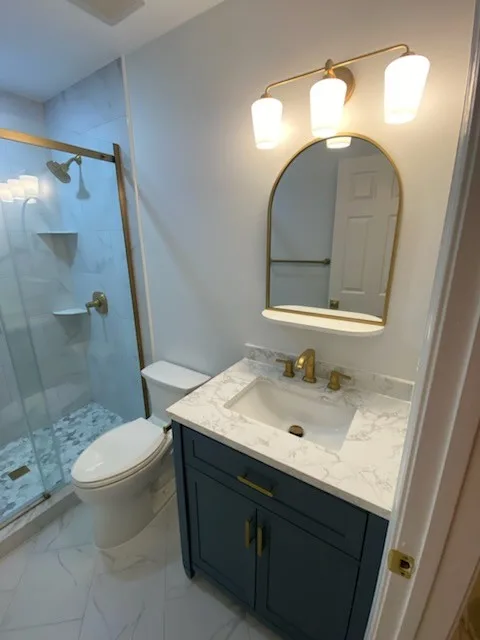
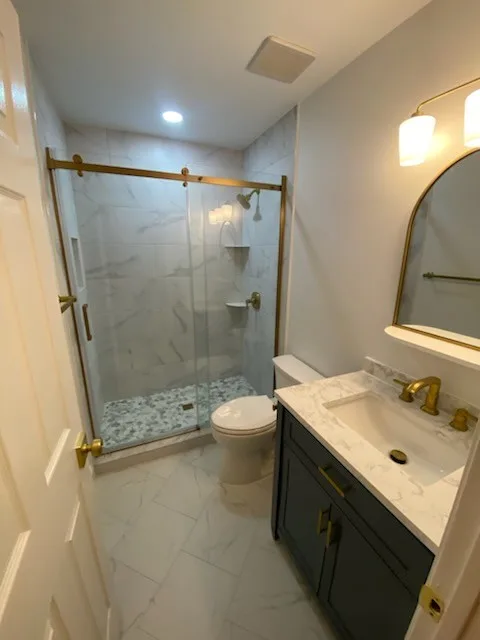
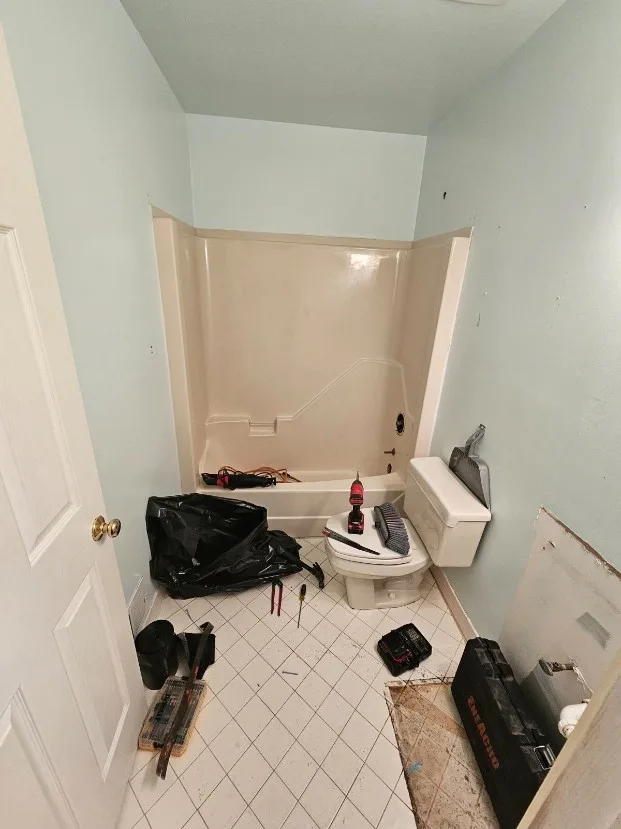
This 40-square-foot hallway bathroom in Spring House had a plastic tub enclosure that had seen better decades. The remodel removed it entirely and installed a walk-in shower in its place — no tub, no prefab insert, just tile on the walls and floor, a recessed niche, two corner shelves, and a light inside the shower. Gold fixtures throughout — showerhead, vanity faucet, and accessories — are the design thread that ties the finished room together.
What This Project Included
- Removal of the existing plastic tub enclosure and bathtub
- New walk-in shower with glass doors
- Large-format tile on shower walls and floor
- Two corner shelves in the shower
- Recessed niche in the shower wall
- Dedicated light in the shower area
- Gold-finished showerhead and shower fixtures
- New modern vanity
- Gold-finished vanity faucet and accessories
- New toilet
- New vanity lighting
- New exhaust fan
Removing the Tub: When a Tub-to-Shower Conversion Makes Sense
Tub-to-shower conversions are one of the more straightforward reconfigurations in bathroom remodeling, but the decision to make one should be deliberate. Removing a tub means the bathroom will no longer have one, which affects resale appeal in homes where it is the only full bathroom on a given floor. In a hallway bathroom that is one of multiple bathrooms in the home, this consideration is less constraining. The homeowner in Spring House decided the tub was not being used and that a properly sized walk-in shower would serve the household better than a tub that primarily served as a surface to clean around.
Once the plastic enclosure and tub came out, the space was rebuilt from the tile substrate up — cement board, waterproofing, and then the tile installation on walls and floor. The finished shower uses the full footprint that the tub occupied, which is why the walk-in can accommodate two corner shelves, a recessed niche, and a proper enclosure with glass doors in a 40-square-foot room.
Gold Fixtures as the Design Thread
Gold was chosen for the showerhead, the shower fixtures, the vanity faucet, and the accessories. Using a single metal finish throughout a small bathroom is a consistent choice in this portfolio — it creates visual unity in a room where every surface is visible at once, rather than a collection of chrome here, brushed nickel there, and oil-rubbed bronze somewhere else.
Gold in particular reads differently from black or chrome against tile: it adds warmth to a room that might otherwise feel cool from all-neutral tile, without introducing color in a way that commits to a specific palette. In a 40-square-foot hallway bathroom used by different members of a household, gold is a neutral-warm finish that does not read as too specific a taste.
Three Storage Features in the Shower
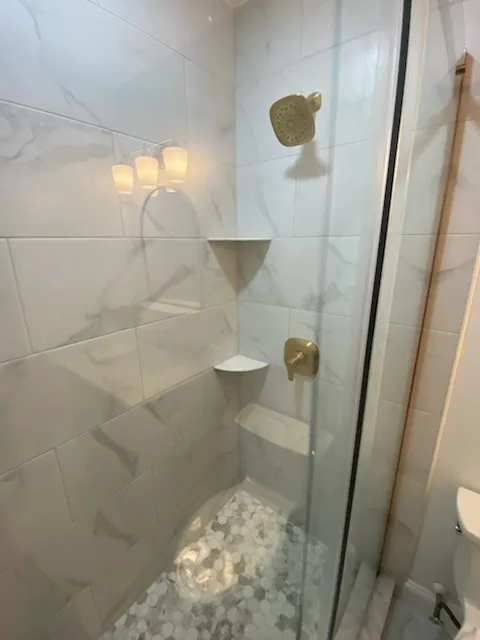
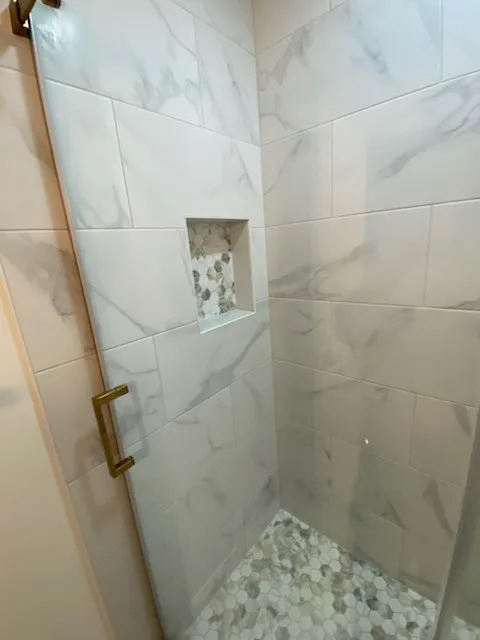
Two corner shelves and a recessed niche were built into the shower. Corner shelves make use of the angles formed where two walls meet — space that has no other function in a shower enclosure. Tiling them in and making them permanent gives the shower dedicated storage surfaces that do not need to be cleaned separately or replaced over time. The recessed niche provides a flat shelf for products that need to be within reach during a shower without being on the floor. Together, the three features handle the storage that a freestanding caddy would otherwise manage — with less visual intrusion and without the rust or drainage issues that metal caddies develop over time.
Light in the Shower
A dedicated light was installed inside the shower area. In a walk-in shower without a tub window, interior lighting makes the back wall of the enclosure visible and gives the shower adequate illumination for daily use. Without it, the ambient light from the main bathroom fixture filters through the glass doors but does not illuminate the far wall. This is a detail that is significantly easier to install during construction — before the tile and ceiling are finished — than to add afterward.
What the Conversion Delivered
The finished bathroom in Spring House has a walk-in shower where a plastic tub enclosure used to be. The tub is gone, the tile is continuous from wall to floor, the shower has built-in storage, the fixtures are gold throughout, and the room functions the way a remodeled hallway bathroom should. At $8,500 for 40 square feet, including a tub-to-shower conversion, this sits at the more accessible end of the full bathroom remodel range in Montgomery County — the homeowner-supplied decisions (no structural reconfiguration, a straightforward tile and fixture scope) kept the project well-managed.
Bathroom Remodeling in Spring House
Spring House is a community in Lower Gwynedd Township, Montgomery County, with a mix of residential development from the mid-20th century onward. Hallway bathrooms in homes from that era often have tub enclosures that have outlived their usefulness. A tub-to-shower conversion that replaces the enclosure with proper tile work and a functional walk-in is a practical update that improves daily use without requiring structural changes to the room.
Belmax Remodeling works throughout Spring House and the surrounding Montgomery County area. For more on our bathroom work, see our bathroom remodeling service page. Homeowners in the Spring House area can also visit our Montgomery County bathroom remodeling page for more completed regional projects.
Considering a Similar Project?
Tub-to-shower conversions in the 40-square-foot range with large-format tile, built-in storage, glass doors, and a consistent fixture finish typically fall in the $7,500–$10,000 range in Montgomery County. This Spring House project came in at $8,500, completed January 2025. To discuss what your bathroom would involve, request a free estimate.