
Home Addition in Morrisville, PA — Slab Removed, New Foundation, Office, Half Bath, and Laundry
Home additions that start with slab removal are among the more demanding projects in residential construction. Before a single new wall goes up, the existing concrete slab has to come out, the perimeter foundation has to be dug and poured, and the site has to be properly prepared to carry the new structure. That groundwork is invisible in the finished product but determines whether the addition is sound for decades or starts showing problems within years. In this Morrisville project, BMR Belmax Remodeling removed an existing slab, installed a new perimeter foundation, built new walls and a roof tied into the existing house, and finished the interior as three distinct living areas, an office, a half bathroom, and a dedicated laundry space — all with diamond-pattern tile flooring and full electrical to code.
Scope of Work
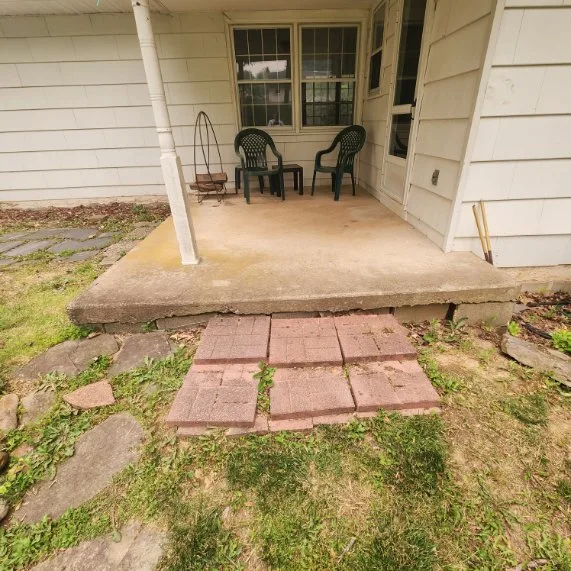
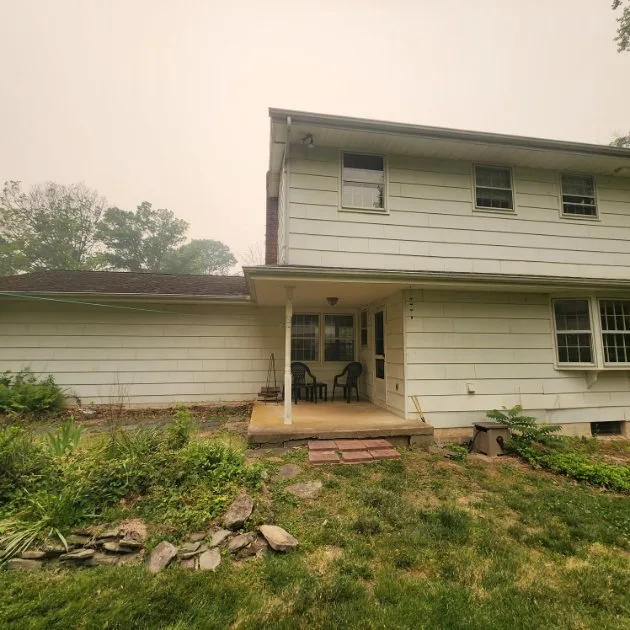
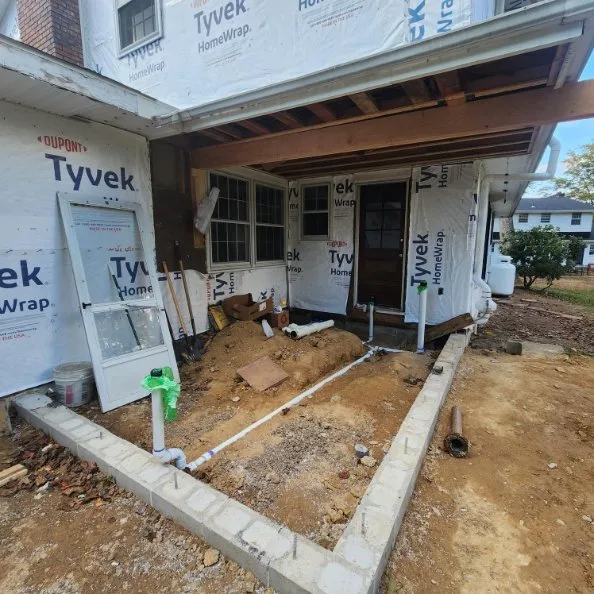
- Existing concrete slab removed
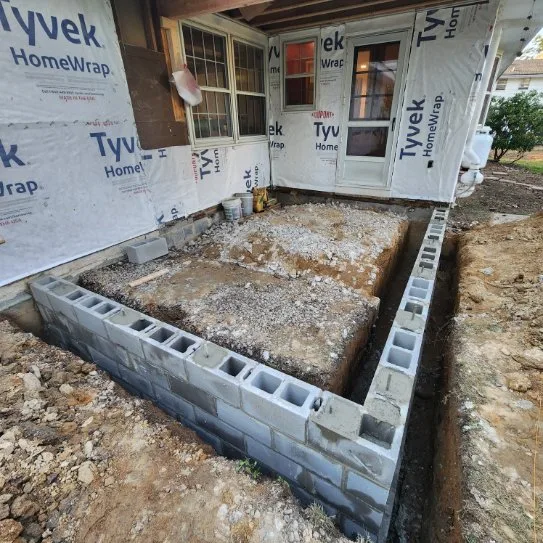
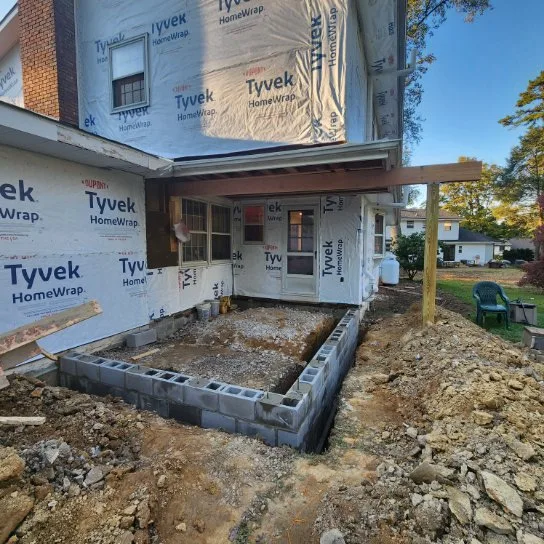
- New perimeter foundation installed
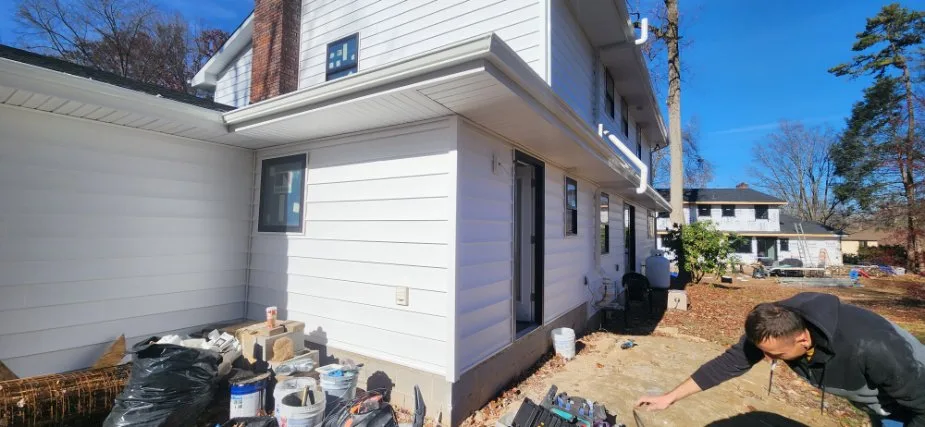
- New exterior walls framed and built
- New roof constructed and integrated with existing house roofline
- New windows installed throughout addition
- New exterior door installed
- Three living areas finished and defined
- Office space built out
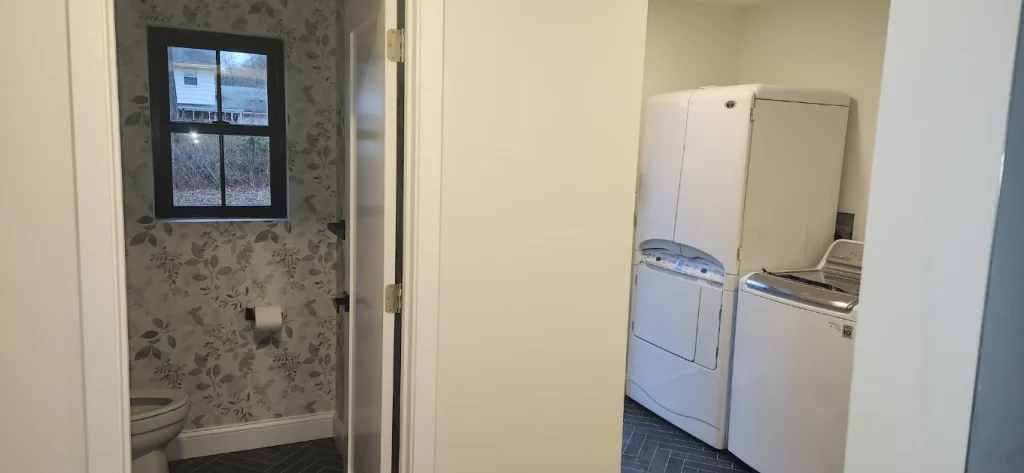
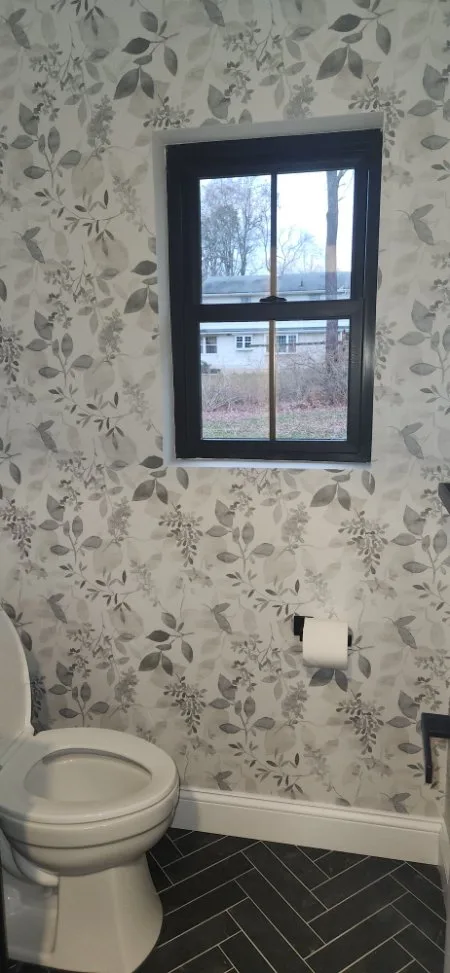
- Half bathroom constructed — toilet and sink, new plumbing rough-in
- Laundry area built out with plumbing connections
- Diamond-pattern tile flooring installed throughout
- Recessed lighting installed throughout addition
- Full electrical installation — circuits, outlets, switches to current code
Why the Slab Had to Come Out First
An existing concrete slab on grade is not a foundation for a new addition — it’s a floor that was designed to sit on the ground, not to transfer the lateral and vertical loads of new walls and a roof into the earth below. Building on top of an existing slab without proper perimeter footings creates a structure that can shift, settle unevenly, and separate from the existing house over time. The right approach is to remove it, excavate to the correct depth for the local frost line (in Bucks County, that’s typically 36 inches), pour new continuous perimeter footings, and build up from there.
Removing a concrete slab also gives the contractor access to the ground underneath, which matters for the new plumbing rough-in. The drain lines for the half bathroom and laundry area run below the slab level — they have to be trenched and set before the new concrete floor is poured. Trying to add those drain lines after a slab is in place means breaking the concrete later, which costs more and disrupts an already-finished floor.
Foundation to Framing: Integrating the Addition With the Existing House
A home addition has to tie into the existing structure at the foundation level, the wall level, and the roof level. At the foundation, the new perimeter footings are poured to bear on undisturbed soil and are connected to the existing foundation wall with rebar or anchor bolts where they meet. At the wall level, the new framing ties into the existing exterior wall through a ledger or by opening the existing wall and framing the new section continuously. At the roof, the new roof framing connects to the existing rafters or top plate so the two rooflines shed water away from the joint rather than into it.
The connection points between old and new are where additions fail if they’re done carelessly. A roof that’s flashed improperly at the junction leaks within a few years. A foundation that doesn’t bear adequately settles away from the house, opening gaps at the joint. These aren’t cosmetic problems — they’re structural and water intrusion failures that require expensive remediation. Getting them right in the initial construction is the whole point of doing foundation work and roof tie-in correctly from the start.
Planning the Interior: Three Living Areas, an Office, a Half Bath, and Laundry
The interior of the addition was divided into five functional zones rather than one open room. This kind of program — multiple distinct uses within a single addition footprint — requires wall placement decisions that are made during framing, before any finish work happens. Moving a wall after drywall is up means re-drywalling, repainting, and potentially relocating electrical that ran through the original wall.
The office is a dedicated enclosed space — a door that closes and walls that provide acoustic separation from the adjacent living areas. This matters for anyone working from home, which is the primary driver for adding office space in residential additions. An open alcove functions as a desk area; a closed room functions as an office.
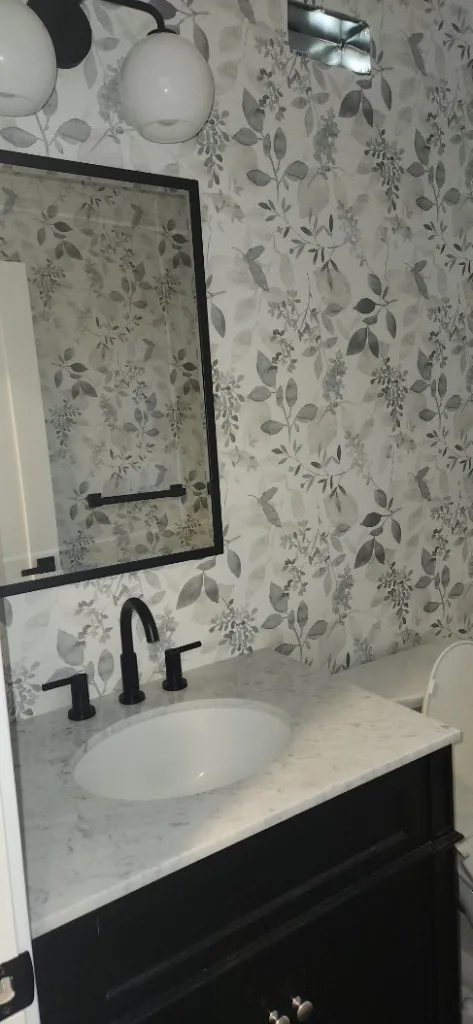
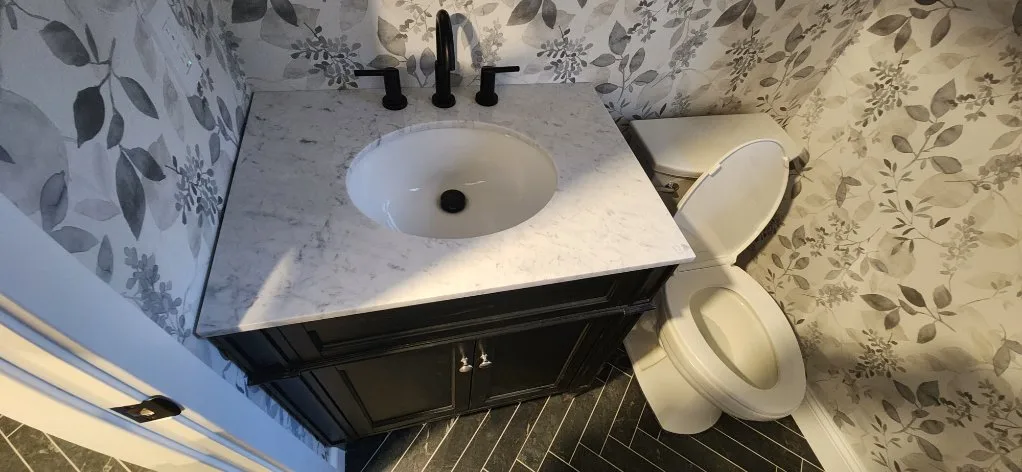
The half bathroom (toilet and sink, no shower) serves the addition without requiring occupants to go back through the main house. This is a practical decision on any addition that includes spaces people will use for extended periods — an office without a nearby bathroom means a walk through the house every time. The half bath plumbing required its own drain and supply rough-in, set during the slab preparation phase before the floor was poured.
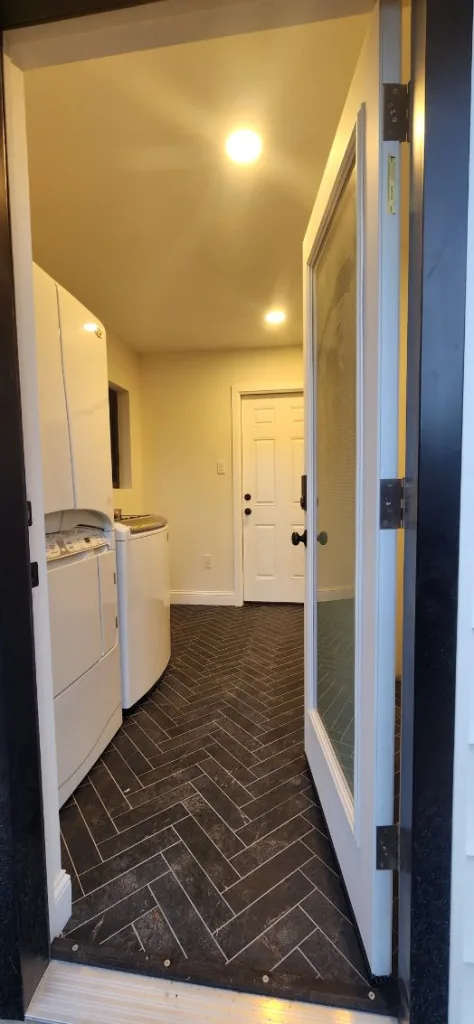
The laundry area similarly needed its own plumbing connections — hot and cold supply for the washer, a drain standpipe, and typically a 240V circuit for a dryer. Locating laundry in the addition rather than in a basement or interior closet of the main house is a common choice when the addition is on the ground floor and accessible from the main living area.
Diamond-Pattern Tile: A Layout Choice With Installation Consequences
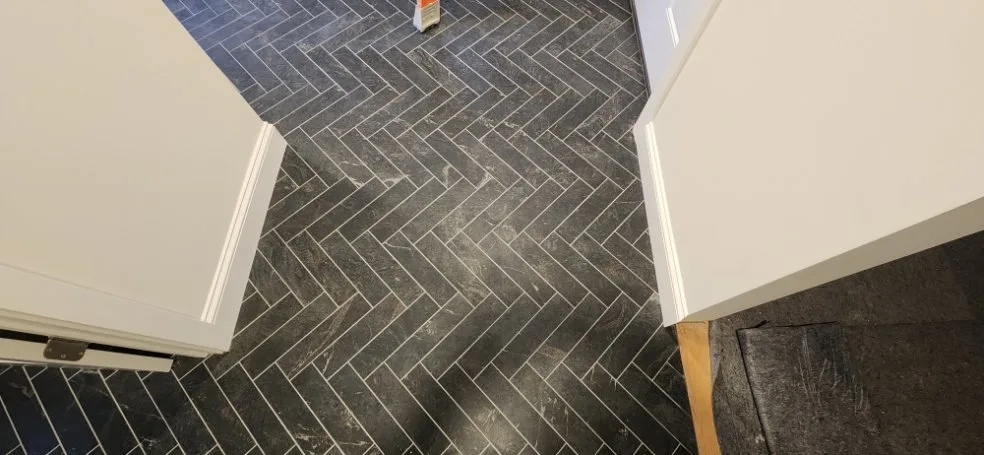
Diamond-pattern tile means the tiles are set at 45 degrees to the walls rather than parallel to them. The visual effect is a more dynamic floor surface — the diagonal lines draw the eye through the space and make rectangular rooms feel less boxy. In a multi-room addition where several spaces connect to each other, a diagonal tile layout can unify the flooring visually across the different zones.
The installation consequence of diamond-pattern tile is that every cut at a wall is a diagonal cut rather than a straight cut perpendicular to the tile edge. This increases installation time and waste — more cuts, more angled pieces, more precision required at the borders. It also means the layout has to be centered in each room before the first tile is set, so that the border cuts on opposite walls are symmetrical. If the layout isn’t set up correctly from the center, the border tiles on one side end up as thin slivers while the other side has full tiles — which looks like an error even if the rest of the installation is clean.
Morrisville Context
Morrisville Borough is a compact Bucks County community where lot sizes are typically modest and vertical or rear additions are the most practical way to add living space without encroaching on setback limits. This project added a meaningful footprint of functional space — office, laundry, half bath, and multiple living zones — to an existing house without requiring a move to a larger property. BMR Belmax Remodeling’s Morrisville home addition services cover the full scope of this type of work, from foundation through finish.
Cost Range and Next Steps
Home additions that include slab removal, new perimeter foundations, and multi-room interior buildout — including plumbing for a half bath and laundry — are among the higher-investment residential projects. Comparable additions in the Morrisville and Bucks County area typically run $80,000–$150,000 depending on square footage, interior program, and finish level. To get a project-specific number for a home addition, visit the free estimate page.