
Deck Renovation – Jamison, PA
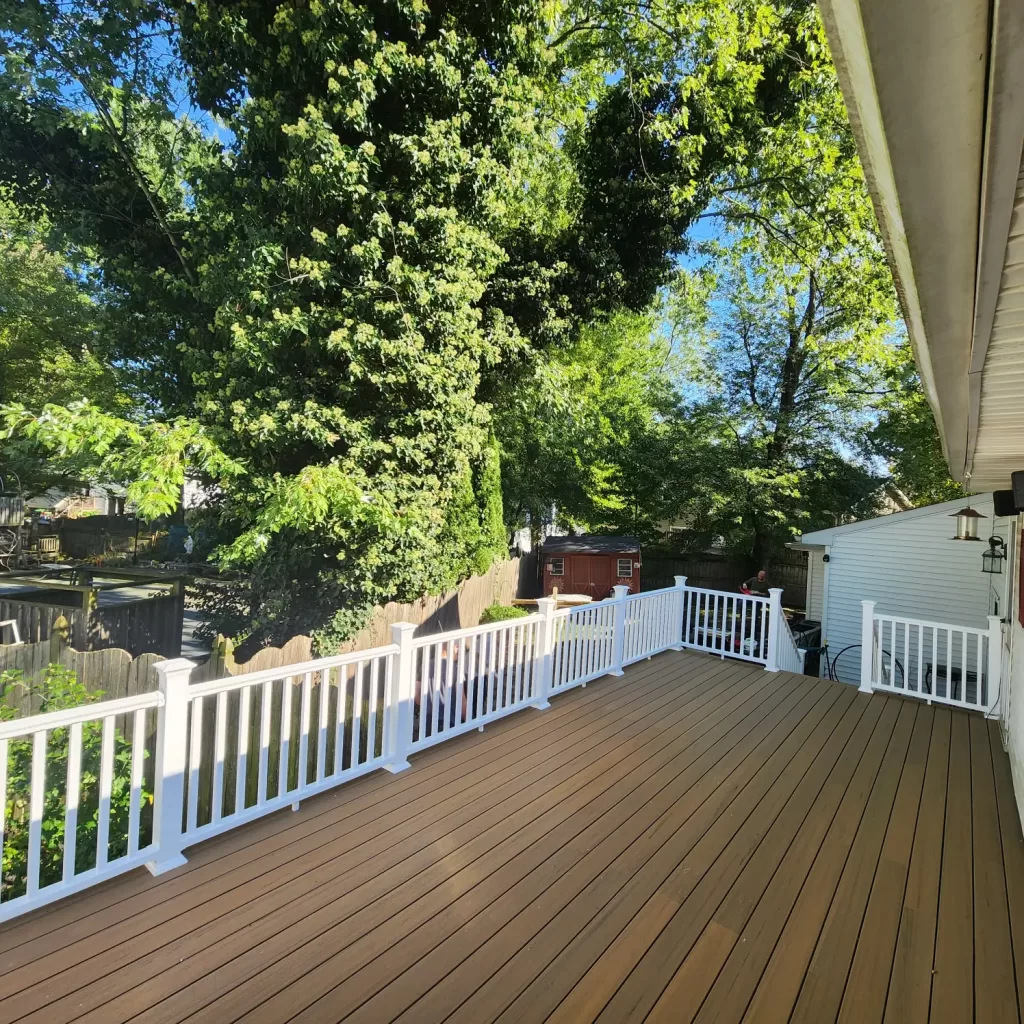
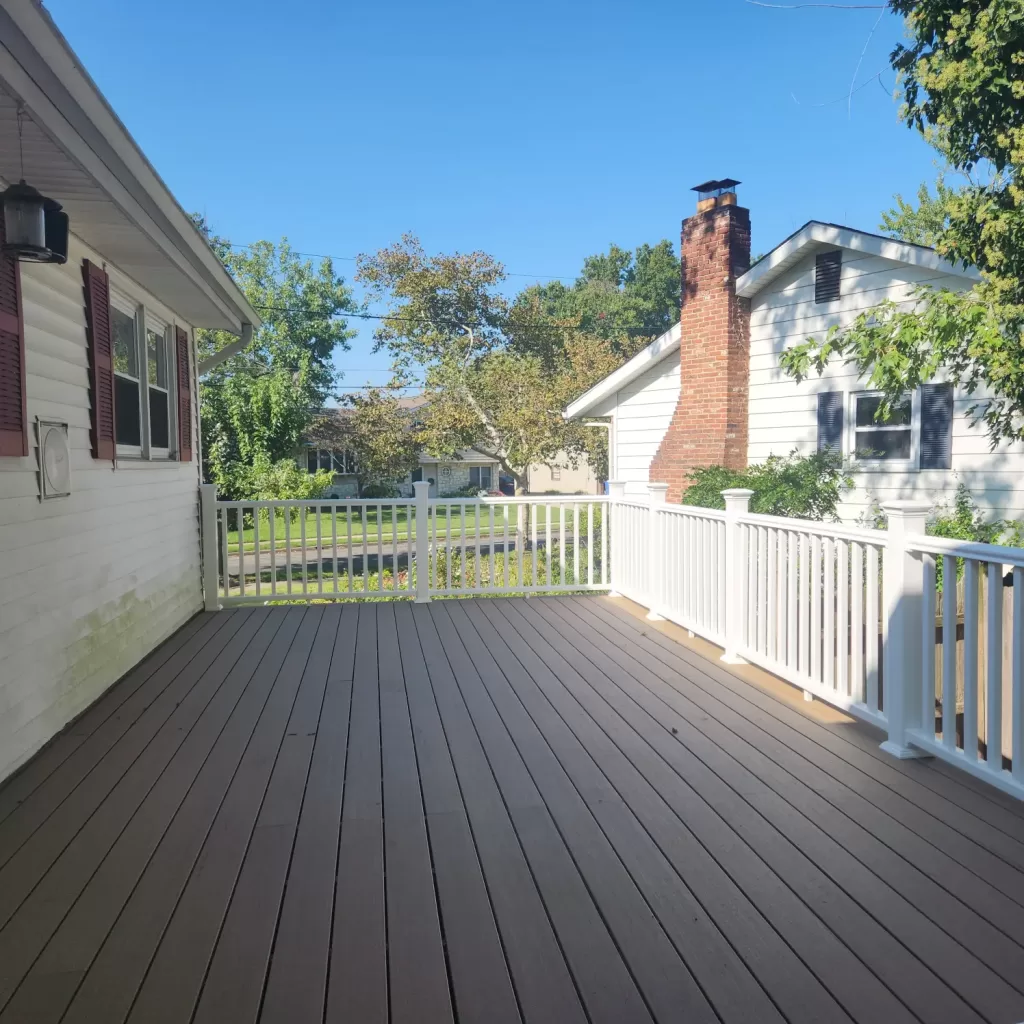
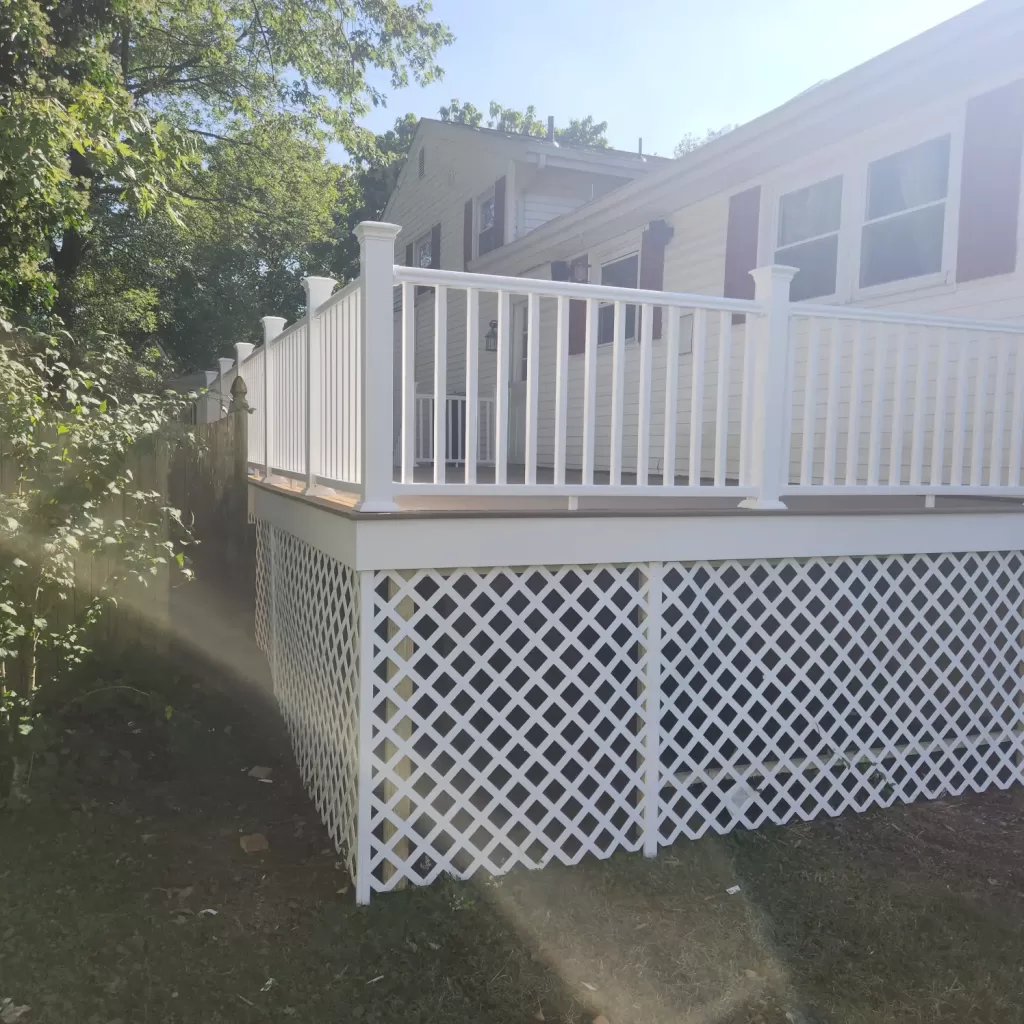
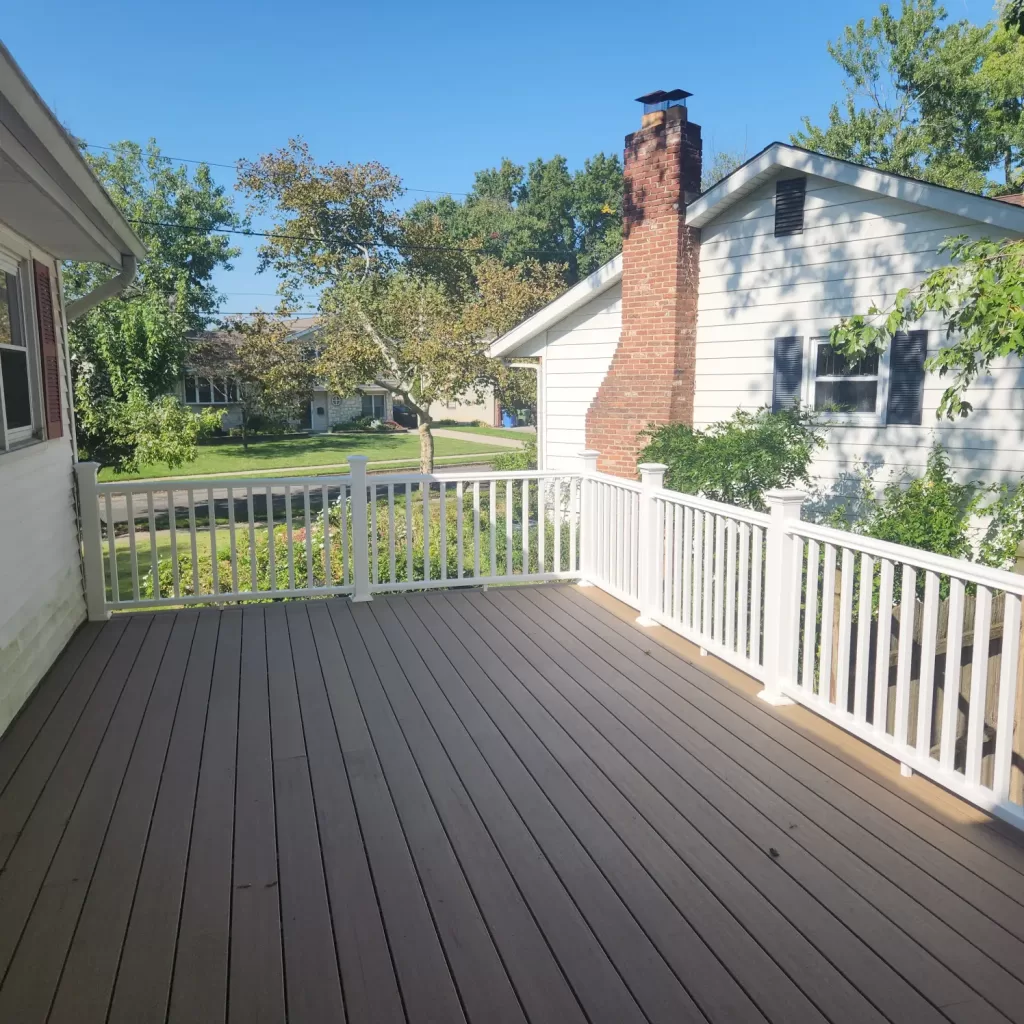
This 300-square-foot deck renovation in Jamison preserved the existing frame — which was inspected and confirmed structurally sound — and replaced everything above it: new decking boards, white railings, a new staircase, and white lattice underneath the deck for a clean, finished perimeter. The result is a fully updated outdoor surface with a consistent finish package, without the cost of tearing out and rebuilding structural framing that did not need to be replaced.
Scope of Work
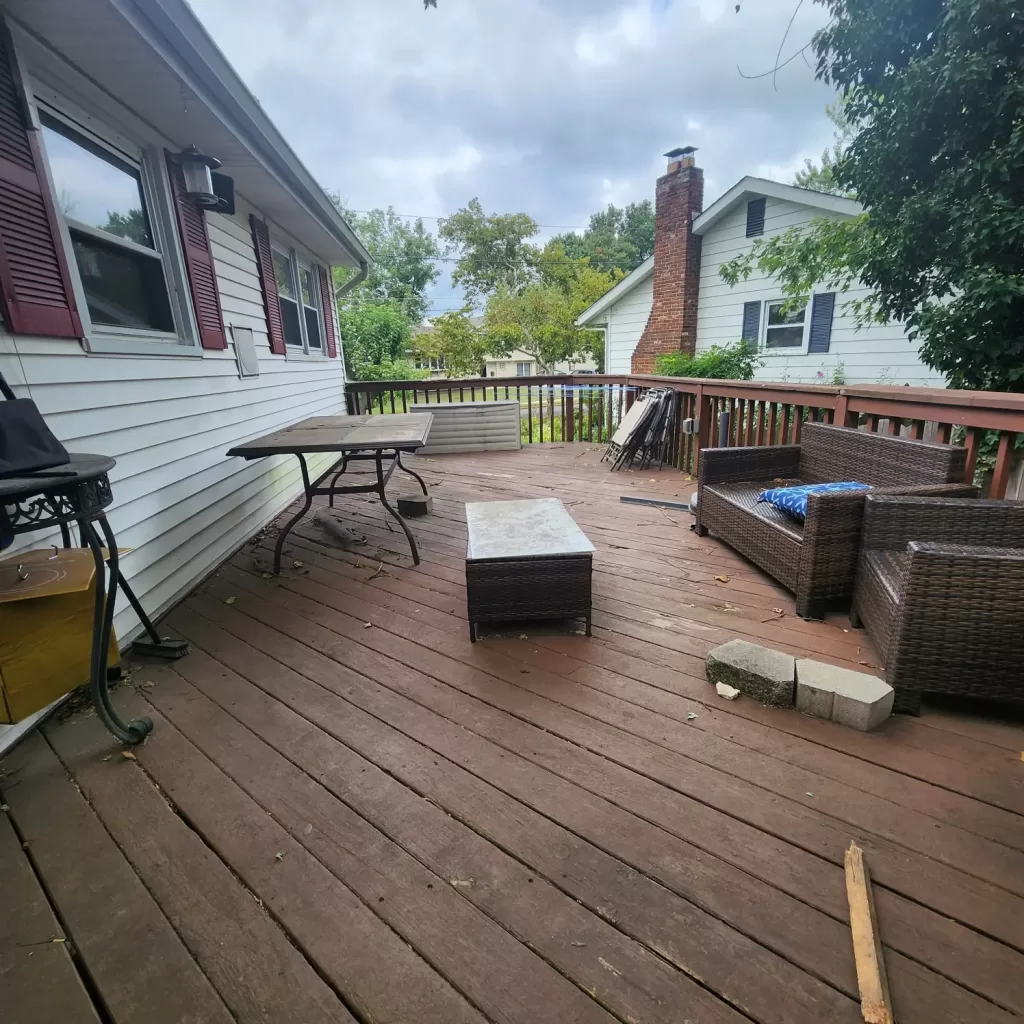
- Existing decking boards removed
- Existing railings removed
- Frame inspected and confirmed sound
- New decking boards installed
- White railings installed
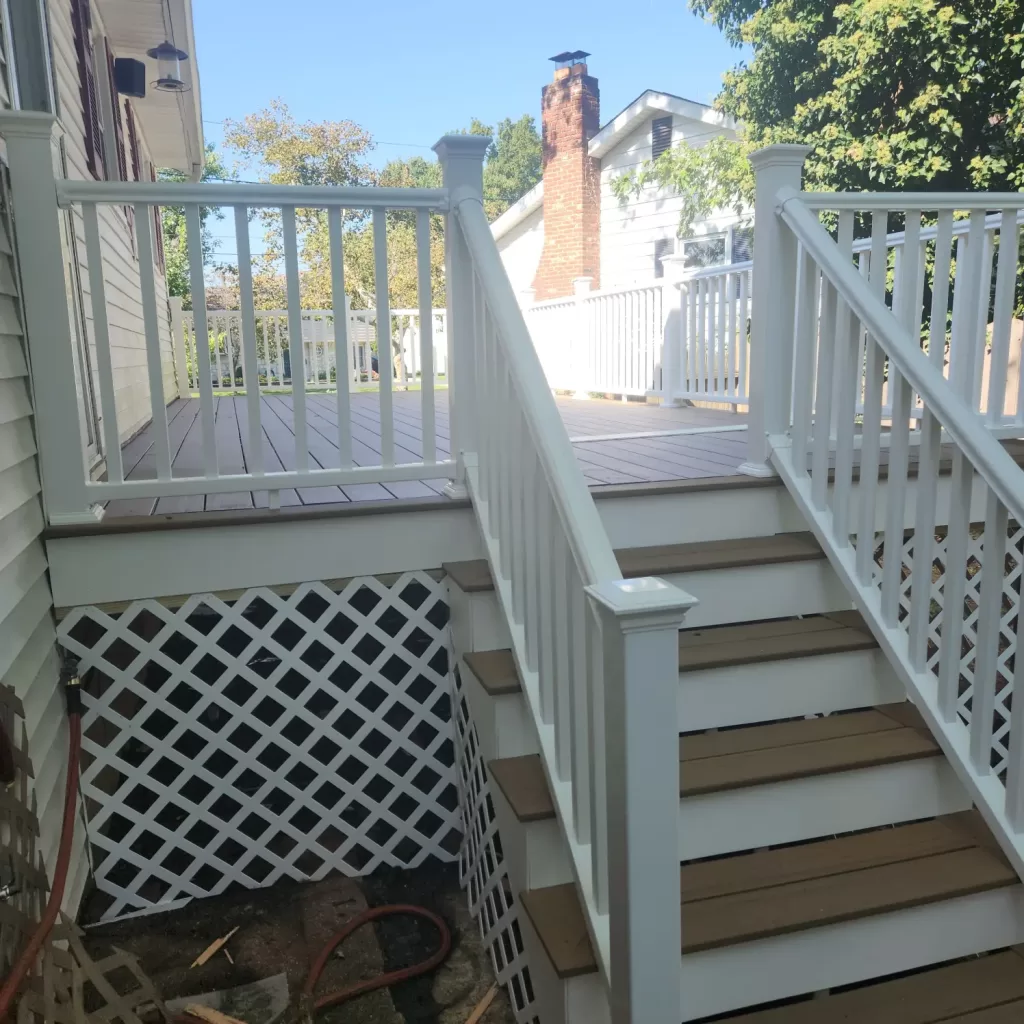
- New staircase constructed
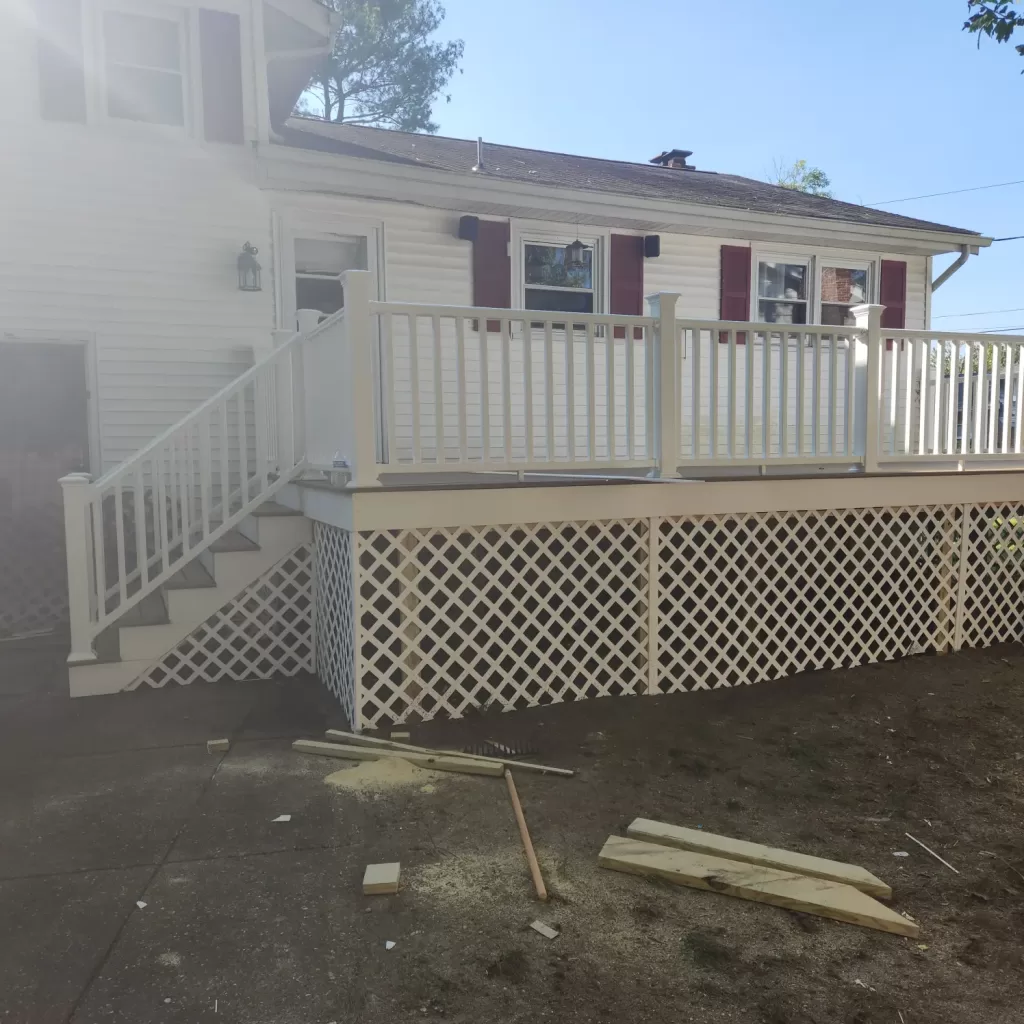
- White lattice installed beneath deck
Keeping the Frame: When It Makes Sense
A deck renovation that preserves the existing frame is a different project from a ground-up rebuild — and it is only the right approach when the frame has been properly evaluated. Once the old decking boards and railings were removed, the joists, beams, and posts were inspected for rot, moisture damage, and structural integrity. The frame was confirmed solid. Starting from a sound frame and replacing all the visible surfaces delivers a completely updated deck at a meaningfully lower cost than rebuilding the structural system.
On a 300-square-foot deck, the difference between a surface renovation on a good frame and a full demo-and-rebuild can be several thousand dollars. The savings come entirely from not replacing framing that does not need to be replaced. The visible result — new boards, new railings, new staircase — is the same either way.
New Decking Boards
The old decking boards were removed and new boards were installed across the full 300-square-foot surface. New decking boards on a sound existing frame is the most efficient path to a completely fresh deck surface — the frame provides the correct joist spacing and structural support, and the new boards go down on a base that is already correctly engineered for the deck’s footprint.
Board selection for a deck renovation balances durability, appearance, and maintenance expectations. Whatever material was selected here — pressure-treated lumber, composite, or other — was fastened to manufacturer specifications for spacing and attachment, which affects drainage, long-term board performance, and the warranty on the material.
White Railings
White railings were installed around the deck perimeter. Railings on a residential deck above a certain height are a code requirement — they are not optional on a deck that needs them, and they are the most visible safety element of any elevated deck structure. White railings against new decking boards create a clean, high-contrast appearance that gives the deck a defined boundary and a finished look from the yard and from inside the house.
Composite or PVC railings in white hold their color and finish better over time than painted wood railings, which require periodic repainting as the finish weathers. Whatever railing material was used here was installed to meet residential code requirements for height and baluster spacing.
New Staircase
A new staircase was constructed connecting the deck to the yard. The staircase is the point where the deck connects to grade — and it is also the point that sees the most concentrated foot traffic and the most weather exposure. Stair treads and stringers take more wear than the main deck surface, and a deck renovation that replaces the decking boards but leaves aged stair components in place produces an uneven result. The new staircase was built to code requirements for residential deck stairs: consistent riser height, appropriate tread depth, and properly attached to the deck frame at the top and to a landing or footing at the base.
White Lattice Beneath the Deck
White lattice was installed beneath the deck around the perimeter. Under-deck lattice serves two practical purposes: it prevents debris, leaves, and animals from accumulating in the space under the deck, and it gives the deck a finished appearance at grade level rather than an open structural view of the underframing. White lattice matched to the white railing finish creates a consistent color throughout the deck’s exterior — the perimeter reads as one continuous finished element from the railings at the top down to the lattice at the base.
Lattice is installed in the panels between the deck posts, typically in a frame that can be removed for access to the area under the deck when needed. It is one of the lower-cost improvements in a deck renovation but one of the more visible ones when viewing the deck from the yard.
Deck Installation in Jamison and Bucks County
Jamison is a community in Warwick Township, Bucks County, with established residential development including many properties where decks built in the 1990s and early 2000s have reached the point where the surface materials need replacement. A surface renovation on a sound frame — new boards, new railings, staircase, and lattice — is the appropriate scope when the structure underneath is still good. Belmax Remodeling works throughout Bucks County. For more on our deck work, see our deck installation service page. Homeowners in the Jamison area can also visit our Bucks County service area page for more on what we do in the region.
Considering a Similar Project?
Deck surface renovations in the 300-square-foot range — new boards, railings, staircase, and lattice on an existing sound frame — typically fall in the $7,500–$11,000 range in Bucks County depending on material selection. This Jamison project came in at $8,500, completed September 2023. To discuss what your deck project would involve, request a free estimate.