

Deck Build – Warminster, PA
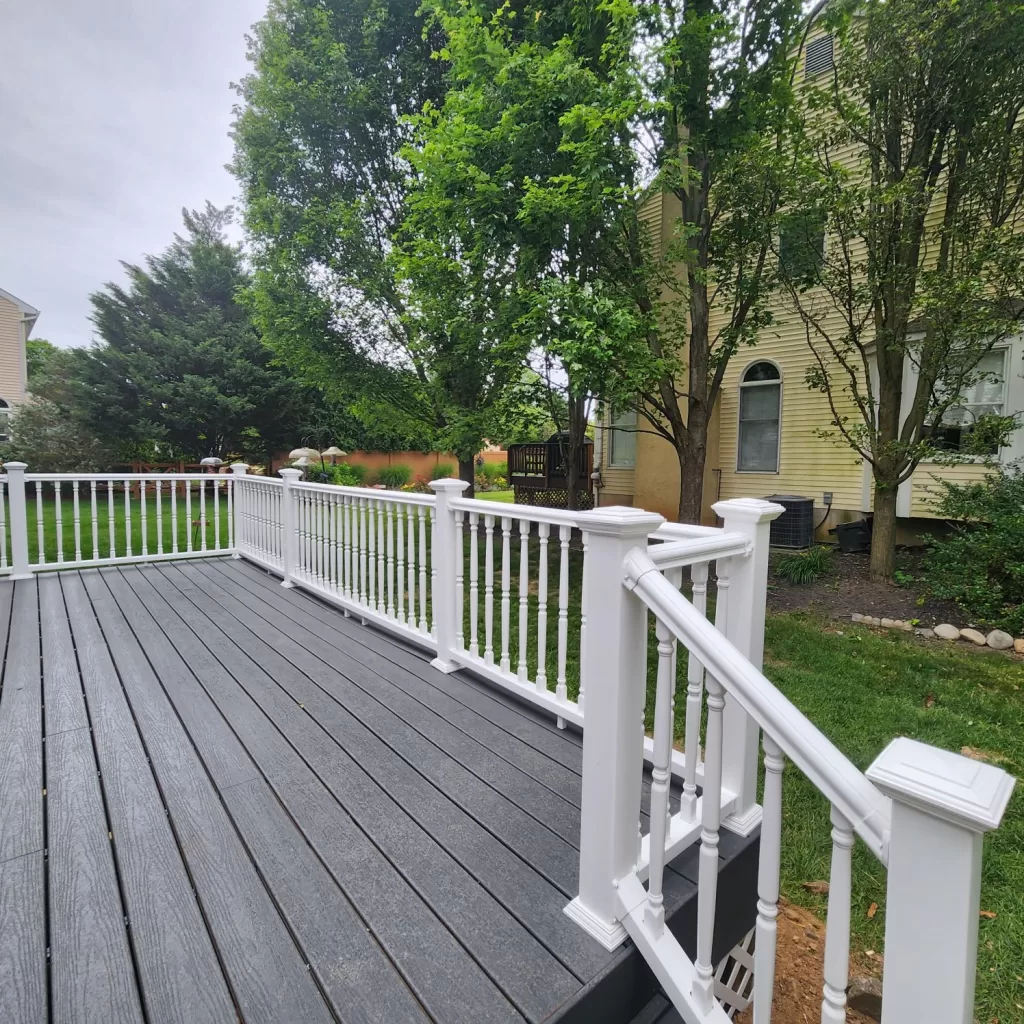
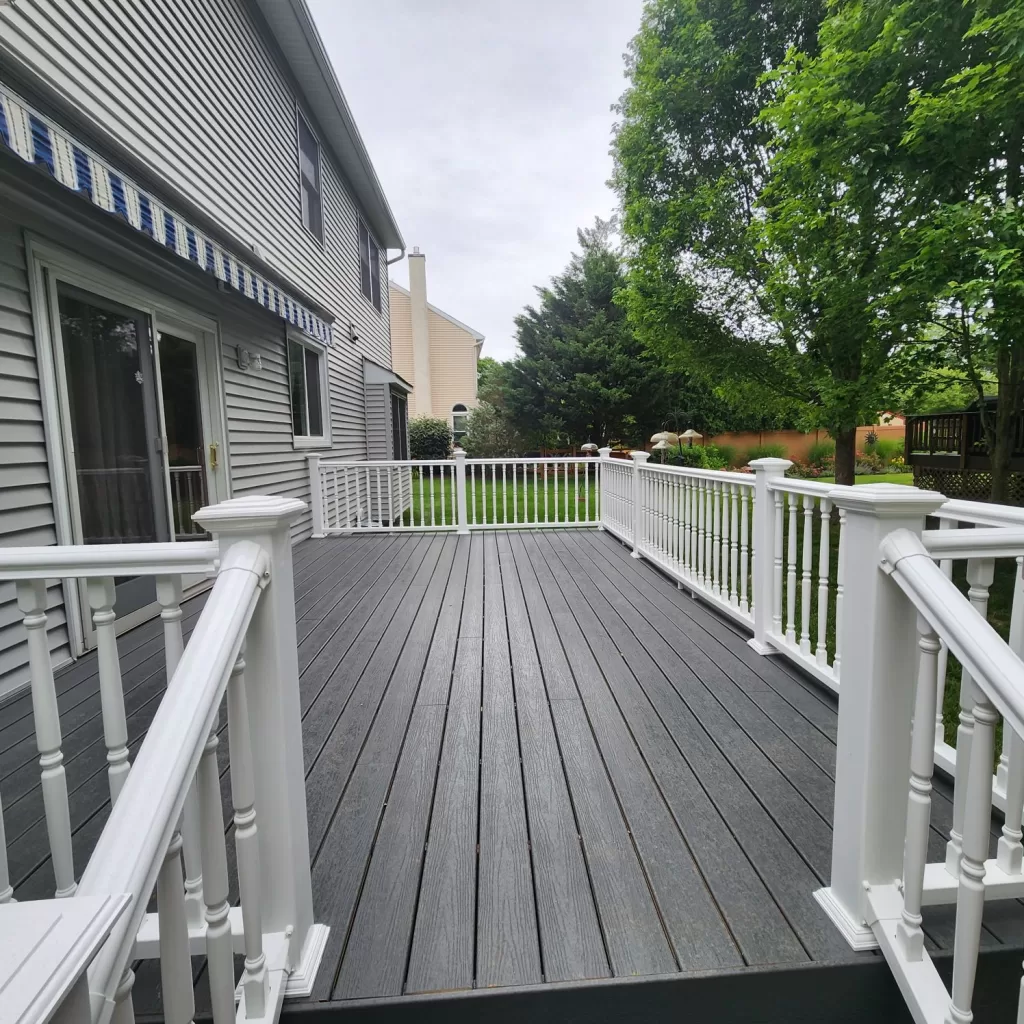
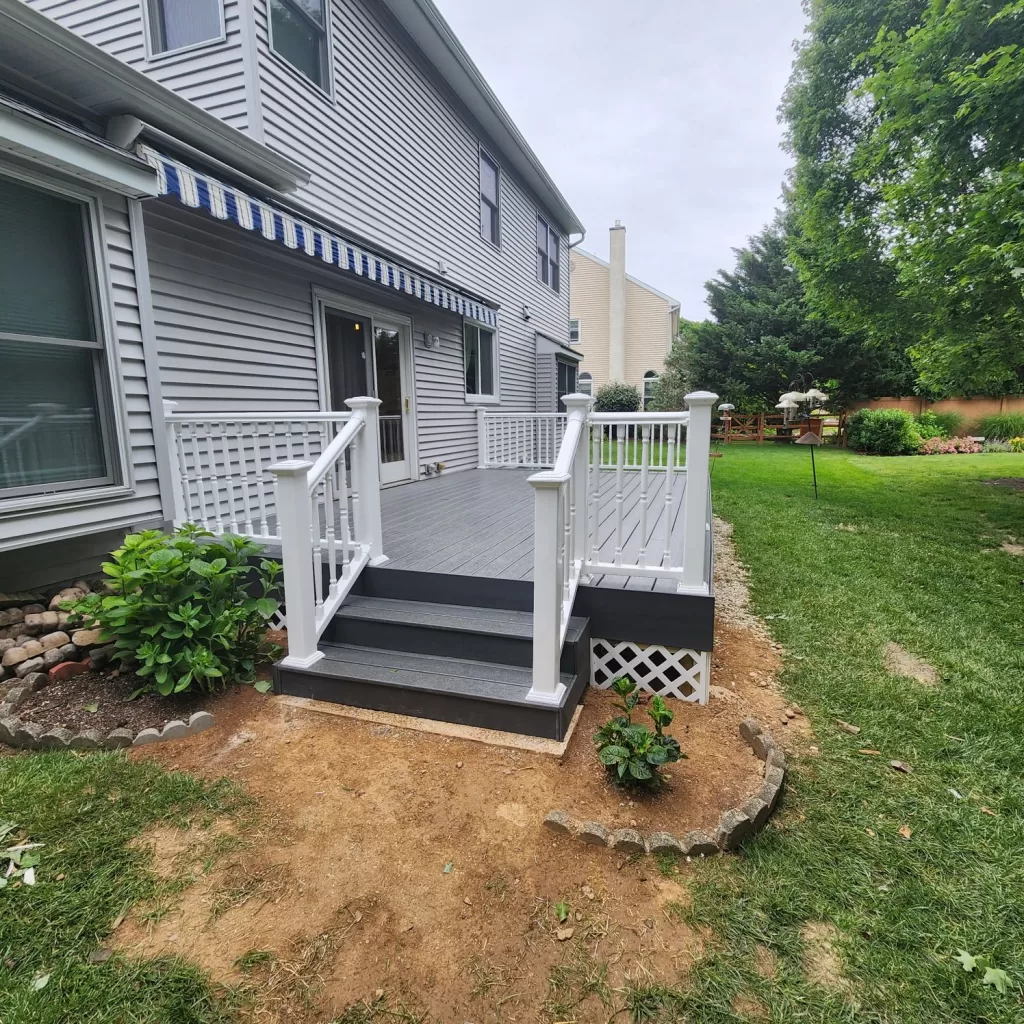
This 150-square-foot deck build in Warminster was a compact but complete ground-up project: footings, pressure-treated frame, decking surface, railings, and stairs — all new, built to code. At $12,800 for 150 square feet, this project reflects what a properly permitted and constructed small deck costs in Bucks County when the work is done correctly from the foundation up.
What a 150-Square-Foot Deck Delivers
At 150 square feet, this deck is a focused outdoor platform — large enough for a table and chairs with clear circulation space around it, or a seating arrangement with room to move without stepping around furniture. It is not an expansive multi-zone deck, but it is a properly sized outdoor living area for a household that wants functional outdoor space without a structure that dominates the backyard.
The cost-per-square-foot on a smaller deck is typically higher than on a larger one. The footings, posts, rim joists, stairs, and railing hardware are required regardless of the deck’s total square footage — the fixed cost of those structural elements does not scale down proportionally with the deck size. A 150-square-foot deck needs the same number of footing excavations and post bases as a 200-square-foot deck with a similar shape; the savings come only from the reduced linear footage of joists and decking boards. Homeowners comparing per-square-foot cost across different sized decks should account for this.
Footings and Foundation
Every ground-up deck starts with footings: concrete piers set below the frost line that carry the load of the deck structure through the freeze-thaw cycles that would otherwise shift or heave a surface-mounted post base over time. In Bucks County, the frost depth requires footings set at a minimum depth to prevent seasonal movement. The footing layout is determined by the deck’s post positions, which are determined by the beam and joist spans — all of which are designed together before any excavation begins.
Getting the footings in the correct position is the first and most consequential step of the project. A footing even a few inches out of position shifts the post above it, which affects the beam, which affects the joist layout, which can create visible irregularities in the decking pattern. Footing placement is marked, verified, and inspected before concrete is poured.
Pressure-Treated Frame
The structural frame was built with pressure-treated lumber — the standard specification for outdoor deck framing exposed to weather and ground proximity. Pressure treatment protects the wood from the moisture and insect activity that would degrade untreated lumber in a ground-adjacent outdoor application over time. The specific treatment rating varies by application: lumber in ground contact requires a higher treatment level than above-ground framing members.
On a 150-square-foot deck, the frame consists of beams spanning between posts, joists spanning between beams, and rim joists closing the perimeter. Joist spacing on a residential deck is typically 12 or 16 inches on center depending on the decking material above — composite decking generally requires closer spacing than dimensional lumber decking because it has less inherent rigidity. All connections were made with hardware rated for the outdoor exposure and load requirements.
Decking Surface
Decking boards were installed across the full 150-square-foot surface. The decking material determines the long-term maintenance requirements of the deck more than any other element. Pressure-treated wood decking requires periodic cleaning and sealing to maintain its appearance and resist weathering. Composite decking does not require sealing or staining but costs more upfront. Whatever material was selected for this Warminster deck was fastened to manufacturer specifications for board spacing — consistent gaps allow drainage and accommodate seasonal expansion without the boards cupping or crowding against each other.
Railings
Railings were installed around the elevated perimeter of the deck. The height at which railings become a code requirement for residential decks in Pennsylvania is specified by the building code — decks above a certain elevation above grade require a railing of minimum height with baluster spacing that prevents a four-inch sphere from passing through. These are not design preferences; they are code requirements that the permit and inspection process verifies.
On a 150-square-foot deck, the railing perimeter is relatively compact. That scale allows for straightforward railing installation without the complexity of managing multiple railing runs, changes in direction, or stair rail transitions that arise on larger structures.
Stairs
Stairs connect the deck surface to grade at the designated access point. Deck stair construction follows the same code requirements as any residential stair: consistent riser height, appropriate tread depth, and a handrail that provides a graspable surface for the full stair run. The stair stringers attach to the deck frame at the top and rest on a concrete landing or footing at the base — the footing prevents the bottom of the stringer from settling or shifting as the ground below it experiences freeze-thaw movement over time.
March Completion: Building in Cold Weather
This deck was completed in March — late winter in Bucks County, when ground temperatures are near their lowest and frost-depth conditions are at their most relevant for footing work. Cold-weather deck construction is entirely achievable when the concrete work is managed correctly: concrete placed in cold conditions requires protection from freezing during the cure period, and footing work cannot proceed if the ground is frozen at the excavation depth. Completing this project in March demonstrates that the scheduling and site conditions were managed to meet those requirements.
Deck Installation in Warminster and Bucks County
Warminster is a Bucks County township with a significant residential stock including many homes where outdoor space is used seasonally. A compact, properly built deck adds functional square footage that is accessible from spring through fall, and a structure that is built to code with permitted footings and inspected framing holds up without the settling or structural issues that shortcuts in the foundation work tend to produce over time. Belmax Remodeling works throughout Warminster and the broader Bucks County area. For more on our deck work, see our deck installation service page. Homeowners in Warminster can also visit our Warminster service area page for more on what we do in the area.
Considering a Similar Project?
Deck builds in the 150-square-foot range with footings, pressure-treated framing, decking, railings, and stairs typically fall in the $11,000–$15,000 range in Bucks County. This Warminster project came in at $12,800, completed March 2023. To discuss what your deck would involve, request a free estimate.