
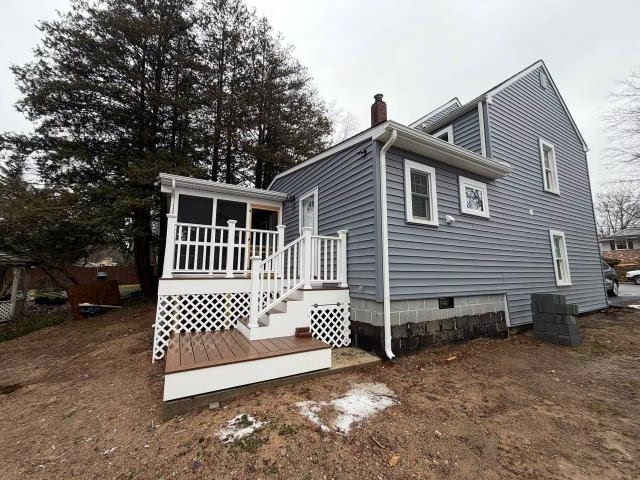
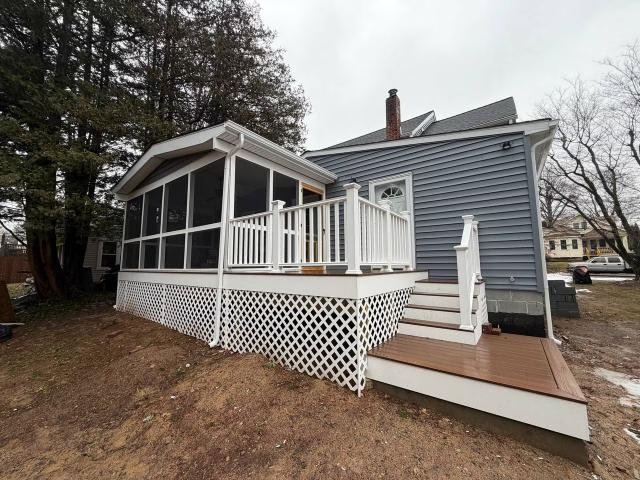
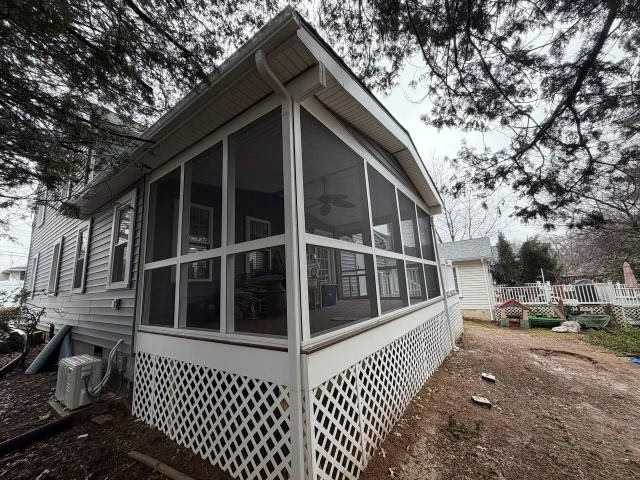
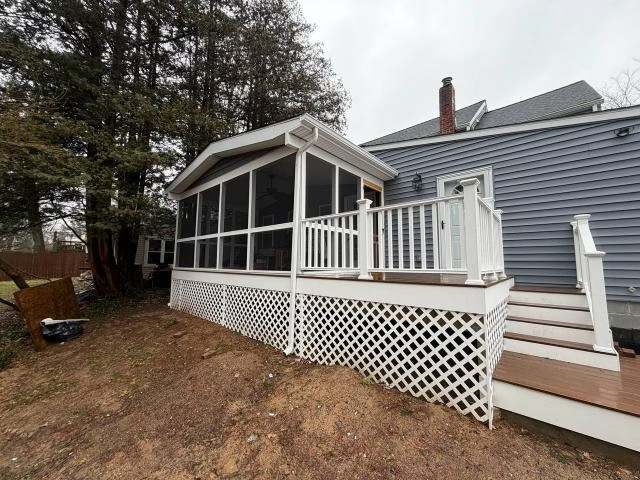
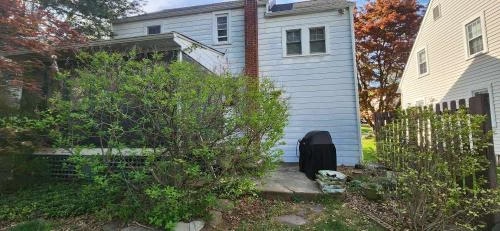
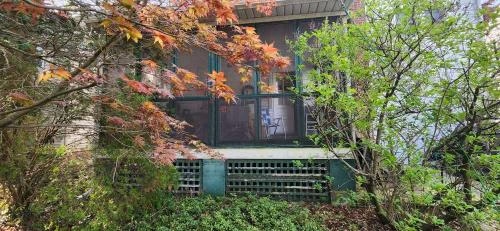
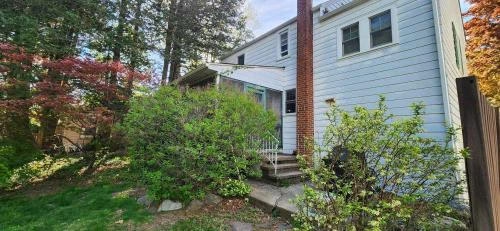
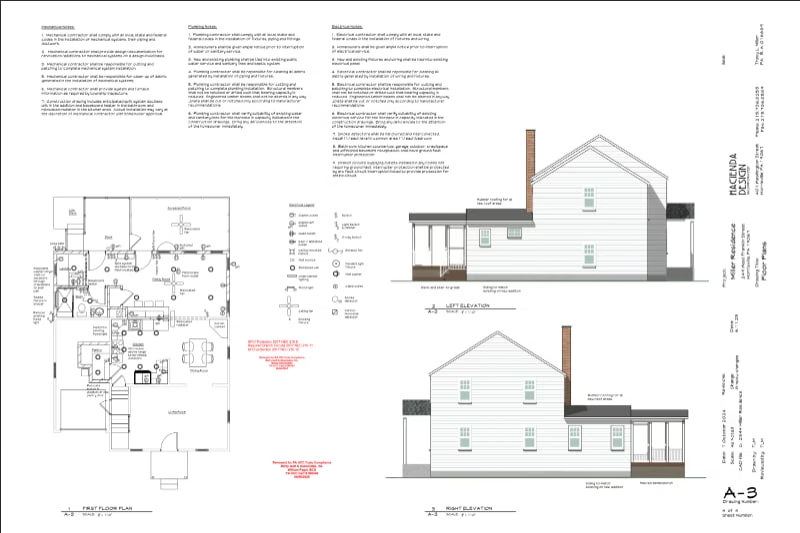
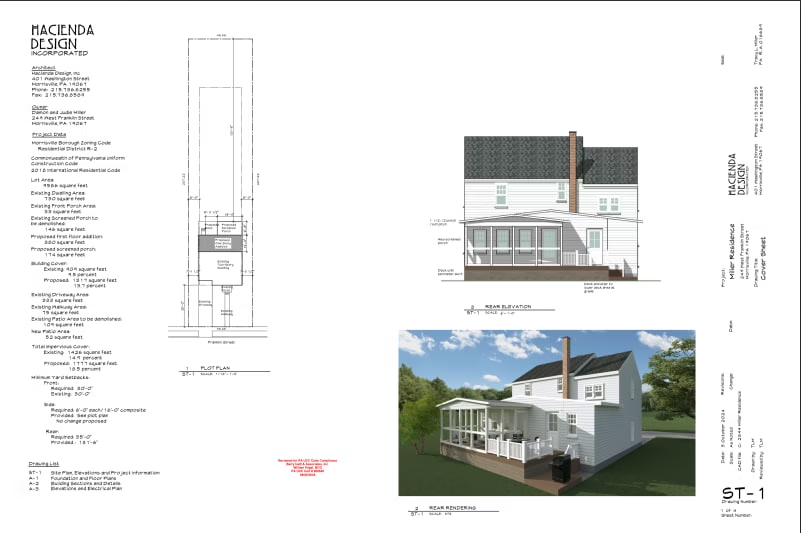
Adding on to a hundred-year-old house is a different kind of project than building an addition on newer construction. The framing conditions are less predictable, the existing systems are older, and the tie-in between new work and original structure requires more coordination at every stage. This project in Morrisville was that kind of addition — 650 square feet of new space built onto a home that had been standing for about a century, with all the complexity that comes with it.
Belmax Remodeling completed this project in February 2026 at a contract value of $145,000. The scope covered everything from site demolition and foundation work through structural framing, roofing, exterior siding, windows and doors, HVAC, and interior rough-in.
What This Project Included
- Site preparation and demolition
- Removal of existing deck and concrete slab
- Clearing of shrubs, trees, and fencing
- Concrete footings and perimeter foundation
- Crawl space slab
- Structural framing
- Parallam PSL beams and posts
- New roof framing and shingles
- Full siding replacement across the entire house
- New windows and relocation of existing windows
- Tempered awning bathroom window
- French door installation
- Exterior door and storm door
- Interior barn door
- Mini-split HVAC system
- Insulation
- Structural plywood subfloor
- Reconnection and reassembly of older radiator heating components
Site Preparation and Clearing
Before any new construction could begin, the existing site had to be cleared. That work included demolishing an existing deck and breaking up a concrete slab, along with removing shrubs, trees, and fencing. On an older property, the area around the house rarely offers a clean, open footprint. Site prep is not just about making room — it is about establishing the right conditions for the foundation and framing work that follows.
Foundation and Structural Support
New concrete footings and a perimeter foundation were poured to support the addition, with a crawl space slab included as part of the foundation package. From there, structural framing went up along with Parallam PSL beams and posts — engineered lumber chosen for its load-carrying strength in open spans where standard dimensional lumber would not be sufficient.
On an addition, the structural work has to do two things at once: carry the loads of the new space and connect back to the original house in a way that is structurally sound. That connection is where the work gets more involved than a standard new-build.
The Old-House Challenge: Tying New Construction Into a 100-Year-Old Structure
The defining challenge of this project was the age of the existing home. Framing in a century-old house is rarely plumb, level, or dimensionally consistent with modern lumber. Tie-in points between the new addition and the original structure require field adjustments that do not show up in drawings — the kind of problem-solving that happens on the job as conditions are revealed.
The transition between old and new had to be handled carefully to create a clean structural connection and a finish result that read as one cohesive home rather than an older house with something attached. That meant extra coordination at every point where the new framing met the existing building, and it is one of the main reasons this project required the scope and budget it did.
The radiator heating system added another layer of complexity. The existing home used older radiator heat, and as part of the project, those components had to be reconnected and reassembled where the new construction intersected with the existing system. Working around a legacy mechanical system in an older home is a practical constraint that affects sequencing and adds time that a straight new-build would not require.
Roofing and Exterior Integration
New roof framing and shingles were installed to cover the addition and tie into the existing roofline. The siding replacement is worth noting separately: rather than replacing siding only on the new addition, the project included full siding replacement across the entire house.
That decision matters more than it might seem. When an addition goes on an older home and only the new portion gets new siding, the contrast between the original and new exterior is immediately visible. Extending the siding replacement to the full house removed that contrast and produced a finished exterior that looks like a single, unified structure — not a renovation project.
Windows, Doors, and Interior Access
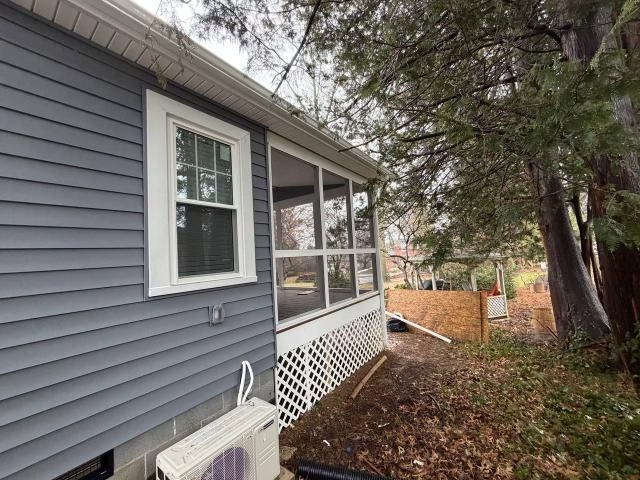
New windows were installed throughout the addition, and some existing windows in the original home were relocated to better suit the updated layout. A tempered awning window was specified for the bathroom area. Door work included a French door, an exterior door with storm door, and an interior barn door — each establishing transitions between spaces in a way that matched the scale and character of the completed addition.
Mechanical Systems and Insulation
A mini-split HVAC system was installed to condition the new addition. Mini-splits work well in additions because they do not require ductwork — they can serve the new space independently without overloading the existing home’s HVAC system or requiring a full duct extension. Insulation was installed throughout the addition as part of the interior build-out, along with a structural plywood subfloor.
What the Homeowner Gained
The completed addition added 650 square feet of new living space to a home that previously could not accommodate it. But the value of this project is not just in the square footage. The full-house siding replacement, the window updates, and the structural integration work all contributed to a result where the finished home looks and functions as a complete, coherent property — not a house with an obvious add-on.
The client was satisfied with the outcome. For a project of this complexity — old-house tie-in, full foundation work, mechanical coordination, and exterior unification — that result takes the right sequencing and the right decisions throughout the build.
Home Additions in Morrisville and Bucks County
Morrisville is a Bucks County borough with a housing stock that includes many older homes where additional space was never built in. Adding onto a home of that age is a significant undertaking that requires more than just expanding the footprint — it requires understanding how the new construction will connect to the existing structure and how the systems and exterior will be managed across both old and new.
Belmax Remodeling has completed home additions throughout the region. For more on how we approach addition projects, see our home addition service page. Homeowners in Morrisville can also visit our Morrisville home addition page for more details on what these projects typically involve locally.
Thinking About a Home Addition?
Addition projects on older homes carry a different cost profile than additions on newer construction, largely because of the tie-in complexity, older system coordination, and exterior integration work involved. This Morrisville project — 650 square feet, full structural scope, siding across the whole house, and old-house mechanical coordination — came in at $145,000 completed February 2026. If you are planning a home addition in the Morrisville area or elsewhere in Bucks County, request a free estimate to discuss what your specific property would require.