
Home Addition – Southampton, PA
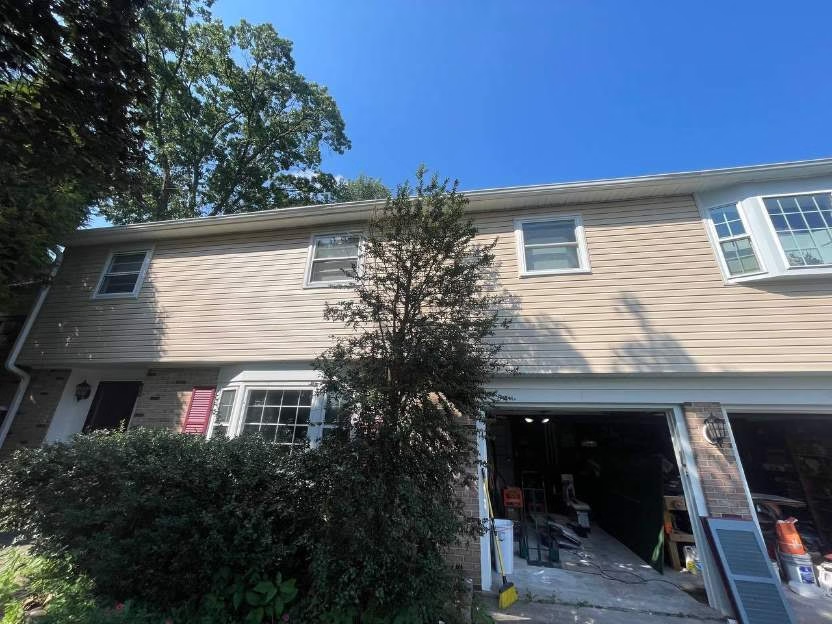
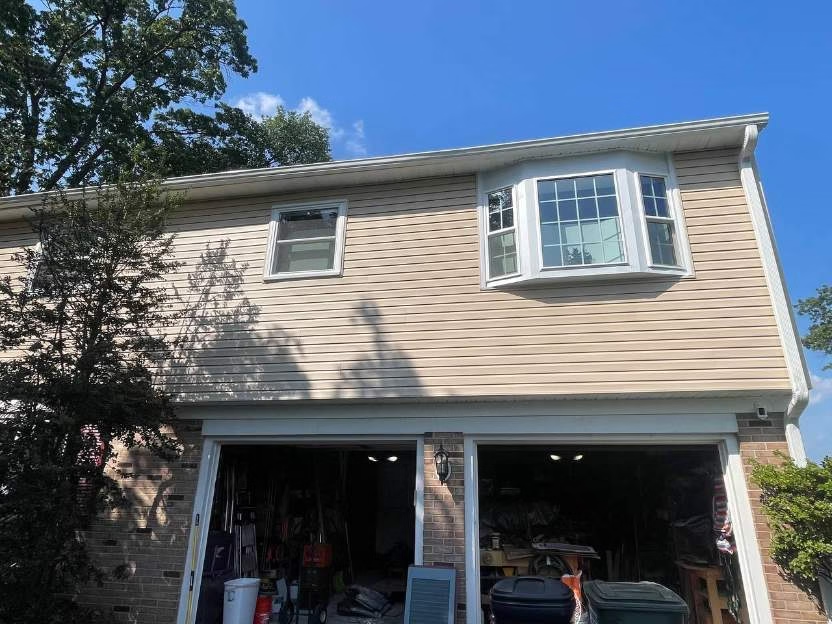
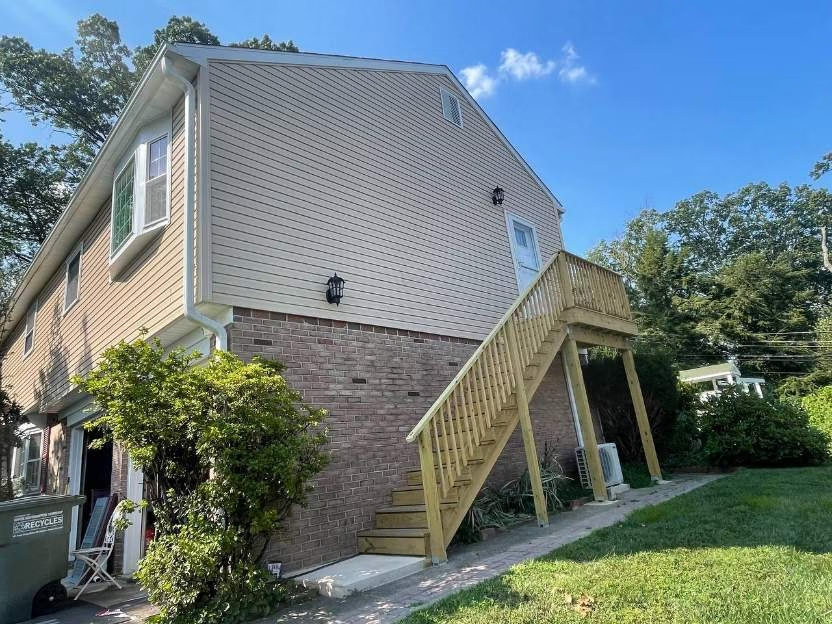
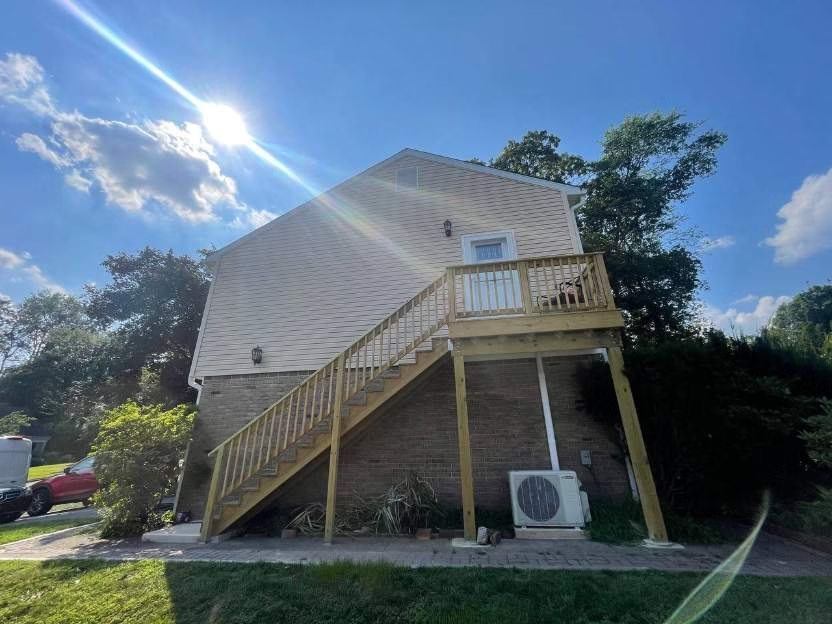
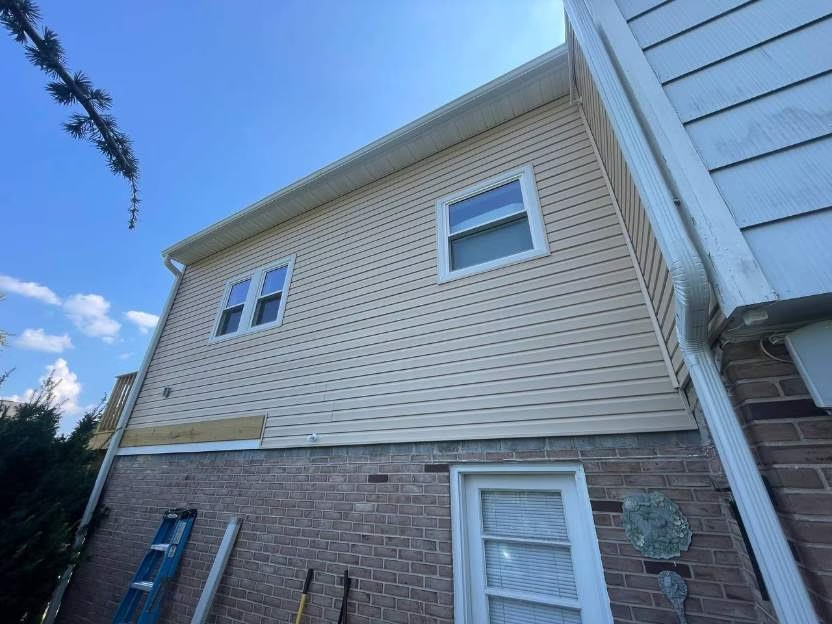
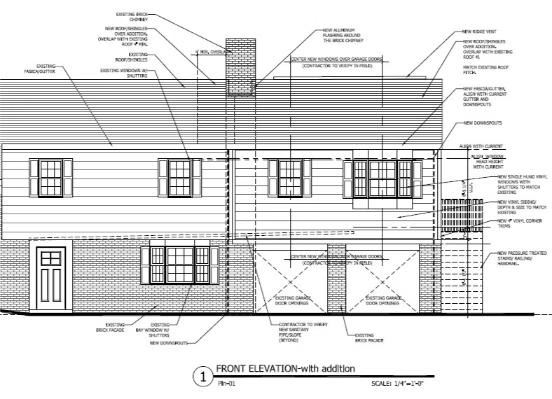
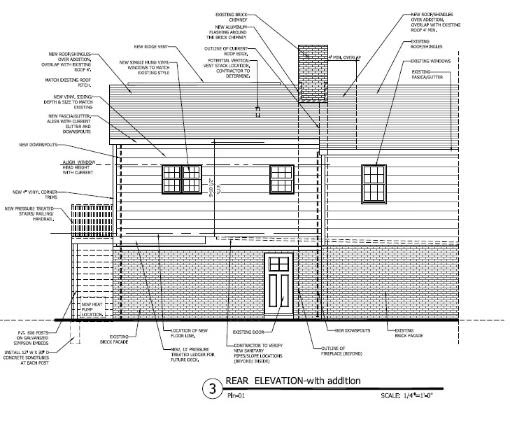
This Southampton addition started above the garage. The existing roof over the garage came off first — the only way to get to a clean structural starting point for the new framing. From there, the project built out 900 square feet of new living space with a full frame, insulated walls, floor, and ceiling, four new windows, vinyl siding, a dedicated HVAC system, plumbing rough-in tied into the existing sanitary stack, and an exterior deck with stairs. Completed in July 2025 at $125,000.
What This Project Included
- Demolition of existing garage roof
- New floor, wall, ceiling, and roof framing
- Interior wall framing to define rooms within addition
- New shingle roof installation
- Vinyl siding on exterior of addition
- Insulation in floor, ceiling, and exterior walls
- New HVAC system dedicated to the addition
- Four new windows with new framing
- New sanitary pipe connected to existing sanitary stack
- Exterior deck with ledger board connection to house
- Deck stairs to yard
Starting with the Roof Demo
The garage had an existing roof that had to come off before any new construction could begin. This is not an unusual starting point for an above-garage addition — the existing roof structure is not designed to support the loads of a floor above it, and the framing conditions underneath it are set up for a roof, not for walls and a ceiling. Removing it cleanly is the prerequisite for getting to a condition where new floor framing can be properly designed and installed.
Roof demolition on a live property requires managing the opening carefully — the garage below has to remain protected during the demo and framing phases, which affects how the work is sequenced and how long the structure can be exposed before the new roof is in place.
Framing: Floor, Walls, Ceiling, and Roof
Once the existing roof was off, the structural framing for the addition was built in sequence: floor framing first to establish the new level, then wall framing to define the perimeter and interior room layout, then ceiling framing and roof framing above. Each phase depends on the one below it being correctly positioned and fastened before the next layer goes up.
Interior walls were framed within the addition to separate the space into rooms. At 900 square feet, an undivided floor plate would function more like a loft than a usable living area — the interior walls give the addition the room organization it needs to work as functional living space.
Roofing, Siding, and Exterior Enclosure
New shingles were installed on the new roof framing. Vinyl siding was applied to the exterior walls of the addition. Vinyl siding was the practical material choice here — it is weather-resistant, low maintenance, and can be installed in a profile that works with the existing house exterior without requiring custom fabrication. On an addition that sits above an existing structure, the exterior has to be properly enclosed and sealed before the interior work begins.
Insulation: Floor, Walls, and Ceiling
Insulation was installed in the floor, exterior walls, and ceiling of the addition. On an above-garage addition, floor insulation matters in a way it does not in a standard ground-floor room — the garage below is unheated, which means the floor of the addition is exposed to a significant temperature differential in winter without proper insulation. Getting the floor insulation right is what prevents the addition from being significantly colder at floor level than the rest of the house.
Dedicated HVAC System
A separate HVAC system was installed specifically for the addition rather than extending the existing home’s system. On a 900-square-foot addition, extending the existing ductwork is often impractical — the existing system was sized for the original house, and adding 900 square feet without sizing up the equipment means the whole house will be conditioned less effectively. A dedicated system for the addition avoids that problem and gives the homeowner independent control over the new space.
Windows and Natural Light
Four windows were framed and installed in the addition walls. On 900 square feet of new living space, window placement determines how light moves through the rooms and affects how each room feels during the day. The framing for each window was built during the wall framing phase, and the windows were installed once the exterior walls were closed and sheathed. Proper flashing and sealing around each window opening is part of the installation — it is the detail that prevents water infiltration at the wall-window joint over time.
Plumbing Rough-In
A new sanitary pipe was installed and connected to the existing sanitary stack in the house. This rough-in creates the drain infrastructure for any plumbing fixtures that will be installed in the addition — without it, adding a bathroom, laundry, or sink connection later would require opening walls and floors to run drain lines after the fact. The connection to the existing sanitary stack was made at the appropriate point in the plumbing system to allow the new pipe to drain correctly by gravity.
Exterior Deck with Ledger Board
An exterior deck was built as part of this project, attached to the addition with a ledger board fastened to the exterior rear wall. The ledger board is the critical connection point — it carries the load of the outer edge of the deck and transfers it into the house framing. Getting the ledger installation right involves proper flashing to prevent water from getting behind the ledger board and causing rot in the wall sheathing, which is one of the most common failure points on ledger-attached decks. Stairs were built from the deck down to the yard.
What This Addition Delivered
The completed addition gave the homeowner 900 square feet of properly framed, insulated, roofed, sided, and mechanically served living space above what was previously just a garage. The rooms are defined by interior walls, the space has its own HVAC, the plumbing infrastructure is in place for future fixtures, and the deck provides outdoor access directly from the new level. At $125,000, this is a substantial project that involved demolition, full structural framing, all four exterior enclosure systems, mechanical, and a deck — and the result reflects that scope.
Home Additions in Southampton and Bucks County
Southampton is a Bucks County township with significant residential development, including many properties with attached garages that have never been built above. Above-garage additions are one of the more common ways to add meaningful square footage to a single-family home without expanding the building’s footprint — the footprint already exists, and the question is whether the structure can support a floor above it and how the roof, exterior, and systems will be managed.
Belmax Remodeling works throughout Southampton and Bucks County on addition projects of varying scope. For more on our approach to home additions, see our home addition service page. Homeowners in Southampton can also visit our Southampton home addition page for more details.
Considering a Home Addition?
Above-garage additions are more involved than ground-level additions because they require roof demolition, floor framing above an unheated space, and careful attention to the transition between the existing house and the new level. This Southampton project — 900 square feet, full framing, vinyl siding, dedicated HVAC, four windows, plumbing rough-in, and an exterior deck — came in at $125,000 in July 2025. To discuss what your property would involve, request a free estimate.