
Kitchen Remodel – Philadelphia, PA
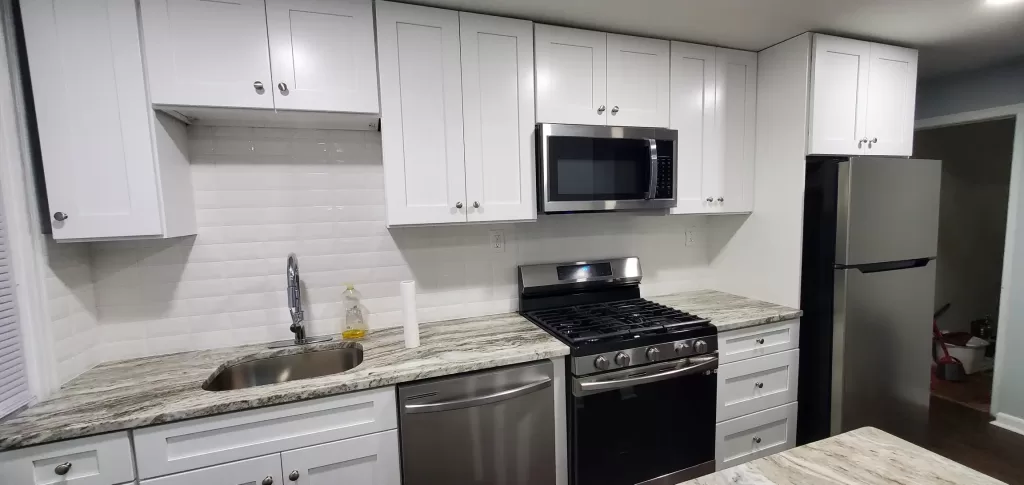
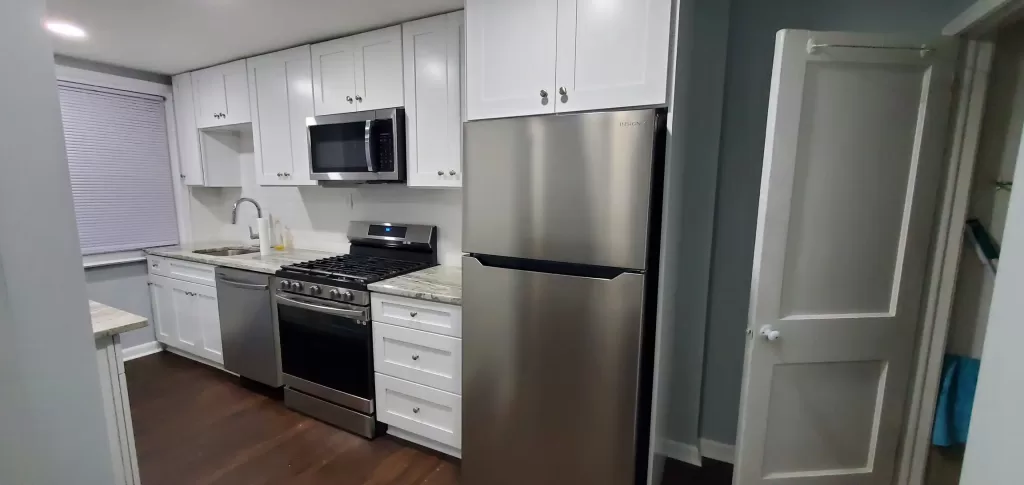
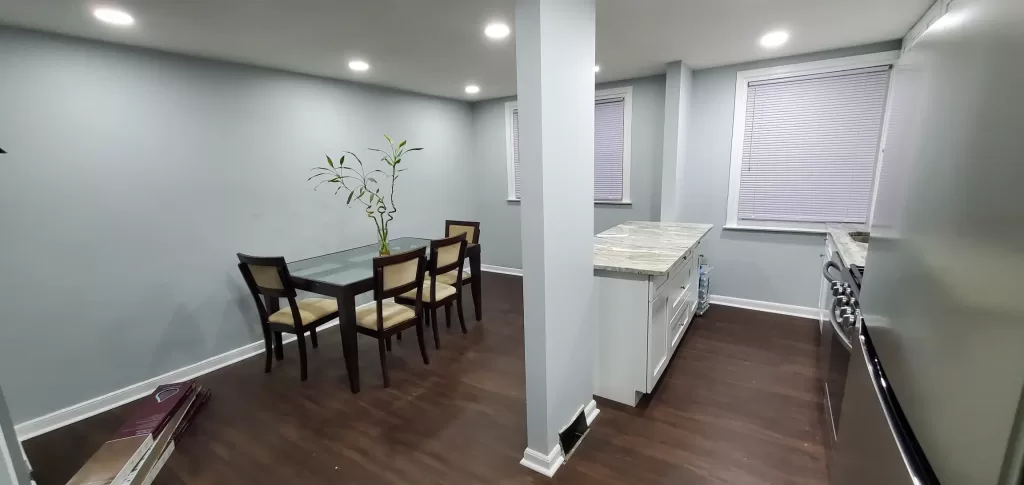
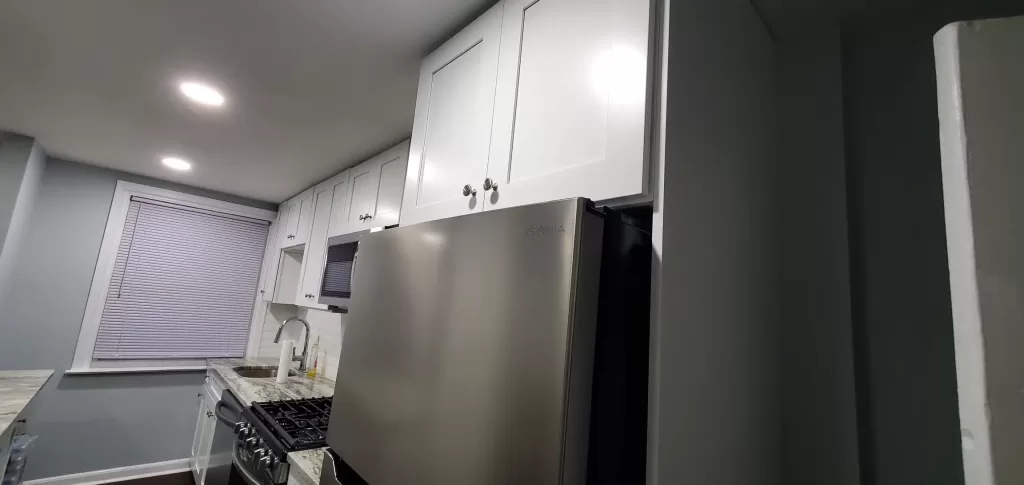
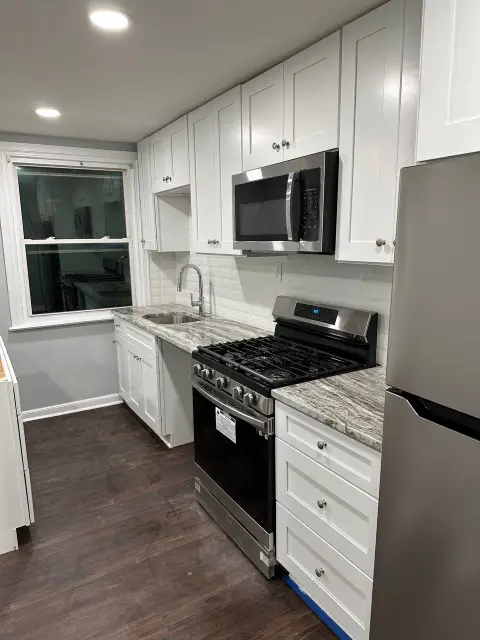
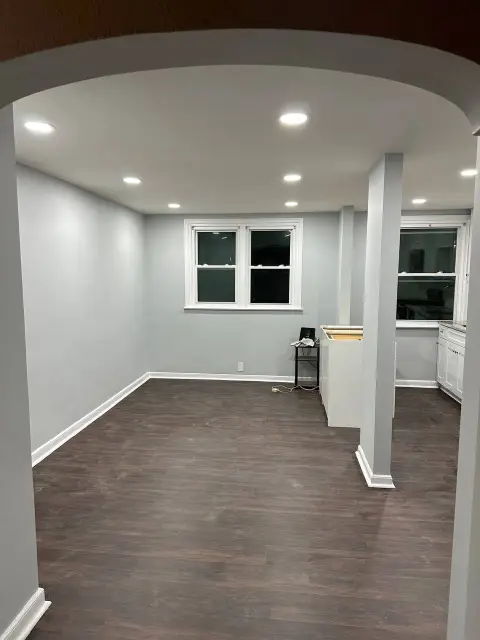
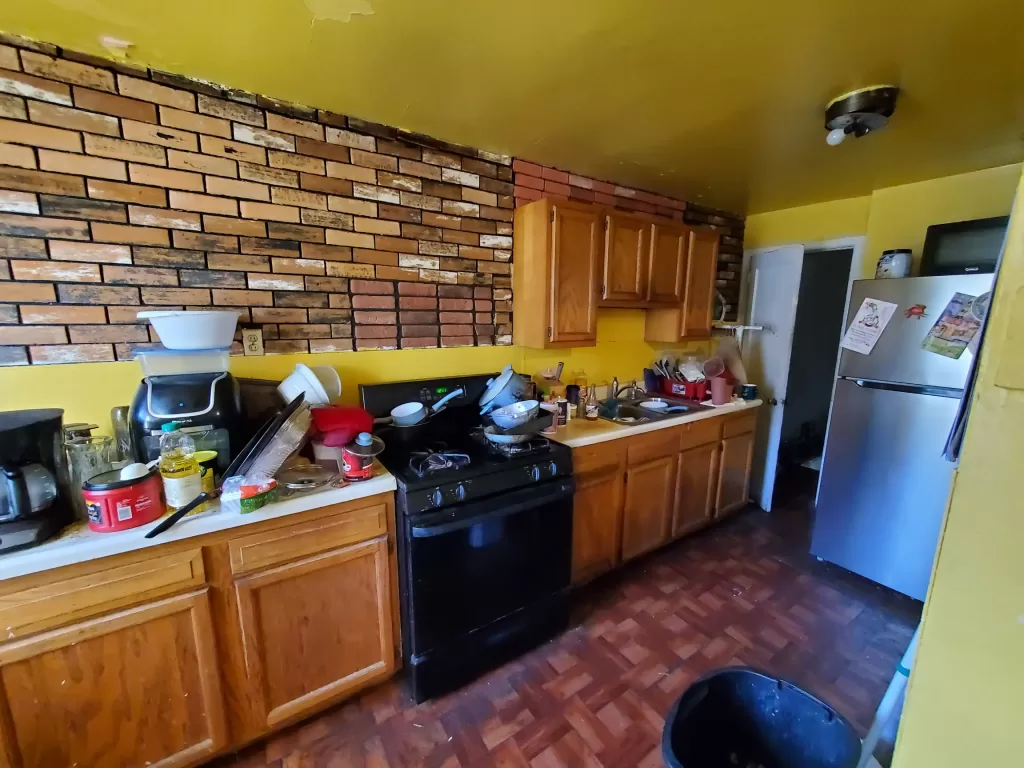
This 265-square-foot kitchen in Philadelphia was a complete gut remodel with an open-concept conversion. The kitchen was fully stripped, the layout was reconfigured to open the space, and every system was updated: new wiring for modern appliances and recessed lighting, updated plumbing for the new layout, new cabinets, a granite countertop, new flooring, a tile backsplash, and new appliances. At $16,900 for 265 square feet, this project covers the full scope of what a gut kitchen remodel with structural and systems work involves in Philadelphia.
Scope of Work
- Full gut demolition
- Open-concept layout created
- New wiring for appliances and recessed lighting
- Plumbing updated for new layout
- New kitchen cabinets installed
- Granite countertop installed
- New flooring installed
- Tile backsplash installed
- New appliances installed
Full Gut: Starting from Zero
A full gut kitchen remodel means stripping the room back to the framing and subfloor before any new work begins. The cabinets come out, the flooring comes up, the drywall comes off, and the plumbing and electrical are exposed. It is more disruptive and more expensive than a surface update, and it is the right scope when the goal is a genuinely different kitchen — different layout, updated systems, new everything — rather than a refreshed version of what was already there.
In a Philadelphia rowhouse or older single-family home, a gut remodel also reveals what is behind the walls: wiring that was not designed for current loads, plumbing connections that have aged beyond reliable service, and framing conditions that affect where the new layout can go. Addressing those conditions at the gut phase — when everything is accessible — is what separates a kitchen that performs well for the next twenty years from one that develops problems within a few years of completion.
Open-Concept Conversion
The kitchen was reconfigured to an open-concept layout. In a Philadelphia home where the kitchen is a defined room separated from the adjacent dining or living space by a wall, converting to an open concept requires a structural assessment of the wall: is it load-bearing? A load-bearing wall carries the weight of the floor or roof structure above it and cannot be removed without replacing its structural function with a beam or header spanning the opening.
Once the structural question is resolved and the opening is properly supported, the open-concept layout changes how the kitchen functions in the home. The cooking area connects visually and physically to the adjacent living space, sightlines from the kitchen extend into the room beyond it, and the combined space reads as larger than either room did individually. In a 265-square-foot kitchen, an open-concept conversion produces a noticeably different spatial experience from a walled kitchen of the same footprint.
Electrical: New Wiring for Modern Loads
New wiring was installed throughout the kitchen. In a Philadelphia home where the existing kitchen wiring was not designed for a modern appliance load, the gut remodel is the right time to bring the electrical to current standards. Each major appliance requires a dedicated circuit: the refrigerator, the dishwasher, the microwave, and the range or cooktop each draw enough power that sharing a circuit creates overload risk. Recessed lighting requires its own circuit separate from the appliance circuits. Running all of this new wiring during the gut phase — before the drywall is back up — means the electrician has full access to the framing bays and the connections can be made correctly without the constraints of a finished kitchen.
Recessed lights were installed throughout the reconfigured kitchen. In a 265-square-foot open-concept kitchen, the lighting layout has to cover the full cooking area, the counter zones, and the transition area into the adjacent space. Recessed fixtures provide even, ceiling-flush illumination that keeps the visual character of the new open layout clean.
Plumbing Updates for the New Layout
The plumbing was updated to support the new kitchen layout. When a kitchen gut remodel reconfigures the layout — moving the sink position, changing where the dishwasher lands, or repositioning the range — the supply and drain connections have to be extended or relocated to match. In a gut remodel where the floor is already up and the walls are open, this work is done at the rough-in phase before any cabinets or flooring go in.
Updated plumbing in an older Philadelphia home also means addressing aged supply lines and drain connections that may have been in service for decades. Replacing them during the gut remodel — when they are fully accessible — is the practical approach. Leaving them in place and tiling around them defers the problem; it does not solve it.
Cabinets, Countertop, and Backsplash
New kitchen cabinets were installed throughout the 265-square-foot kitchen after the rough-in work was complete. Cabinet installation follows the electrical and plumbing rough-in and precedes the countertop templating — the countertop template has to be taken from the installed cabinets to get the correct dimensions. A granite countertop was installed across the new cabinet run. Granite is a natural stone that requires periodic sealing to maintain its staining resistance, and each slab has its own unique variation in color and veining.
A tile backsplash was installed between the countertop and the upper cabinets. In a kitchen with granite countertops and new cabinets, the backsplash is the design element at eye level that connects those two surfaces and sets the visual character of the wall. The backsplash installation follows the countertop, so the tile lays correctly against the countertop edge without requiring adjustment after the counter is set.
Flooring
New flooring was installed across the 265-square-foot kitchen. In a gut remodel where the existing flooring was removed as part of demolition, the subfloor is exposed and can be properly assessed and prepared before the new finish floor goes down. Any damaged or soft spots in the subfloor are addressed at this phase. The flooring choice — whether LVP, tile, or hardwood — determines how the kitchen floor reads in the finished room and how it holds up to the foot traffic and moisture exposure that a kitchen floor experiences daily.
Kitchen Remodeling in Philadelphia
Philadelphia’s housing stock — rowhouses, twins, and detached singles across neighborhoods of varying ages — produces a consistent category of kitchen remodel: older kitchens in homes where the layout, systems, and finishes are all ready for replacement at the same time. A full gut that addresses the electrical, plumbing, layout, and finishes together is the scope that produces a kitchen that functions and looks like a different room for the next generation of use. Belmax Remodeling works throughout Philadelphia. For more on our kitchen work, see our kitchen remodeling service page. Homeowners in Philadelphia can also visit our Philadelphia kitchen remodeling page for more completed local projects.
Considering a Similar Project?
Full gut kitchen remodels in the 265-square-foot range with open-concept conversion, new electrical and plumbing, cabinets, granite countertop, flooring, backsplash, and appliances typically fall in the $15,000–$22,000 range in Philadelphia. This project came in at $16,900, completed November 2022. To discuss what your kitchen would involve, request a free estimate.