

Kitchen Remodel – Warrington, PA
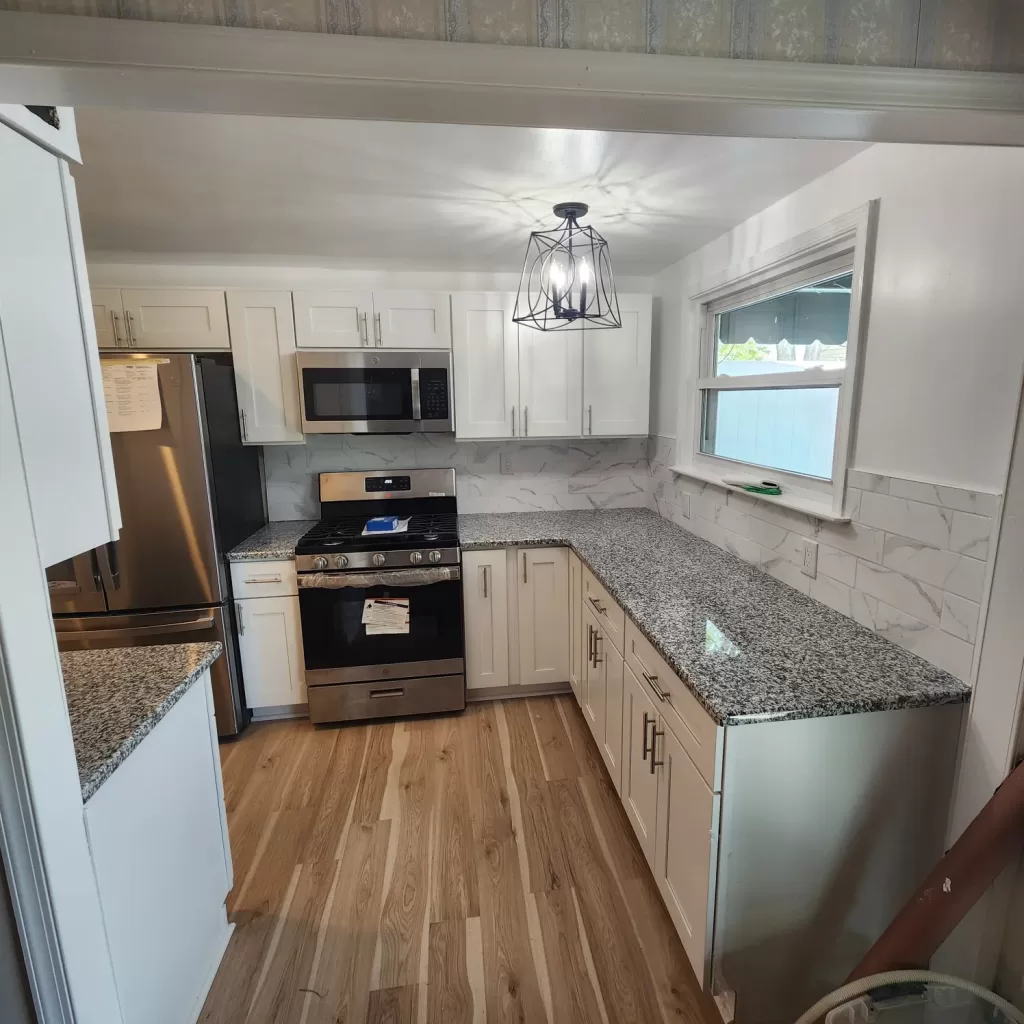
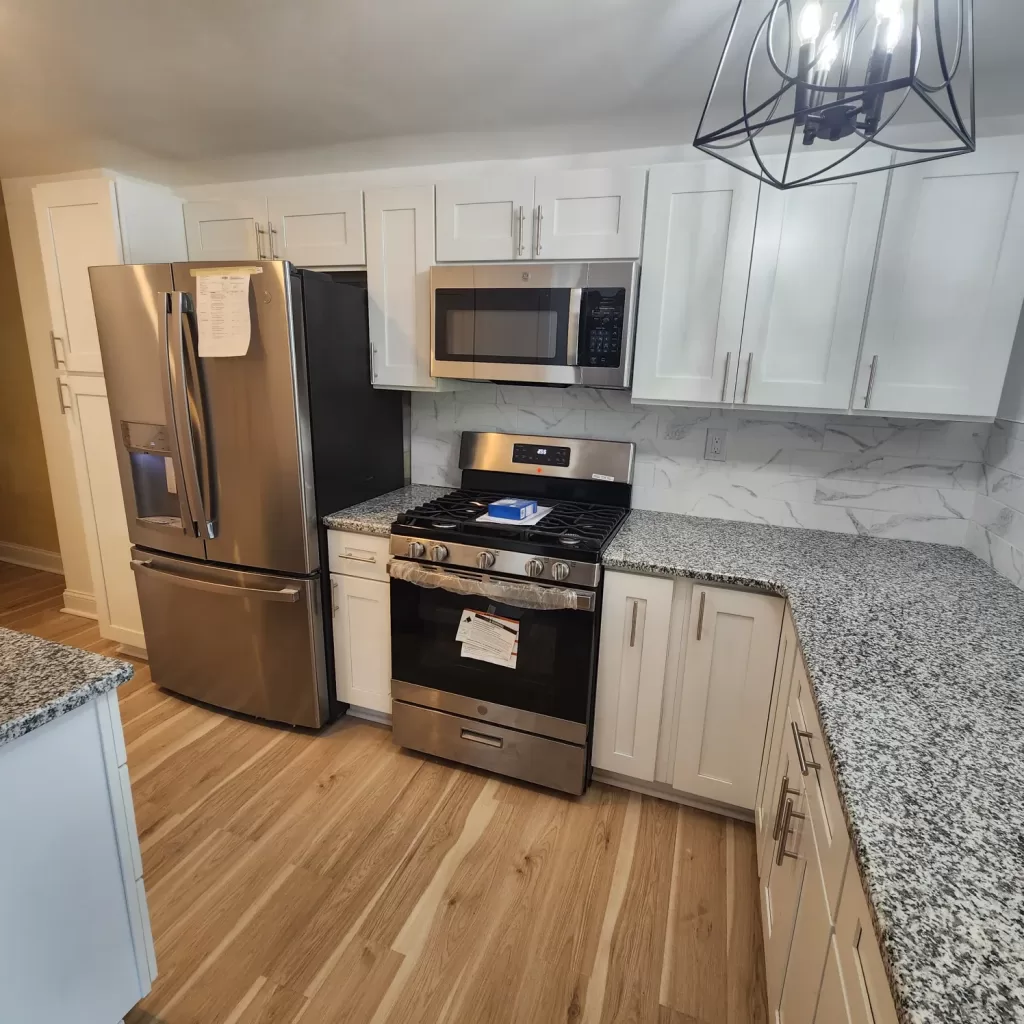
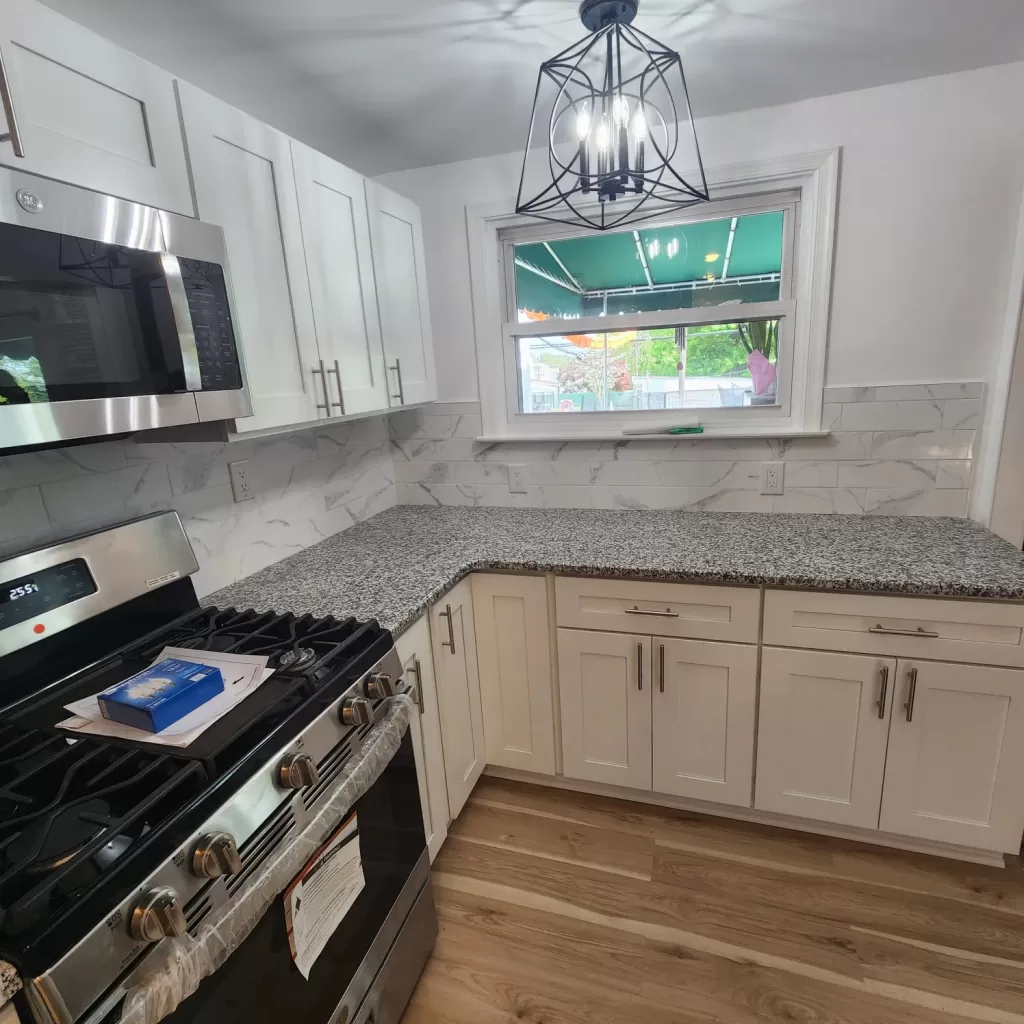
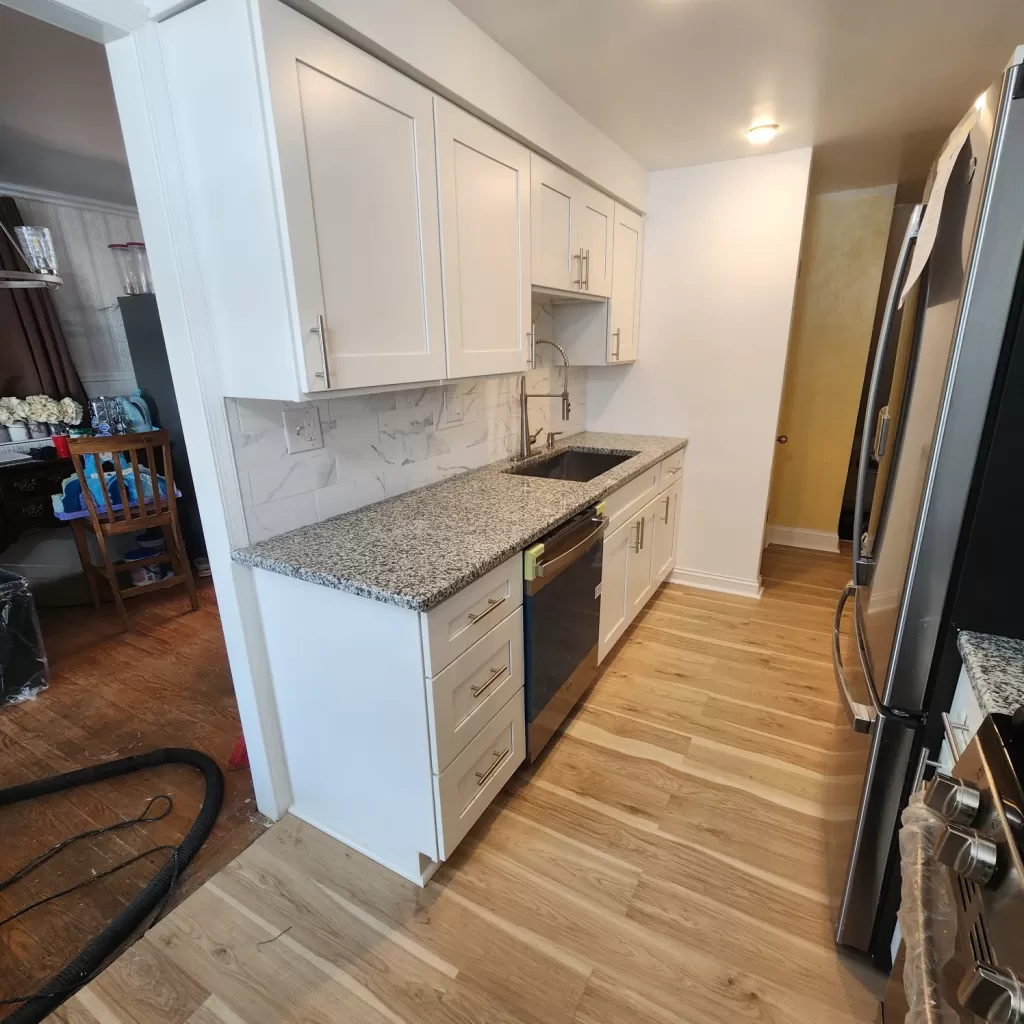
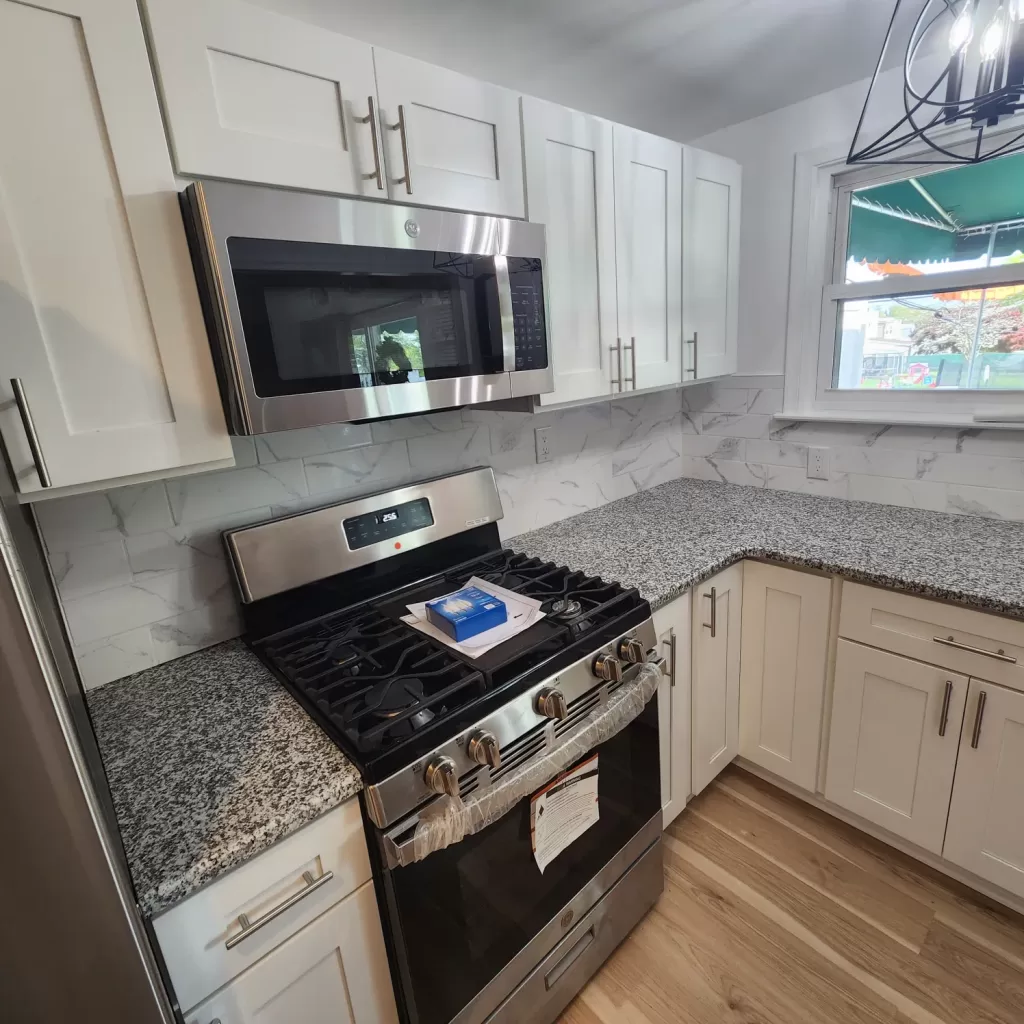
This 160-square-foot kitchen remodel in Warrington updated a mid-size kitchen with white cabinets, LVP flooring, a tile backsplash, new appliances, and two fixture relocations: the gas stove and the sink were moved to new positions to improve the layout. The combination of surface updates and fixture relocation produces a kitchen that functions differently from how it was organized before, not just one that looks newer.
Scope of Work
- White kitchen cabinets installed throughout
- LVP flooring installed
- Tile backsplash installed
- New appliances installed
- Gas stove relocated to new position
- Sink relocated to new position
Relocating the Gas Stove and Sink
Moving both the gas stove and the sink as part of a kitchen remodel is the scope decision that most distinguishes this project from a standard cabinet and countertop replacement. Relocating the gas stove requires capping the original gas line at the current location and running a new gas line to the new position, with a shutoff valve and connections that meet code. The new line has to be pressure-tested before the remodel closes the wall surfaces around it. A gas line relocation is inspected as part of the permit process in Bucks County.
Relocating the sink requires extending or rerouting the supply lines and the drain connection to the new position. The drain in particular has to maintain the correct slope back to the stack — at least 1/4 inch drop per foot of horizontal run — or the new sink location will drain slowly. Both relocations are done during the rough-in phase, before the new cabinets are set and before the countertops are templated. Getting those positions right before the cabinets go in is what allows the new layout to work as intended.
The reason to relocate either fixture during a kitchen remodel is that the original positions were determined by the original layout — which was designed around the original cabinet and traffic flow plan. When the cabinet layout changes, the stove and sink positions that made sense in the old plan may not make sense in the new one. Moving them resolves that rather than accepting a new cabinet layout organized around old fixture positions.
White Cabinets
White cabinets were installed throughout the kitchen. In a 160-square-foot kitchen, the cabinet finish is visible across the full room from any entry point. White cabinets reflect light into the space, which is relevant in a kitchen that may have limited window area or overhead lighting coverage, and they provide a consistent finish across the full cabinet run without the variation that wood-grain finishes introduce at scale.
New cabinets in a kitchen remodel also typically provide more storage capacity than the originals — older cabinet configurations often have less efficient interior storage than current cabinet lines with adjustable shelving, full-extension drawers, and pull-out organizers. The cabinet installation is sequenced after the rough-in is complete and before the countertop is templated, because the counter template has to be taken from the installed cabinets to get the correct dimensions.
LVP Flooring and Tile Backsplash
LVP (Luxury Vinyl Plank) flooring was installed throughout the 160-square-foot kitchen. LVP is a practical material choice for a kitchen floor: it is water-resistant, durable under foot traffic and dropped items, easy to clean, and available in finishes that closely replicate hardwood. It is also installed as a floating floor over the existing subfloor in most applications, which means the installation does not require removing the existing floor surface — a meaningful reduction in labor and disruption compared to tile or hardwood installations that require full subfloor preparation.
A tile backsplash was installed in the zone between the countertop and the upper cabinets. The backsplash is the surface most exposed to cooking splash and the one that provides the visual transition between the countertop and the cabinet faces above it. In a white-cabinet kitchen with new LVP flooring, the backsplash is the design element with the most latitude for texture, pattern, or color — it can introduce visual interest without committing the whole room to it.
Kitchen Remodeling in Warrington
Warrington is a Bucks County township with a significant stock of suburban homes built from the 1970s through the 1990s, many of which have kitchens where the original layout no longer suits how the household uses the space. A mid-size kitchen remodel at this scope — new cabinets, updated flooring, fixture relocation, and new appliances — is the level of investment that produces a kitchen that functions and looks like a different room. Belmax Remodeling works throughout Warrington and the broader Bucks County area. For more on our kitchen work, see our kitchen remodeling service page. Homeowners in Warrington can also visit our Warrington kitchen remodeling page for more completed local projects.
Considering a Similar Project?
Mid-size kitchen remodels in the 160-square-foot range with white cabinets, LVP flooring, backsplash, new appliances, and fixture relocation typically fall in the $11,000–$16,000 range in Bucks County. This Warrington project came in at $12,700, completed April 2023. To discuss what your kitchen would involve, request a free estimate.