
Kitchen Remodel – West Windsor Township, NJ
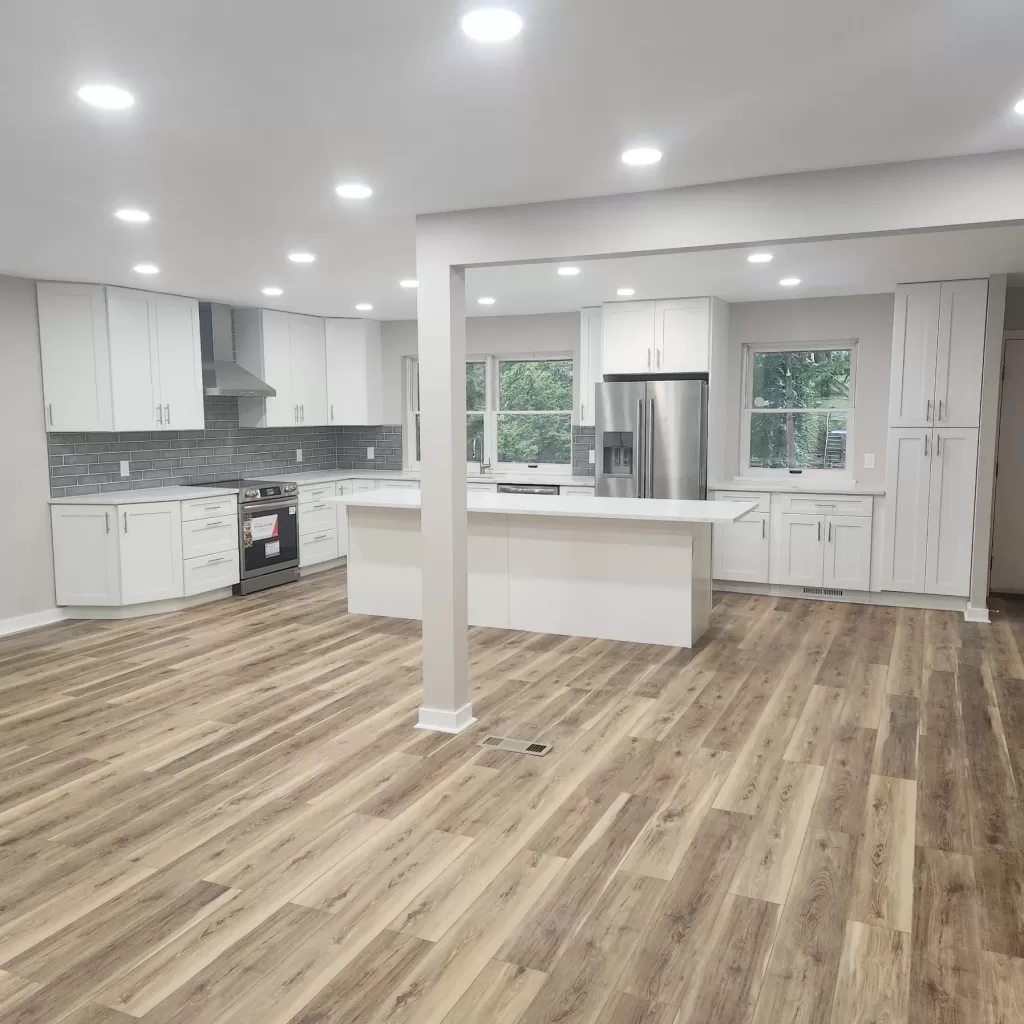
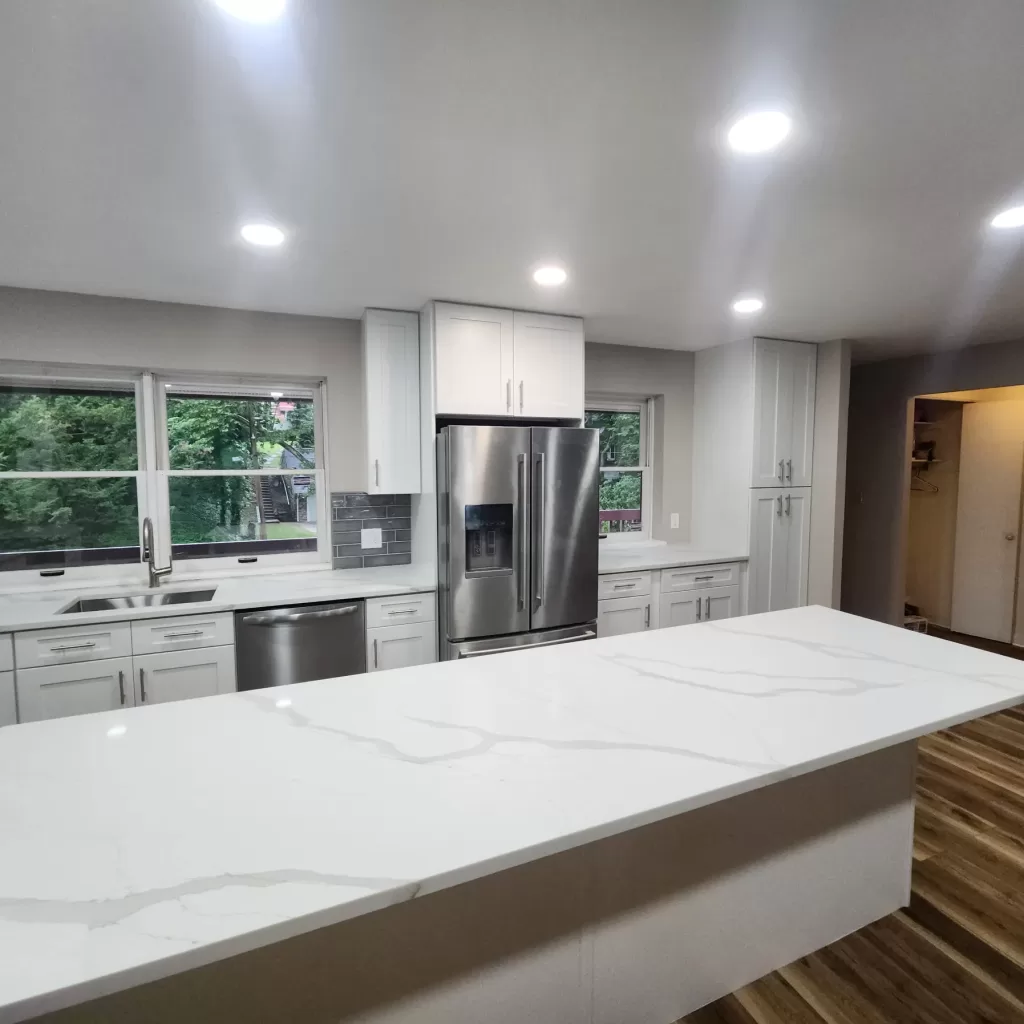
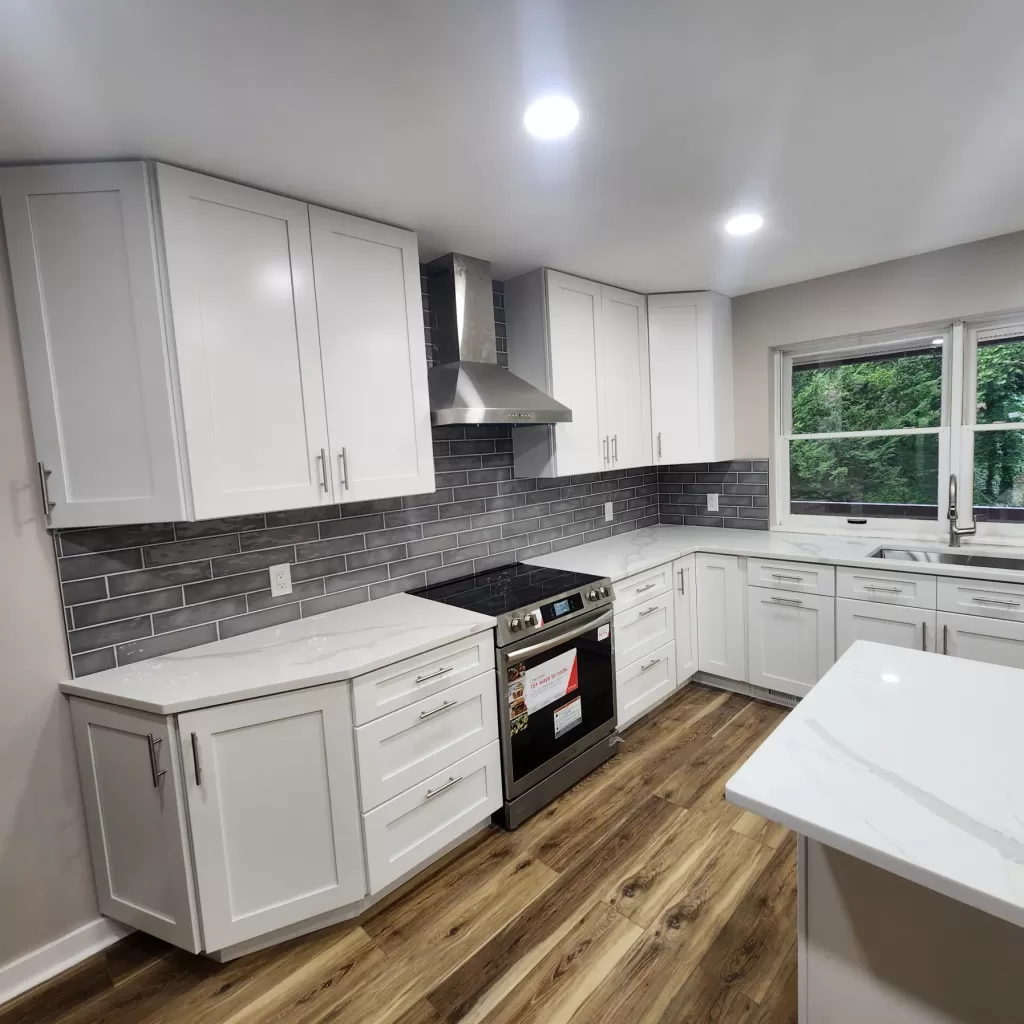
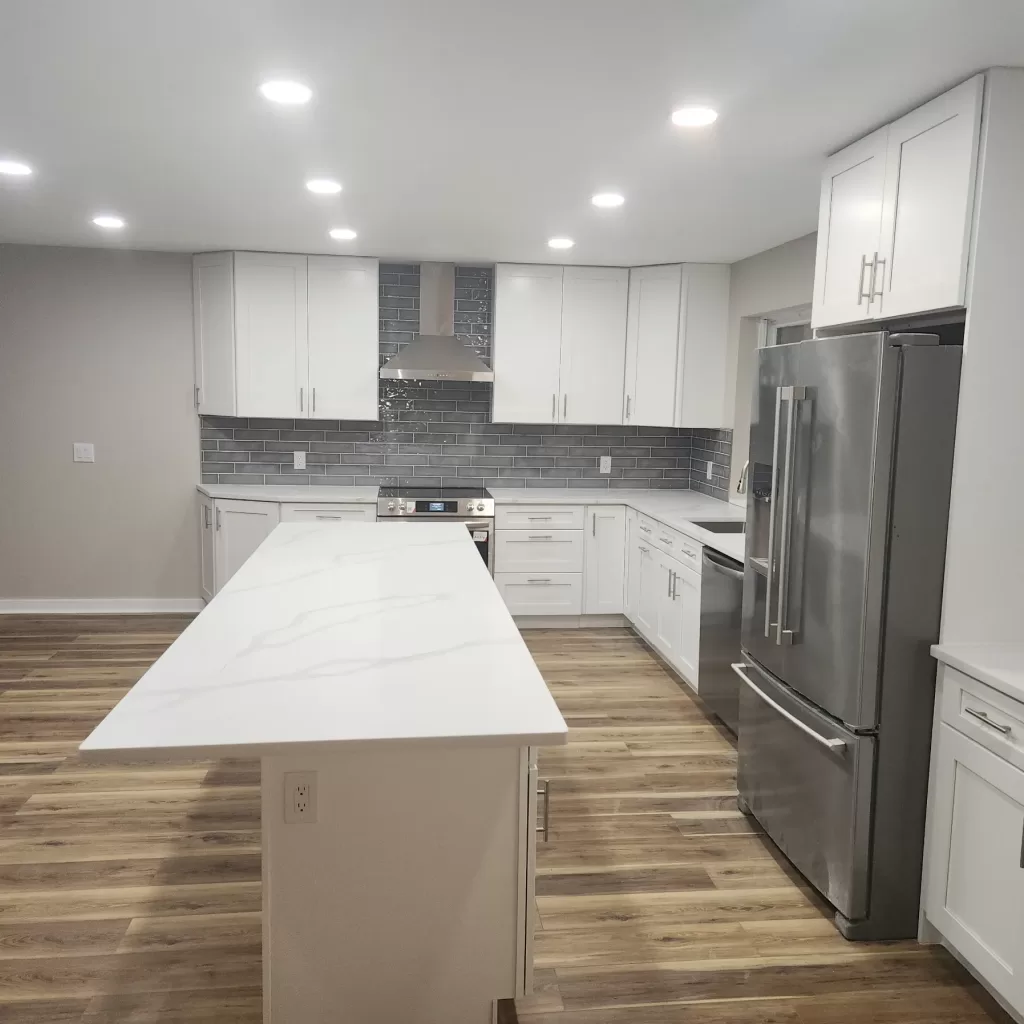
This 800-square-foot kitchen remodel in West Windsor Township is the most structurally involved kitchen project in this portfolio. Four walls were removed to create an open-concept layout, and a new support beam was installed to carry the load of the structure above the largest opening. The remodel added 27 recessed lights, relocated the gas stove and sink, installed white cabinets, LVP flooring, a tile backsplash, and wired dedicated circuits for updated appliances.
Scope of Work
- Four walls removed to create open-concept layout
- New support beam installed
- White kitchen cabinets installed throughout
- Tile backsplash installed
- LVP flooring installed
- Gas stove relocated
- Sink relocated
- New appliance wiring for updated and relocated appliances
- Additional countertop outlets installed
- 27 recessed lights installed
- Full paint throughout
Four Walls Removed: The Structural Foundation of the Remodel
Removing four walls to create an open-concept kitchen is the most structurally intensive work in this project and the decision that determines what every other element of the remodel can be. Each wall removal requires a structural assessment: is the wall load-bearing? If yes, what is carrying the load now and what has to replace it before the framing comes down? Removing a load-bearing wall without properly transferring its load to a beam or header is a structural failure waiting to happen — the floor or roof above it will sag or shift as the support is gone.
A new support beam was installed to carry the structural load at the largest opening created by the wall removals. The beam spans the opening and transfers the load down to posts or columns at each end, which in turn carry it to the foundation. This is standard structural engineering for a wall-removal opening of this scale — the beam size and span are determined by the load above it, not by aesthetics. The beam is in place before any finish work begins, and the new open-concept layout is only possible because it is there.
800 Square Feet: What Scale Changes
At 800 square feet, this is a kitchen and combined space large enough that design decisions that work in a smaller room have to be reconsidered. Twenty-seven recessed lights — rather than the 4 to 6 that a standard kitchen remodel might include — are required to provide even illumination across a floor area this large. A single overhead fixture or a small cluster of pendants would leave significant dark zones across the counters and floor. Twenty-seven fixtures, positioned in a planned grid across the ceiling, provide consistent light throughout.
Similarly, relocating the gas stove and sink — rather than keeping them in place — reflects the opportunity that an 800-square-foot open floor plan creates. The original positions of those fixtures were determined by the walls that no longer exist. With four walls removed and the layout reconfigured, the stove and sink can be positioned where the new floor plan needs them rather than where the old construction put them. Relocating a gas stove involves capping the original gas line, running a new line to the new position, and having the connection inspected. Relocating a sink requires extending supply and drain lines to the new location.
27 Recessed Lights
Twenty-seven recessed lights were installed in the ceiling across the 800-square-foot space. Recessed lighting at this quantity in a large kitchen is a planned lighting design, not a random number — the fixtures are positioned to cover the counter zones, the cooking area, the central floor, and the perimeter without creating bright spots over some surfaces and dim zones over others. Each fixture requires an electrical circuit connection, and at 27 fixtures, the rough electrical work for the lighting alone is a substantial portion of the electrical scope.
Recessed lighting in a kitchen also keeps the ceiling visually clean. In an 800-square-foot open-concept space where the kitchen ceiling flows into the adjacent living or dining area, ceiling-mounted pendant fixtures or track lighting would interrupt the visual continuity that the wall removals created. Recessed fixtures sit flush and disappear into the ceiling plane.
White Cabinets, LVP Flooring, and Backsplash
White cabinets were installed throughout the kitchen. In a large open-concept space, the cabinet finish is visible from a distance and from multiple vantage points — from the adjacent dining or living area, from the entrance, and across the full width of the kitchen. White cabinets keep the space feeling open and light across that visual field, and they provide a consistent finish across a long linear run without the variation that wood-grain finishes introduce at scale.
LVP (Luxury Vinyl Plank) flooring was installed throughout. LVP is a practical choice for a large kitchen and adjacent open-concept space: it is water-resistant, durable under heavy foot traffic, easy to clean, and available in formats that closely replicate the appearance of hardwood. In an open-concept layout where the kitchen floor is continuous with the adjacent dining or living floor, a single consistent flooring material running throughout reinforces the spatial unity that the wall removals created.
A tile backsplash was installed in the area between the countertops and the upper cabinets. The backsplash is the surface most directly exposed to cooking and the one that provides the visual connection between the countertop and the cabinet surfaces above it — in a white-cabinet kitchen, the backsplash is where texture, pattern, or subtle color can be introduced without committing the whole room to it.
Appliance Wiring and Countertop Outlets
New electrical wiring was run for the updated and relocated appliances. Relocating the gas stove and sink changes where the electrical connections for those appliance zones need to be — the refrigerator circuit, the dishwasher circuit, and the dedicated circuits for the cooktop and other major appliances all have to be positioned relative to where the appliances now sit, not where they used to be. Additional outlets were installed above the countertops for everyday use. In a kitchen this size, counter-length electrical access across multiple runs of cabinetry requires planning the outlet positions during the rough electrical phase before any countertops or backsplash are installed.
Kitchen Remodeling in West Windsor Township
West Windsor Township is a Mercer County municipality in central New Jersey with established residential neighborhoods and homes of varying sizes. A kitchen remodel at this scale — 800 square feet, four walls removed, structural beam, full cabinet and flooring replacement, and comprehensive electrical work — reflects what a fully committed open-concept kitchen transformation involves. Belmax Remodeling works throughout West Windsor Township and the broader Mercer County region. For more on our kitchen work, see our kitchen remodeling service page. Homeowners in West Windsor can also visit our West Windsor Township service area page for more on what we do in the area.
Considering a Similar Project?
Large-scale kitchen remodels in the 800-square-foot range with structural wall removals, support beam installation, full cabinet and flooring replacement, appliance relocation, and comprehensive electrical typically fall in the $22,000–$32,000 range in this region. This West Windsor Township project came in at $25,500, completed August 2023. To discuss what your kitchen would involve, request a free estimate.