
Powder Room Converted to Accessible Full Bathroom – Elkins Park, PA
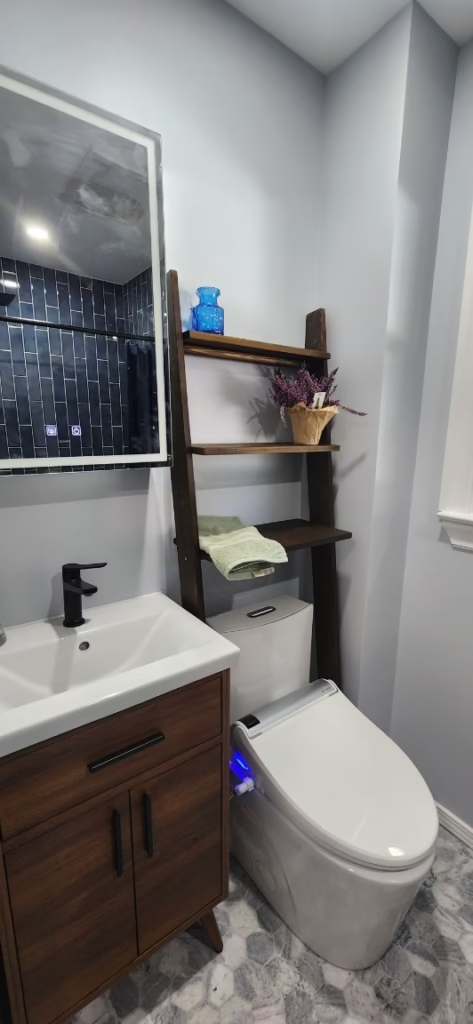
This project started as a 15-square-foot powder room — a pedestal sink and toilet with no shower and no room to add one. It ended as a 40-square-foot wheelchair-accessible full bathroom with a curbless shower, a pocket door, a bidet toilet, and an exhaust fan with a built-in heater, humidity sensor, and night light. Getting from 15 to 40 square feet required removing existing walls and building new ones. Every design decision in the finished bathroom was made with accessibility in mind, without the room reading as a medical facility.
What This Project Included
- Wall removal to expand the footprint from 15 to 40 square feet
- New wall construction to define the expanded bathroom
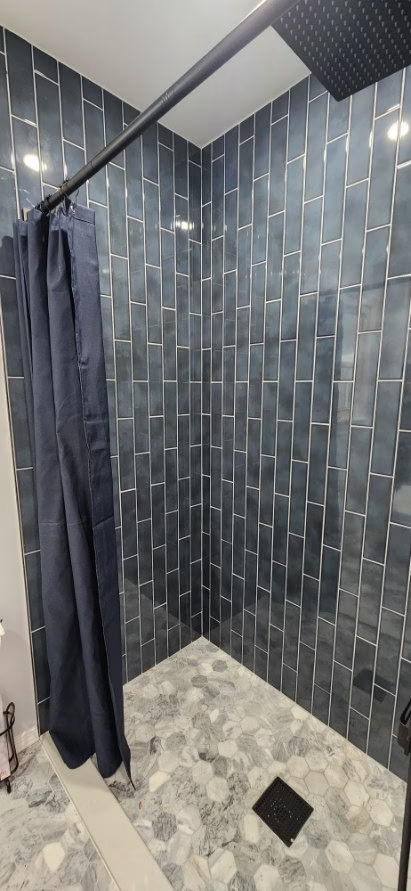
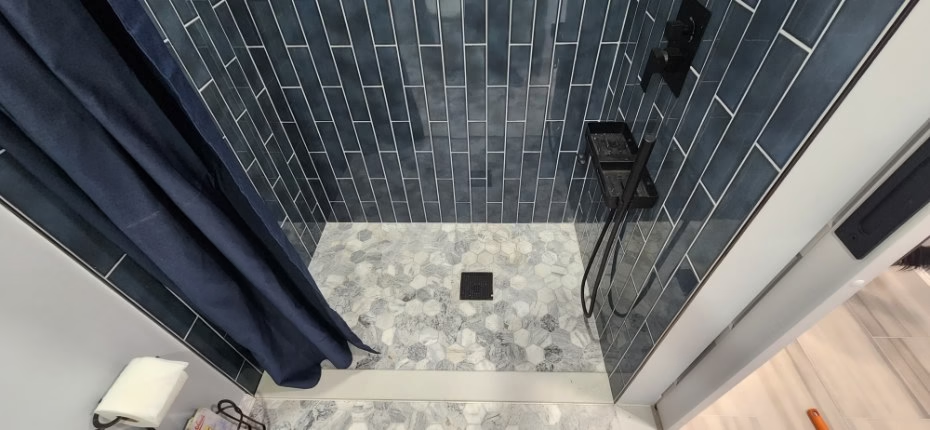
- Curbless (zero-threshold) walk-in shower
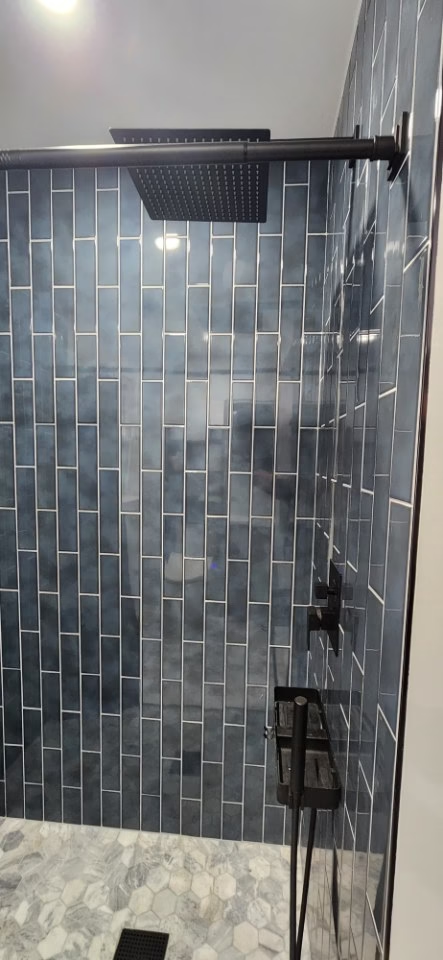
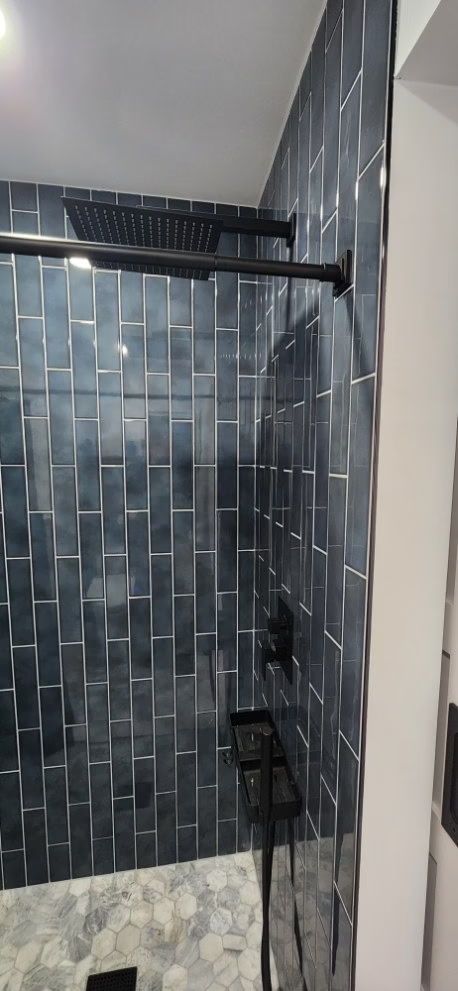
- Waterproof tile throughout the shower zone
- Black-finished shower fixtures
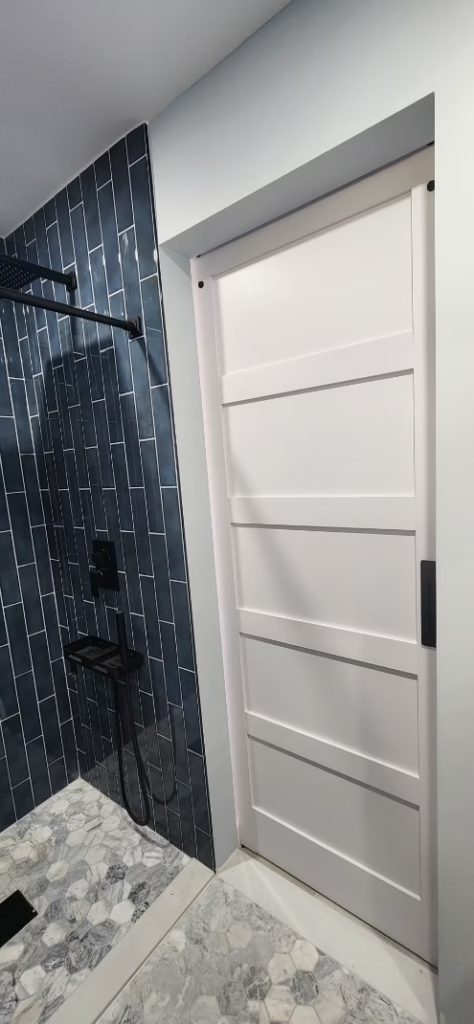
- Pocket door installation
- Modern vanity replacing pedestal sink (with storage)
- LED lighted mirror
- An electric bidet toilet with a dedicated electrical circuit
- Exhaust fan with built-in heater, humidity sensor, and night light
- Black bathroom fixtures throughout
The Conversion: From 15 to 40 Square Feet
Converting a 15-square-foot powder room into a 40-square-foot accessible bathroom is not a remodel in the conventional sense — it is a reconfiguration that begins with removing walls and building new ones. The existing walls that defined the powder room had to come out to create the expanded footprint. New walls were framed to define the larger space, position the shower correctly, and establish the room’s relationship to the adjacent areas.
That structural work is what separates this project from a standard bathroom update. The square footage did not expand on its own — it came from deliberate framing decisions that had to be made correctly before any finish work could begin.
Curbless Shower: Accessibility Without Compromise
A curbless shower has no threshold or curb at the entry point — the floor transitions directly from the bathroom floor into the shower zone without any step up or over. For wheelchair users, this is a functional requirement: a curb creates a barrier that makes the shower unusable without assistance. For ambulatory users, it reduces the daily risk of catching a foot on a threshold, which is a meaningful safety improvement regardless of mobility level.
The curbless design requires careful floor preparation — the shower floor has to be properly sloped to drain without a curb to contain the water, and the waterproofing has to extend far enough from the drain that water does not migrate under the adjacent floor tile. When this is done correctly, the shower looks clean and intentional rather than like a wet area without a defined edge.
The Pocket Door
A swinging door in a 40-square-foot bathroom accessible to a wheelchair user creates a serious problem: opening and closing the door requires maneuvering space that competes with the space needed to use the bathroom. A standard door swinging inward can trap a wheelchair user who needs to close it behind them. Swinging outward solves that, but requires clear space in the adjacent hallway or room.
A pocket door slides into the wall on a track and requires no swing clearance in either direction. It is the right solution for this situation — it adds no friction to entry or exit, it does not compete with the usable floor area of the bathroom, and it reads as a standard finished door when closed. The framing to accommodate the pocket door was done during the wall construction phase.
The Exhaust Fan: Three Functions in One Unit
The exhaust fan installed in this bathroom is not a standard single-function unit. It includes a built-in heater for rapid warming of the space, a humidity sensor that activates the fan automatically when moisture levels rise (rather than requiring a manual switch), and a night light for visibility without full overhead lighting. In a bathroom that needs to be accessible and easy to use at all times of day and in all seasons, these three functions address real daily use scenarios rather than just ventilation compliance.
The humidity sensor is particularly useful in an accessible bathroom — it removes the need to remember to turn on the fan after showering, which matters both for moisture control and for the longevity of the tile and grout in the curbless shower zone.
Vanity, Bidet, and Fixtures
The pedestal sink was replaced with a full vanity that provides counter space and storage beneath — a meaningful upgrade for a room that will be used as a primary bathroom rather than just a powder room. An LED lighted mirror was mounted above. An electric bidet toilet was installed with a dedicated electrical circuit, roughed in during the electrical phase. All fixtures were specified in black, giving the room a consistent finish that reads as a considered design choice rather than a collection of defaults.
What the Homeowner Gained
A 15-square-foot powder room with no shower served a limited purpose. The 40-square-foot accessible bathroom that replaced it serves a person who needs a wheelchair-accessible shower, provides proper ventilation and heating, includes a bidet for hygiene independence, and is accessible without assistance through a pocket door. At $12,600, this project reflects both the structural work of expanding the footprint and the cost of specifying the right accessibility features rather than standard equivalents.
Bathroom Remodeling and Accessibility Conversions in Elkins Park
Elkins Park is a Montgomery County community with a substantial stock of older residential properties — many of them built before accessibility was a design consideration. Converting an existing small bathroom or powder room into a space that works for a wheelchair user involves both structural work and the right fixture and door choices. Belmax Remodeling handles both.
For more on our bathroom work, see our bathroom remodeling service page. Homeowners in Elkins Park can also visit our Elkins Park bathroom remodeling page for more on what we do in the area.
Considering a Similar Project?
Powder room to accessible full bathroom conversions that require wall removal, new framing, a curbless shower, a pocket door, and accessibility-appropriate fixtures typically fall in the $11,000–$15,000 range in Montgomery County, depending on the extent of the structural work. This Elkins Park project came in at $12,600, completed in November 2024. To discuss what your project would involve, request a free estimate.