
- By admin
- In Uncategorized
Choosing Countertop Colors for White Kitchen Cabinets: A Complete Guide
Choosing Countertop Colors for White Kitchen Cabinets — What Actually Makes It Hard
White kitchen cabinets seem like the easy choice — neutral, bright, works with everything. But ask anyone who’s tried to finalize a countertop color for white cabinets and they’ll tell you it’s harder than it looks. The samples that seemed right in the store look different installed. The color that looked warm and inviting in photos looks cold in their actual kitchen. The veined quartz that looked elegant in the showroom is overwhelming at full scale.
This isn’t a taste problem. It’s a context problem. White cabinets are not a single thing — they span a wide range from cool, blue-toned whites to warm, creamy off-whites. And the countertop that works beautifully with one type of white actively clashes with another. Add backsplash, flooring, hardware, and natural light into the picture and the decision becomes genuinely complex.
This article is about how to make that decision well — not a list of colors that “go with white cabinets,” but a practical guide to the variables that determine whether a combination actually works in your specific kitchen.
If you’re also thinking about the broader kitchen renovation, our kitchen remodeling page and kitchen design page have more on the full scope of what a kitchen project involves.
Warm white vs cool white — this is the decision most homeowners skip
The most common countertop selection mistake with white cabinets starts before the countertop is even considered. Homeowners pick a countertop they like without first identifying which type of white their cabinets actually are — and then wonder why the combination doesn’t feel right.
White cabinets broadly fall into two camps.
Cool whites have blue or gray undertones. They read as crisp, clean, and modern. Benjamin Moore Chantilly Lace and Sherwin-Williams Extra White are examples of this tone. In certain lights they can feel slightly cold or stark.
Warm whites have yellow, cream, or beige undertones. They read as softer and more inviting. Antique White, Swiss Coffee, and Alabaster fall into this category. In certain lights they can feel slightly dated if not paired carefully.
The undertone of your cabinets has to inform the undertone of your countertop. Pairing a cool white cabinet with a countertop that has warm beige veining creates an undertone clash — neither surface is wrong individually, but together they fight.
Before you evaluate any countertop sample, hold it against your actual cabinet door in your actual kitchen under your actual lighting. This single step prevents the most common selection mistake we see homeowners make.
Countertop directions — what each actually does in a white kitchen
Rather than a list of colors, here’s how the major countertop directions behave with white cabinets — including what they emphasize, what they hide, and where they go wrong.
White and light gray countertops — the continuity approach
A white or very light gray countertop with a white cabinet creates a continuous, expansive feel. The kitchen reads as one unified surface rather than contrasting zones. This works particularly well in smaller kitchens where you want the space to feel larger, and in kitchens with strong backsplash or flooring that you want to be the design statement.
The risk with all-white combinations is that they can feel sterile or flat without enough texture variation. A countertop with subtle movement — fine veining, soft variation in tone — prevents this.
Beige, cream, and warm stone countertops — adding depth without contrast
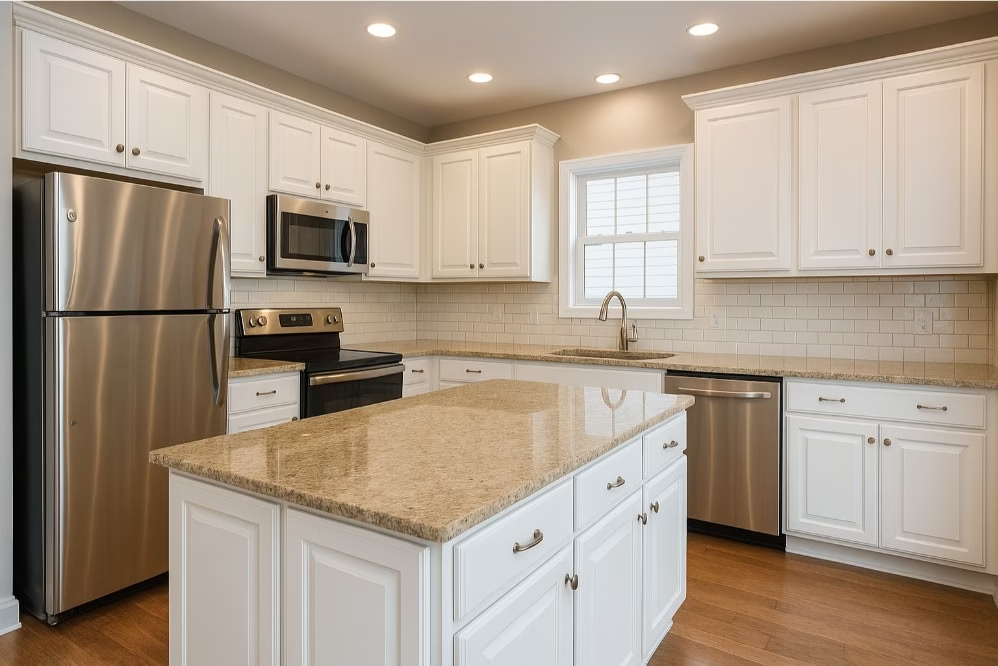
Beige and warm stone countertops — including many quartzites, warm-toned granites, and quartz products in that color family — add warmth and depth to a white kitchen without creating strong contrast. They work exceptionally well with warm white cabinets.
The risk here is undertone matching. A beige countertop with pink undertones against a cool white cabinet with blue undertones creates a visible tension. Bring your cabinet sample when evaluating beige options.
Gray countertops — the most versatile middle ground
Medium gray countertops are probably the safest choice across the widest range of white cabinet tones. Gray is neutral enough to work with both warm and cool whites, and it provides clear visual separation between counter and cabinet without the drama of a dark countertop.
If your goal is a kitchen that will show well for resale and won’t feel polarizing to future buyers, gray countertops with white cabinets is a consistently strong choice.
Black and dark countertops — when contrast works and when it doesn’t
A dark countertop — black granite, deep charcoal quartz, soapstone — against white cabinets creates the strongest contrast in the kitchen. Done well, it’s one of the sharpest looking combinations available. Done poorly, it makes a kitchen feel heavy and the dark surface shows every water spot, crumb, and smear constantly.
Dark countertops work best when the kitchen has good natural light and when the homeowner is prepared for the maintenance reality. This combination is bold rather than resale-safe.
Veined and dramatic countertops — where things get complicated
Heavily veined countertops — Calacatta-style quartz, Statuario marble look, dramatic natural quartzite — are beautiful in the right context and overwhelming in the wrong one. Scale matters enormously here. A veined slab that looks stunning as a sample looks completely different across 30 linear feet of countertop in a full kitchen.
If you’re considering a heavily veined countertop, try to see the full slab or a large section of it — not a 4-inch sample. Many showrooms and stone yards will let you view full slabs before ordering.
How backsplash and flooring change the countertop decision
Countertop selection doesn’t happen in isolation. The backsplash and floor are both in the visual field at the same time, and they affect whether a countertop combination works.
The backsplash relationship
The general principle: if your countertop has significant movement or pattern, your backsplash should be simpler. A heavily veined quartz countertop with a patterned mosaic backsplash is too much pattern in too small a space.
Subway tile in a standard or elongated format is the most reliable backsplash for almost any countertop combination with white cabinets. It’s simple enough not to compete, and it provides the texture break between cabinet and wall without drawing attention away from the countertop.
The floor relationship
Kitchen flooring is the largest horizontal surface in the room and has more visual weight than it gets credit for in countertop selection conversations. A dark floor with white cabinets creates vertical contrast — the countertop then needs to either support that contrast or lean toward the cabinet end.
Warm wood floors with white cabinets are a common and effective combination. In this context, a countertop with warm undertones — beige, warm gray, warm white — works better than a cool-toned countertop that fights the warmth the floor is adding.
Mistakes homeowners make when selecting countertop samples
Evaluating samples on a white paper background, not against the actual cabinet. A sample on a white sheet of paper tells you what the countertop looks like in isolation. It tells you nothing about how it looks next to your specific cabinet color in your specific kitchen.
Evaluating samples in the store lighting, not in home lighting. Showroom lighting is usually warm and flattering. Bring samples home and look at them at different times of day.
Choosing based on a 4-inch sample for a heavily veined stone. For any stone with significant movement, view the actual slab.
Deciding before the backsplash is selected. Narrow your countertop options to two or three, then evaluate them against backsplash options simultaneously.
Ignoring maintenance reality. Quartz outperforms natural stone significantly on maintenance — which is why it’s become the dominant choice for active kitchens.
Resale-safe combinations vs bold design choices
If you’re renovating a kitchen primarily for resale, the goal is a combination that appeals to the broadest range of buyers.
Resale-safe combinations with white cabinets:
- White or light gray quartz with subtle veining — clean, neutral, appeals broadly
- Medium gray quartz with soft movement — versatile, neither trendy nor dated
- Warm beige or greige countertop — adds warmth without strong contrast
- Simple white subway tile backsplash — universally acceptable
Bold combinations that reflect a specific design direction:
- Black or very dark countertop with white cabinets — strong contrast, polarizing
- Heavily veined Calacatta-style countertop — high-end feel, requires complementary restraint everywhere else
- Warm quartzite with natural variation — beautiful, distinctive, less universally appealing
The kitchen renovation cost guide has more on ROI and how kitchen choices affect resale value if that’s part of your planning.
How seeing combinations in person changes the decision
Most homeowners make countertop decisions from samples and photos. Both have real limitations — samples show a small fraction of the slab, and photos are taken in ideal lighting with carefully styled surroundings that rarely match a real kitchen.
Seeing installed cabinet and countertop combinations in person consistently changes what homeowners decide to build. It’s one of the main reasons we have a showroom in Horsham where homeowners can see installed combinations before finalizing selections.
If you’re planning a kitchen renovation in Bucks County, Montgomery County, or surrounding areas, visiting the showroom before finalizing selections is worth doing. Call us at 609-712-2750 or request a consultation to schedule a visit.


