
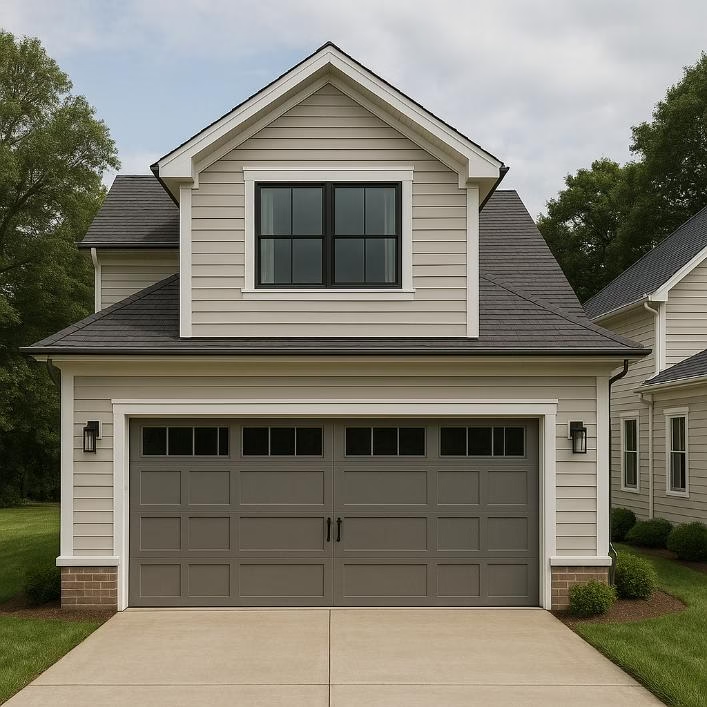
Comprehensive Guide to Master Suite Addition: Costs, Design Ideas, and Plans for Every Home
Master Suite Addition — What It Involves and How to Plan It
A master suite addition is one specific type of home addition — and one of the most commonly requested. The motivation is usually clear: the existing primary bedroom is too small, it shares a bathroom with the rest of the house, or it lacks the closet space the household actually needs. A dedicated addition solves all three at once without taking a room away from the rest of the house.
This article focuses specifically on master suite additions: what they include, where they can be built, what makes them complex, and what homeowners should think through before requesting an estimate. For a broader look at home addition types — room additions, kitchen expansions, garage additions, and more — see our home additions service page or our home additions guide when you’re ready to explore all your options.
[Note for freelancer: the second link above — “home additions guide” — is a placeholder pointing to the service page for now. Once the Home Additions hub page is live, update this link to the hub page URL.]
What a master suite addition typically includes
Most master suite additions are built around three components. Each one has different construction implications and a different effect on total project cost.
The bedroom
The bedroom is the foundation of the suite — typically 200 to 350 square feet of finished space, sized to accommodate the furniture configuration the household wants with comfortable circulation. The bedroom dimensions drive the addition’s footprint, which in turn determines foundation scope, framing, and roof area.
How the bedroom connects to the existing house — through an existing hallway, through a new opening in a wall, or from a staircase — affects both construction scope and how well the suite functions. A bedroom that requires cutting through a load-bearing wall to connect adds structural work that a bedroom accessed from an existing corridor does not.
The master bathroom
The bathroom is the most construction-intensive part of a master suite addition. It requires supply and drain plumbing extended to the new space, a waterproofing system, tile work, fixtures, and ventilation. In a ground-floor addition, drain lines run through the slab or under the floor. In a second-floor addition, they route through the floor structure.
Bathroom scope varies considerably. A standard full bathroom — single vanity, tub or shower, basic tile — costs significantly less than a full master bath with a custom shower, double vanity, freestanding tub, and premium tile throughout. The bathroom component frequently represents 40 to 50 percent of total addition cost, which is why bathroom specification is the most important early decision in planning a master suite addition.
The walk-in closet
A walk-in closet is standard in most master suite additions — typically 60 to 100 square feet with a U-shaped or L-shaped rod and shelf configuration. It’s the least construction-intensive component (no plumbing, no waterproofing, standard electrical) but its square footage is part of the total addition footprint.
Closet organization systems — from basic wood shelving to fully configured custom built-ins — are typically selected and installed as a finish-phase item after the space is framed and finished, not during rough construction.
Optional sitting area
Some master suite additions include a small sitting area separate from the sleeping zone. It adds square footage and cost but no additional utility complexity. Whether it’s worth including depends on how the space will realistically be used and whether the addition’s footprint and budget support the extra square footage.
Where a master suite addition can be built
Location feasibility depends on the existing house layout, the lot size, and zoning setback requirements. The location choice has a significant effect on both construction approach and cost.
Rear ground-floor addition
The most common configuration in Bucks County and Montgomery County. A rear addition extends the back of the house at ground level. It requires a new foundation along the addition perimeter, new exterior walls, and roof framing that ties into the existing roof.
Township zoning determines how far the addition can extend toward the rear property line. Most townships in this area require 25 to 30 feet of rear setback. The available buildable depth between the existing house and the setback line determines how large the addition can be.
Side addition
A side addition extends the house laterally. It works when the lot has adequate side setback — typically 10 to 15 feet from the side property line — and when the side of the house offers a practical connection to the existing bedroom zone.
Side additions sometimes require adjusting how the new suite connects to the existing floor plan, which adds scope if hallways or room configurations need to change to create a logical path to the new suite.
Second-floor addition above existing footprint
Adding the master suite on a second floor above an existing portion of the house avoids a new foundation but requires assessing whether the first-floor structure can carry the additional load. In most cases it can, sometimes with added structural support.
A second-floor addition also involves removing and replacing the roof over the area being built above and routing plumbing through the floor structure. If you’re considering a second-floor expansion more broadly — adding a full second story rather than a single suite — our article on adding a second floor covers the full scope of that project type.
Above-garage addition
Building the master suite above an attached garage uses the existing garage footprint without expanding the ground-level building envelope. The garage structure needs to be assessed for load capacity — garages are not always framed to the same standard as habitable space, and reinforcement is sometimes required before floor framing for the new suite can be installed.
An above-garage suite also requires adequate insulation in the floor assembly to separate the conditioned living space above from the unconditioned or minimally heated garage below.
What makes a master suite addition complex
The construction complexity of a master suite addition comes from the combination of components involved, not from any single element. Here are the main factors.
Foundation work
A ground-floor addition requires a new foundation along the addition perimeter. Pennsylvania’s frost line — typically 36 to 42 inches deep depending on the township — determines foundation depth. This involves excavation, forming, and concrete work before above-grade framing begins. Soil conditions and site access affect this phase.
Roof tie-in
Every addition needs its roof integrated with the existing roof. A simple shed or gable roof ties in cleanly. A more complex roof — matching an unusual pitch, working around dormers, or creating new valleys — adds scope and requires careful flashing detail at every junction. Roof tie-in is where long-term water management is won or lost.
Structural connection
Opening through a load-bearing exterior wall to connect the addition to the house requires installing a properly sized beam to carry the load above. This is standard work but needs to be engineered and permitted. The structural connection is assessed during the design phase.
HVAC and utilities
The master suite needs heating, cooling, ventilation, and electrical circuits. HVAC is either extended from the existing system (if it has capacity) or supplemented with a ductless mini-split unit. Electrical circuits run from the existing panel — if the panel is near capacity, an upgrade may be needed. All of this is assessed during the planning phase, not discovered during construction.
Permit coordination
Master suite additions require building permits in every Bucks County and Montgomery County township. Plans typically require architectural drawings and structural review. Inspections happen at multiple phases: foundation, framing, rough mechanical, insulation, and final. We manage the full permit process as part of our work as general contractor on every project we build.
Master suite addition vs reconfiguring existing space
Before committing to an addition, it’s worth asking whether the space need can be met by reconfiguring what already exists. Sometimes it can — and at significantly lower cost.
Absorbing an adjacent bedroom into the primary suite, converting a large unused bonus room into a walk-in closet and expanded bedroom, or reconfiguring an adjacent bathroom into a private ensuite — these options work when the household has more bedrooms than it actively uses and doesn’t need to preserve the room count.
An addition makes the clearest sense when the house is already at its functional room capacity, when the existing primary bedroom is genuinely undersized, or when the household wants the suite physically separated from other bedrooms rather than adjacent to them.
A garage conversion is a third path worth evaluating if the household doesn’t depend on garage parking — it can provide square footage at lower cost than a full addition in some configurations, though the construction conditions are different.
What drives master suite addition cost
Master suite additions in Bucks County and Montgomery County typically range from $150,000 to $300,000+ depending on size, location type, and finish level. The variables that move the number most significantly:
Bathroom specification
The bathroom is the largest single cost variable. A standard full bathroom (single vanity, shower or tub, basic tile) costs substantially less than a full master bath (custom shower, double vanity, freestanding tub, premium tile throughout). The difference between these two bathroom scopes can be $30,000 to $60,000 within the same addition footprint. This is the first decision to narrow down before requesting estimates.
Addition location and foundation type
A ground-floor rear addition on normal soil with a standard perimeter foundation is the cost baseline. Rocky soil, high water table, or a tight site with difficult access adds cost. A second-floor addition above existing structure eliminates foundation cost but may require structural reinforcement and involves more complex roof work.
Roof complexity
A clean gable or shed roof addition is less expensive than one that requires integrating multiple roof planes or matching an unusual existing pitch. The roof represents a meaningful share of total cost — and quality roof tie-in is non-negotiable.
Total square footage
Every square foot added multiplies the cost of foundation, framing, insulation, drywall, flooring, and roofing. A 400 sq ft suite costs more than a 280 sq ft suite at the same finish level. Getting clear on the minimum usable size vs the ideal size before planning begins helps keep scope realistic.
Finish level
Tile selection, vanity quality, flooring, countertop material, and fixture choices all affect final cost. Most homeowners find a practical balance: higher-end selections in the bathroom where daily experience is concentrated, and solid mid-range choices for bedroom flooring, trim, and lighting.
Common planning mistakes
Budgeting only for the bedroom square footage
The bedroom is the most visible part of the addition but not necessarily the most expensive. Foundation, roof, HVAC, electrical, and plumbing extension all have to happen regardless of bedroom size. Homeowners who start with a per-square-foot estimate for the bedroom alone consistently underestimate total project cost.
Not resolving utility routing before design is finalized
Where the plumbing drains to, whether the HVAC system has capacity, and whether the electrical panel can serve the addition are questions that affect feasibility and cost. These need answers during the planning phase — not during construction.
Treating exterior integration as an afterthought
An addition that looks appended rather than integrated — mismatched siding, disconnected roofline, windows that don’t coordinate with the existing facade — affects both daily appearance and resale value. Exterior design is a planning decision, not a finishing detail.
Optimizing for square footage rather than function
How the bedroom, bathroom, and closet relate to each other — the circulation between them, privacy of the toilet from the sleeping area, closet access from the bathroom — determines how well the suite works day to day. A well-planned 300 sq ft suite often functions better than a poorly organized 450 sq ft one.
What to clarify before requesting estimates
Getting comparable, useful estimates requires having several things clear before anyone comes to look at the site:
- Preferred location — rear of house, side, above garage, or second floor. Even a rough preference matters because structural and utility implications differ significantly.
- Approximate total size — compact (250–300 sq ft), standard (350–450 sq ft), or larger with a sitting area.
- Bathroom scope — standard full bath or full master bath? This is the most important single variable in the estimate.
- Closet size — what the household actually needs for two people, honestly assessed.
- Tolerance for structural and exterior changes — opening walls, modifying the roofline, changing the exterior appearance.
- Timeline expectations — master suite additions in this area typically take 5 to 8 months from permit application through completion. Is that workable?
With these decisions narrowed down, estimates from different contractors reflect the same project and can be meaningfully compared.
Ready to discuss a master suite addition?
If you’re planning a master suite addition in Bucks County, Montgomery County, or surrounding areas and want an honest assessment of feasibility, scope, and cost for your specific property, we’re glad to help. We work as a home addition contractor in Bucks County and throughout southeastern Pennsylvania, managing addition projects from initial design and structural engineering through permitted construction.
Call us at 609-712-2750 or request a free estimate online. We’ll come to the property, assess what’s feasible, and give you a realistic picture of what the project involves and what it will cost.


