
- By admin
- In Kitchen and bath
Pennsylvania Bathroom: An Inspiring Cost & Design Guide
Pennsylvania Bathroom Remodeling — How Your Design Choices Affect What It Costs
Homeowners planning a bathroom renovation in Bucks County, Montgomery County, and surrounding areas of Pennsylvania face a consistent challenge: they see a bathroom they want to build — from a photo, a showroom, a friend’s house — and they request an estimate without fully understanding that the design choices in that image are what determine the cost, sometimes as much as the size of the room.
This article is about that connection. Not a breakdown of average cost ranges — the bathroom renovation cost guide covers that in detail. This article is about the specific design decisions that move bathroom renovation cost significantly, why they move it, and how to think through those decisions before requesting an estimate so the quote you get actually reflects what you want to build.
For a look at the full scope of what bathroom renovation involves from a construction standpoint, see our bathroom remodeling page.
The bathroom design decisions that affect budget most
A bathroom renovation involves dozens of decisions. Most of them have modest cost impact. A handful have significant cost impact. Understanding which is which before you start planning saves money and prevents the surprise that comes from discovering mid-project that the bathroom you designed costs considerably more than you expected.
Shower size and configuration
The shower is the most consequential cost decision in a bathroom renovation after the overall scope. A prefabricated tub surround replacement is a fundamentally different project from a custom tile walk-in shower. The waterproofing scope, the tile coverage area, the labor time, and the glass enclosure are all different categories of cost that apply to a custom shower and not to a prefabricated one.
Within custom showers, size matters directly: more floor area means more waterproofing membrane, more tile, more labor. A 36×36 shower costs less than a 48×72 shower for the same tile and glass specification, not just because it’s smaller but because the fixed costs — the waterproofing system, the base installation, the glass templating — are spread over more or less tile labor accordingly.
A curbless shower entry adds scope. A larger shower niche or multiple niches adds scope. A built-in bench adds scope. Each is a legitimate choice — these features genuinely improve the shower — but each also adds cost incrementally, and the decisions need to be made consciously rather than assumed to be included.
Tile height and coverage area
Tile height is one of the most visible cost levers in a bathroom renovation. Floor-to-ceiling tile on all four shower walls costs more than tile to a standard height on shower walls and paint elsewhere. Tile on the bathroom walls outside the shower — on the vanity wall, on the back wall — adds significant square footage to the tile installation scope.
The labor cost of tile work doesn’t scale linearly with coverage area because every tile installation has setup costs — layout planning, substrate preparation, waterproofing — that are largely fixed. But the material cost and tile-setting labor time do scale with coverage area. A bathroom with 60 square feet of tile costs less than one with 120 square feet of tile at the same tile specification.
Tile pattern complexity adds labor cost independently of area. Herringbone, diagonal, chevron, and mixed-format patterns each require more cuts, more precise layout planning, and more installation time than a standard stacked or offset layout. Two bathrooms with identical square footage of tile can have meaningfully different labor costs based purely on layout pattern.
Frameless glass enclosures
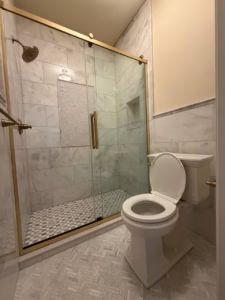
A frameless glass shower enclosure costs more than a framed one, and significantly more than a shower curtain. The glass itself is heavier and requires more precise installation. The hardware is more substantial. And the enclosure is templated after tile installation is complete — which means there’s a lead time between tile completion and glass installation that affects the project schedule.
In most master bathroom renovations, frameless glass is worth the cost because it significantly opens the visual field of the bathroom and makes the room feel larger. In smaller bathrooms or in projects where budget is a priority, a semi-frameless enclosure provides most of the visual benefit at lower cost than fully frameless.
Vanity size and configuration
A larger vanity costs more than a smaller one in materials and sometimes in plumbing scope. A double vanity — the most common master bathroom upgrade request — requires plumbing supply and drain for a second sink where previously there was only one. If the existing plumbing rough-in doesn’t support the second sink location cleanly, that adds additional scope.
Vanity style also matters. A stock vanity from a home improvement store costs less than a semi-custom vanity, which costs less than a custom built-in vanity. The visual difference between these tiers is real — they’re not the same product at different prices. But the functional difference is less dramatic, and in many renovations the semi-custom tier provides a genuinely good result without the lead time and cost of full custom.
Freestanding tub
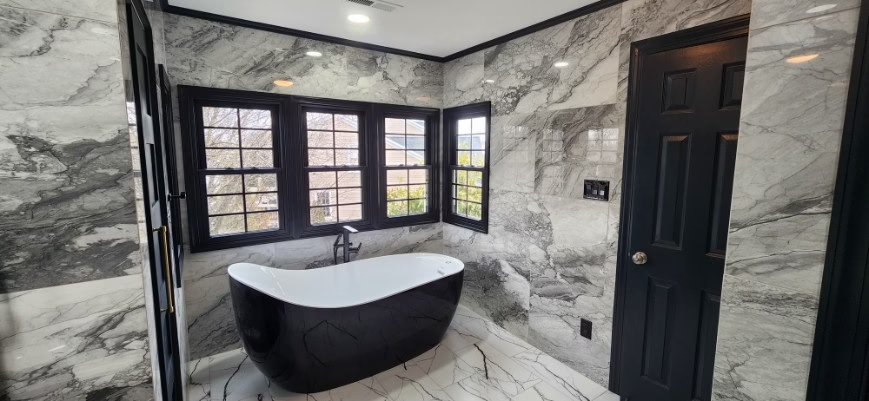
A freestanding tub is the most visually prominent design choice in a master bathroom and one of the more expensive ones to execute correctly. The tub itself varies in price from a few hundred dollars for a basic acrylic model to several thousand for cast iron or stone resin. But the installation cost is where many homeowners are surprised: floor-mount faucets require supply lines run through the floor, which means opening the floor, rerouting plumbing, and patching back. This plumbing work doesn’t apply to a standard alcove or deck tub.
The other question to answer honestly before committing to a freestanding tub: does the bathroom have enough square footage to give the tub proper clearance on all sides without compromising circulation? A tub positioned against a wall with insufficient clearance doesn’t look or function like the photos that made it appealing. For a full look at freestanding tub planning, our article on freestanding tub covers what to consider before selecting one.
Plumbing layout changes
Keeping plumbing in its existing location is the single most effective cost control decision in a bathroom renovation. Moving the toilet, relocating the shower drain, or repositioning the vanity to a different wall requires opening the floor, rerouting drain and supply lines, and patching back. Each fixture move adds $1,500 to $3,000 or more depending on the complexity of the routing.
This doesn’t mean plumbing moves are never worth it — sometimes the existing layout has a genuine functional problem and the move is justified. But it should be a deliberate decision with the cost understood, not an assumption that it’s included in a standard renovation scope.
Why some bathroom styles cost more than others
Some bathroom aesthetic directions are inherently more expensive to execute than others, independent of the specific tile or fixture selected. Understanding which directions carry higher construction cost helps homeowners make informed choices rather than discovering the connection between style and cost when an estimate comes in higher than expected.
Full-wall tile throughout
A bathroom where tile covers all four walls floor to ceiling — not just the wet area — is more expensive than one where tile is confined to the shower and a simpler finish covers the dry walls. More tile means more material cost, more substrate preparation, more labor, and more grout. It also means more long-term maintenance area. The look is clean and cohesive when executed well. The cost reflects the coverage.
Natural stone and large-format tile
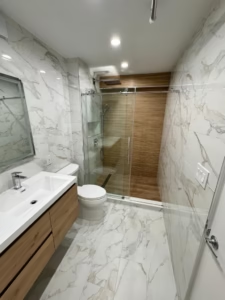
Natural stone tile — marble, quartzite, travertine — costs significantly more in material than porcelain of similar appearance, and requires more careful installation and periodic sealing. Large-format tile (24×24 and above) requires more precise substrate preparation to avoid hollow spots and cracking, and produces more waste during cutting. Both directions produce beautiful results. Both carry cost premiums over standard porcelain in a clean layout.
Custom lighting configurations
A bathroom with sconces at the vanity, recessed fixtures in the shower (wet-rated), and dimmer-controlled general lighting involves more electrical rough-in than a bathroom with a single overhead fixture and a bar light above the mirror. The cost difference is real but manageable — typically $500 to $1,500 more in electrical scope for a well-lit bathroom versus a minimally lit one. It’s one of the better investments in a renovation because lighting quality directly affects daily use of the space.
Floating vanities
A wall-mounted (floating) vanity requires more robust wall blocking during the framing phase than a floor-standing vanity. The vanity hangs from the wall and carries the weight of the countertop, sink, and contents without floor support — the wall framing behind it needs to be adequate. In a renovation where walls are already open, adding wall blocking is a modest cost addition. In a renovation where walls are staying closed, accessing the framing to add blocking is more involved.
Design choices that add value without overcomplicating the project
Not every design improvement requires significant additional scope. Several choices consistently improve the look and function of a bathroom renovation without creating disproportionate labor or cost.
Recessed shower niche
A recessed niche built into the shower wall provides permanent, clean storage without a surface-mounted caddy. It’s framed and waterproofed before tile begins — a modest amount of additional framing labor and waterproofing material — and tiled as part of the same installation as the shower walls. The result is better storage and a cleaner appearance for typically $200 to $400 in additional project cost. For how much a niche is used daily, it’s one of the highest-value additions available at that cost level.
Proper vanity lighting
Vanity lighting at face height — sconces flanking the mirror rather than a single bar light above it — improves the daily usability of the vanity significantly. The electrical rough-in for sconces is included in the overall electrical scope of a renovation. The sconces themselves vary in price. The result is a vanity zone that’s genuinely useful for grooming rather than creating overhead shadows. The cost increment over a bar light is primarily the fixture price difference, not additional labor.
Large-format tile in a simple layout
12×24 porcelain tile in a clean stacked or offset layout produces a refined result with fewer grout lines than smaller tile, lower maintenance, and a clean visual. It costs less in labor than the same tile in a herringbone or diagonal pattern. This is the combination that most consistently delivers a high-quality appearance at a reasonable labor cost, and it’s why it’s the most common tile choice in well-executed bathroom renovations at mid-range and above budgets.
Frameless or semi-frameless shower glass
Upgrading from a shower curtain or framed enclosure to frameless or semi-frameless glass makes more visual difference per dollar than almost any other single choice in a bathroom renovation. It opens the sightline through the shower, makes the room feel larger, and gives the bathroom a finished quality that other upgrades can’t replicate. In a master bathroom renovation especially, this is one of the choices most worth prioritizing in the budget.
What Pennsylvania homeowners specifically should factor in
Homes in Bucks County and Montgomery County were largely built between the 1940s and 1990s. Most of these homes have conditions that affect bathroom renovation scope in ways that newer construction doesn’t.
Older homes frequently have galvanized steel supply lines that are corroding from the inside. When a bathroom is opened for renovation, replacing galvanized supply lines makes sense rather than closing the walls back over plumbing you know is deteriorating. This adds $500 to $1,500 to the project scope and should be treated as a planned item rather than a surprise.
Shower surrounds in homes built before the 1990s were often installed without adequate waterproofing — or with waterproofing products that have long since failed. When tile comes off during demolition, water damage behind the surround is a common finding. Budgeting a 10 to 15 percent contingency on older home bathroom projects is a practical approach. If it’s not needed, you’re ahead. If it is, you’re not scrambling.
Pennsylvania’s climate also creates bathroom conditions that warmer climates don’t. Freeze-thaw cycles contribute to grout cracking in bathrooms that were improperly waterproofed. Bathroom moisture in older homes with less ventilation contributes to mold behind tile. A full gut renovation that addresses substrate, waterproofing, and ventilation from scratch resolves these conditions rather than painting over them.
Common planning mistakes
Choosing a design direction before understanding layout constraints
A freestanding tub that requires 12 inches of clearance on all sides won’t work in a bathroom where 8 inches is the maximum available clearance from the wall. A double vanity that requires 60 inches of width won’t fit on a 54-inch wall. These are layout constraints that determine what’s actually possible in a specific bathroom, and they need to be understood before design direction is finalized.
The most reliable approach is to have a contractor walk through the existing bathroom with a rough design intent before any selections are made. The layout constraints will become clear quickly, and the design direction can be calibrated against what the space actually supports.
Mixing too many materials in one space
A bathroom with four different tile types, three different hardware finishes, natural stone on the shower floor, large-format porcelain on the shower walls, and a patterned mosaic on the main floor is visually complicated in a way that doesn’t resolve by adding more. The most coherent bathroom designs use one or two tile types consistently throughout, with variation in texture and format rather than a proliferation of competing materials. Simpler material palettes also cost less to install because there are fewer transitions and less cut complexity.
Selecting fixtures before confirming rough-in dimensions
Toilet rough-in distance, shower drain location, and vanity supply line positions all need to match the actual plumbing configuration in the floor and wall. Fixtures ordered from a photo or a showroom without confirming rough-in dimensions sometimes don’t fit without plumbing modification. Confirm rough-in dimensions with the contractor before any fixture is purchased or ordered.
Underestimating the cost of wet-area work
The wet area of a bathroom — the shower, and to a lesser extent the area around the tub — is where waterproofing, tile labor, and glass installation concentrate the most cost per square foot. Homeowners who budget based on the bathroom’s total square footage rather than the wet-area scope consistently underestimate what a custom shower build costs. The wet area needs to be costed separately from the rest of the bathroom scope.
What to finalize before requesting estimates
A bathroom renovation estimate is only as accurate as the scope it’s based on. Getting comparable, useful quotes requires these decisions to be clear:
- Shower or tub — or both? The wet area configuration is the most important scope decision. Keeping the tub, converting to shower-only, or having both are fundamentally different projects.
- Custom tile shower or prefabricated? Custom tile costs significantly more and produces a different result. Both are valid — but the choice has to be explicit.
- Is plumbing staying in place? Any fixture move adds cost. Clarity on this before estimates means quotes reflect the actual intended scope.
- Vanity direction — single or double, what width, floor-standing or wall-mounted? These affect both material cost and plumbing scope.
- Tile scope — shower walls only, or additional wall tile outside the shower? Floor-to-ceiling or standard height? Pattern or standard layout?
- Glass enclosure type — frameless, semi-frameless, or framed? Swinging door or slider?
- Fixture level — even a rough sense of the intended quality level helps produce an estimate with realistic material allowances.
For a more detailed look at how master bathroom design decisions work in a larger primary bathroom renovation context, see our article on master bathroom remodel ideas.
Ready to plan your bathroom renovation?
We work with homeowners throughout Bucks County, Montgomery County, Philadelphia, and Mercer County NJ on bathroom renovations of all scopes and budgets. We’ll come to your home, look at the existing bathroom and its conditions, and give you a detailed written estimate based on what the project actually involves.
Call us at 609-712-2750 or request a free estimate online. We’ll get back to you within one business day.


