
- By admin
- In Uncategorized
Shower Benches: When They Make Sense in a Bathroom Remodel
Shower Bench — When It’s Worth Building In and When It Isn’t
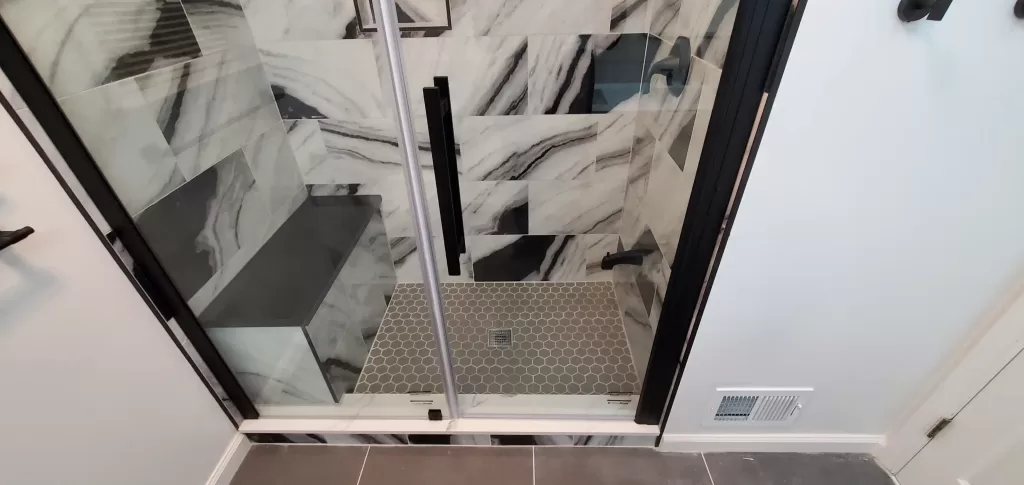
A built-in shower bench comes up in almost every walk-in shower renovation conversation. Homeowners have seen them in photos, they like the idea, and they want to include one. That’s reasonable — a well-placed bench in the right shower genuinely improves daily usability. But a bench added to the wrong shower — one that’s too small to support it, or one where the bench conflicts with how the space is actually used — reduces functional shower floor area without proportional benefit.
A built-in bench is also not just an accessory that gets added after tile work is complete. It’s framed before waterproofing begins, waterproofed as an integral part of the shower assembly, and tiled as part of the same installation as the shower walls and floor. The decision to include a bench has to be made during the design phase, not mid-project. And if it’s specified after rough-in has started, it may require structural modification.
This article explains when a shower bench makes sense, what building one actually involves, and how to think about the tradeoff between bench space and usable shower floor area. For general bathroom renovation planning, our bathroom remodeling page covers the full renovation scope.
When a shower bench actually makes sense
The shower is large enough to support it without compromise
The minimum shower size where a built-in bench works without significantly compromising usable floor area is roughly 42×60 inches. In a shower of this size, a bench occupying one end — typically 15 to 18 inches deep and spanning the full width at the bench end — still leaves adequate standing room in the remaining floor area.
In a smaller shower — 36×36, 36×42, even some 36×60 configurations — a full-width bench at one end reduces the usable floor area to a point where daily shower use feels cramped. The bench takes up real space, and that space has to come from somewhere in the shower footprint.
The household has an aging-in-place or accessibility need
A shower bench is one of the most consistently valuable accessibility features in a bathroom renovation for households where mobility or stability is a concern. It provides a safe, stable surface to sit while bathing, a place to rest for anyone who has difficulty standing for extended periods, and a surface to brace against if balance is an issue.
For homeowners planning a renovation with accessibility in mind, a bench built into a curbless walk-in shower with grab bars at the correct positions is one of the most impactful improvements possible. This is a functional decision, not a luxury one, and it should be treated as such in the project planning conversation.
The shower is being used for practical daily tasks
Shaving legs, scrubbing feet, sitting while conditioner sets — these are real daily uses that a bench supports in a way that a sloped wet surface doesn’t. For households where these tasks happen regularly, a bench in the right shower is used consistently rather than sitting unused after the first month.
The honest question to ask before adding a bench: will this household actually use it regularly? A household with two people who shower quickly and neither shaves nor has mobility concerns may genuinely not use a bench after the initial renovation. A household where leg-shaving is a daily routine will use it every day.
The bench placement works with the shower’s layout and glass configuration
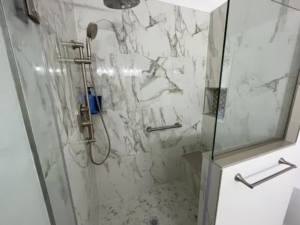
A bench positioned at the end of the shower away from the showerhead works well. It keeps the person using the bench out of the main spray zone, leaves the area in front of the showerhead as clear standing space, and doesn’t interfere with the glass door or panel opening.
A bench positioned on the same wall as the showerhead, or positioned where it conflicts with the door swing, creates functional problems. The bench placement needs to be worked out as part of the overall shower layout — showerhead position, door position, niche position, and bench position all interact and need to be resolved together during design.
Built-in shower bench vs bathroom seating outside the shower
A built-in tiled bench is a permanent, integral part of the shower structure. It’s framed, waterproofed, and tiled as part of the shower build. It doesn’t move, it doesn’t require removal for cleaning, and it doesn’t require purchasing or storing a separate product.
A freestanding shower stool or transfer bench is a portable alternative that can be placed in or removed from the shower as needed. It’s less expensive than a built-in and doesn’t require any modification to the shower construction. For households where bench use is occasional or accessibility needs may change, a portable bench is a reasonable approach that doesn’t commit the shower layout to a permanent feature.
Seating outside the shower — a small stool or chair at the vanity area, or a bench at the bathroom entrance — serves a different purpose from a shower bench. It’s useful for dressing and undressing but doesn’t address the in-shower use cases that a built-in bench addresses.
Space and layout considerations before committing to a bench
How much usable shower floor area will remain
A standard built-in bench is 15 to 18 inches deep and spans the full width of the shower at the bench wall. In a 42-inch deep shower, a 16-inch deep bench leaves 26 inches of shower floor depth in front of the bench — workable, but not generous. In a 60-inch deep shower, 16 inches of bench leaves 44 inches of standing space, which is comfortable.
The calculation worth doing before finalizing a bench: if the bench occupies X inches of depth, how much floor space remains? If the remaining floor area is under 30 inches of depth, the shower will feel cramped for daily standing use. This should be a deliberate tradeoff made consciously, not discovered after tile is installed.
Glass door and entry configuration
A bench at the back wall of the shower doesn’t typically conflict with the door. A bench on a side wall may extend into the entry zone depending on door placement, which affects how easily someone can step into and move through the shower.
If a frameless glass door is planned, the door swing direction and hinge placement need to be coordinated with the bench position. A door that swings toward the bench, or a slider that’s impeded by the bench end, creates a functional problem. The glass enclosure and bench need to be designed together, not specified independently.
Corner bench vs full-width bench
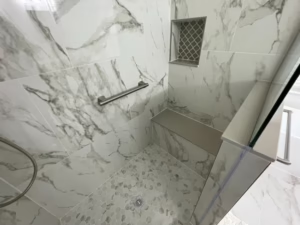
A corner bench occupies less linear floor space than a full-width bench. It typically fits in one corner of the shower at a triangular or angled configuration, providing a seated surface without spanning the full wall width. Corner benches work better than full-width benches in smaller showers where a full-width bench would leave too little standing room.
A full-width bench provides more usable bench surface and looks more intentional and substantial in a larger shower. It also provides better surface area for accessibility use — a full-width bench is more stable and easier to use for someone with mobility challenges than a smaller corner bench.
How a built-in bench is constructed — and why it matters
This is the section most articles about shower benches skip entirely. A built-in shower bench is not a shelf you tile over. It’s a structural element that’s part of the shower’s waterproofing assembly. How it’s built determines whether it holds up for 20 years or begins failing in five.
Framing
The bench is framed before the shower walls are waterproofed. Typically this means building a wood or metal framed box at the bench location, sized to the intended bench dimensions. The framing has to be solid — it needs to support the weight of an adult sitting on it plus the weight of the tile and mortar above it, without any flex or deflection. Deflection in the substrate under tile causes grout cracking and eventually tile failure.
Waterproofing the bench
The bench surface is part of the wet zone in the shower. It gets direct water exposure from the showerhead and retains standing water when the shower is in use. Every surface of the bench — the top, the sides, and the front face — has to be covered by the same waterproofing membrane that covers the shower walls and floor.
The bench top needs to be sloped slightly toward the shower floor — typically 1/8 inch per foot minimum — so water drains off rather than pooling on the bench surface. Standing water on a tiled horizontal surface in a wet environment accelerates grout and tile joint deterioration. The slope is built into the mortar bed or the substrate framing before tile goes on.
A bench that wasn’t properly waterproofed — or that was treated as a decorative afterthought rather than an integral part of the shower assembly — is one of the more common causes of shower failure. Water that gets through the bench tile works its way into the framing below and produces rot, mold, and eventually structural damage that requires tearing out the whole shower to fix.
Tile on the bench
The bench top tile is typically the same tile used on the shower floor rather than the shower walls — because the bench top is a horizontal wet surface subject to similar drainage and traction requirements as the floor. Large-format tile on a bench top requires the same slope and substrate preparation it would on a shower floor. Mosaic tile or smaller format tile on the bench top is easier to slope correctly and provides more grout lines for grip.
The bench edge and front face are typically finished with a bullnose tile or a mitered edge to produce a clean, finished corner. The detail at the bench-to-wall transition and the bench-to-floor transition needs to be planned as part of the tile layout — it’s not something to figure out during installation.
Cost and timeline
A built-in bench adds roughly $400 to $800 to the cost of a shower renovation at standard labor and material rates — covering the additional framing, waterproofing labor, tile, and finishing. In a larger or more complex shower, or with premium tile, the addition is proportionally higher.
The bench has to be framed before waterproofing begins. This is the constraint that makes the bench a design-phase decision rather than a field adjustment. If a bench is requested after the shower has been waterproofed and tile work has started, adding it requires removing completed work, reframing, and restarting the waterproofing and tile sequence for the affected area. For full context on how bathroom renovation decisions affect cost, see our bathroom renovation cost guide.
Cleaning and maintenance reality
A tiled bench surface accumulates soap residue, shampoo, shaving cream, and hard water deposits in a way that a vertical shower wall doesn’t. The horizontal surface holds products and water rather than shedding them. The bench-to-wall and bench-to-floor transitions — corners and edges — accumulate soap scum faster than smooth vertical tile.
This doesn’t make a bench a bad choice — it’s the same maintenance reality as any horizontal surface in a wet area. But it’s worth understanding before assuming a tiled bench is as low-maintenance as the vertical tile on the shower walls. Regular cleaning at the bench surface and at the grout joints in the transition corners is part of keeping the bench looking good over time.
Tile with fewer grout lines — larger format tile on the bench top — has less surface area for accumulation. A properly sloped bench top that sheds water rather than pooling it reduces the rate at which residue builds up. These are practical design choices that affect the long-term maintenance burden of the bench.
Common planning mistakes
Adding a bench to a shower that’s too small for it
The most common shower bench mistake is including a full-width bench in a shower that doesn’t have the depth to support it without significantly reducing standing space. A bench in a 36×60 shower that leaves 20 inches of depth for standing use is technically possible but functionally frustrating. The test is: after the bench is included, does the remaining shower floor feel like adequate working space? If the answer is no, the shower needs to be larger to support a bench, or the bench should be omitted.
Treating the bench as a design afterthought
A bench requested mid-project after waterproofing has started requires removing completed work, reframing, and restarting the waterproofing sequence. The cost and delay are avoidable. The bench decision needs to be part of the shower design conversation at the beginning of the project, not added when someone sees a photo they like two weeks into construction.
Ignoring the door and glass configuration
A bench positioned where it conflicts with the door swing or with how the shower is entered creates a functional problem that gets noticed every time the shower is used. The bench, door, and showerhead positions are all part of the same shower layout conversation and need to be resolved together.
Not accounting for drainage slope on the bench top
A flat bench top pools water. A bench top built without adequate slope toward the floor traps standing water at the bench surface, accelerates grout joint deterioration, and can eventually allow water to work through imperfect grout lines into the substrate below. Slope has to be built into the bench substrate during framing — it can’t be corrected after tile is installed.
When a shower bench is worth it — and when to skip it
A bench is worth including when: the shower has adequate depth (42 inches minimum after the bench) to leave comfortable standing space; the household will genuinely use it for daily tasks or accessibility; the bench position works with the shower layout, door configuration, and showerhead placement; and the decision is made during the design phase.
A bench is worth skipping when: the shower is too small to support one without reducing standing space to an uncomfortable level; the household honestly won’t use it regularly; or the preference for a bench conflicts with the optimal shower layout for the space.
In a smaller shower where a built-in bench doesn’t fit well, a portable shower stool achieves the same functional benefit — sitting while bathing, accessibility support — without occupying permanent floor space or affecting the shower construction.
For comprehensive guidance on master bathroom shower planning — including shower size, bench, niche, and glass decisions — see our article on master bathroom remodel ideas.
Planning a bathroom renovation with a walk-in shower?
If you’re planning a bathroom renovation in Bucks County, Montgomery County, or surrounding areas of Pennsylvania and want to work through the shower design — including whether a bench makes sense for your specific shower size and household — call us at 609-712-2750 or request a free estimate online.
We’ll come to the space and have a straightforward conversation about what works for your bathroom and what it will cost.


