
- By Saveli
- In Uncategorized
How to Plan a Kitchen Remodel Before Requesting Quotes
Most homeowners start the kitchen renovation process by calling contractors to request estimates. That feels like the logical first step — find out what it costs, then make decisions from there. The problem is that without a clear scope, the estimates that come back are based on different assumptions. One contractor prices a same-layout remodel with semi-custom cabinets. Another prices a layout reconfiguration with custom cabinetry. A third prices a cosmetic update. Each quote is individually reasonable, and none of them can be compared to the others because they’re not describing the same project.
The solution is a modest amount of upfront thinking before the first contractor walks through the door. Not a full design plan — that happens with the contractor. But clear answers to a handful of questions that define what the project actually is: whether the layout is changing, what cabinet tier is intended, what the island goals are, what appliances are being replaced. With those answers in place, every estimate you receive is based on the same project, and comparing them becomes straightforward.
This article walks through those questions. For the full scope of what kitchen renovation involves, see our kitchen remodeling page. For cost ranges by project type, the kitchen renovation cost guide covers that in detail.
Decide whether the layout is staying or changing
This is the single most impactful scope decision in a kitchen renovation, and it’s the one that most directly determines what the project will cost and how long it will take.
Keeping the kitchen’s layout — the sink, range, and refrigerator in their existing positions — means no plumbing lines move, no appliance circuits are rerouted, and the rough-in phase is focused on connecting new fixtures to existing positions. The project is about replacing cabinets, countertops, appliances, and finishes within the existing footprint. This is faster, less disruptive, and meaningfully less expensive than a layout change.
Changing the layout means moving at least one plumbing fixture (the sink is the most common) or relocating appliances to different walls. Moving the sink requires extending or rerouting drain and supply lines — a plumbing scope addition of $1,000 to $2,500 depending on the distance and routing. Adding an island prep sink requires a drain run through the floor. Converting from electric to gas requires a new gas line. Each change adds real cost and complexity on top of the cabinet and finish renovation.
The question to ask honestly: does the existing layout have a genuine functional problem? If the kitchen works reasonably well as laid out — reasonable work triangle, adequate counter space for daily cooking, acceptable relationship to the dining area — keeping the layout and investing in better cabinets and finishes usually produces a better result at the same budget than a layout change with the same total spend.
If the layout has a real problem — the kitchen is isolated from the rest of the living area in a way the household wants to address, the sink is positioned so that the person washing dishes faces a wall and is excluded from conversation, or the traffic flow through the kitchen creates daily frustration — addressing it during the renovation is appropriate. But it should be a deliberate decision with the cost understood, not a default assumption.
Define the scope of the remodel
Before any quotes can be accurate, the depth of the renovation needs to be defined. These are meaningfully different projects, and a contractor walking through the kitchen without knowing which one you want will have to guess.
Cosmetic update
A cosmetic kitchen update replaces visible finishes without touching the structure or systems: cabinet door and drawer fronts replaced while keeping the existing box, new countertops, new hardware, new backsplash tile, paint. No permits required for most cosmetic work. Fastest to complete, lowest cost, and often produces a genuinely improved kitchen if the existing cabinet boxes are in sound condition and the layout works.
Same-layout full remodel
A full remodel replaces everything — cabinets, countertops, appliances, flooring, lighting, plumbing fixtures — while keeping the plumbing and appliances in their existing positions. This is the most common kitchen renovation scope and the one that produces the most complete transformation within a manageable budget and timeline. Permits are typically required for electrical work. Lead times for cabinets (4 to 8 weeks for semi-custom) determine the project schedule.
Layout change or wall removal
Adding a layout change or wall removal to a full remodel adds structural, plumbing, and electrical scope. Removing a load-bearing wall to open the kitchen requires a structural engineer’s beam specification, a permit, and the beam installation before any other work. Moving the sink or adding an island prep sink adds plumbing scope. Adding an island cooktop adds gas or electrical scope and a ventilation path for the range hood. Each of these is a legitimate choice — they just need to be identified as part of the scope before estimates are requested so the quotes reflect them accurately.
Kitchen expansion
Extending the kitchen into an adjacent room or adding square footage through a bump-out or addition is a different project category from a renovation of the existing kitchen. It involves structural work, foundation or subfloor extension, roof work if the addition is at the rear of the house, and a full kitchen renovation in the expanded footprint. This is a significant construction project and is scoped differently from a same-footprint kitchen remodel.
Cabinet and storage direction
Cabinets are typically 30 to 45 percent of the total kitchen renovation budget. The cabinet tier decision — stock, semi-custom, or custom — is the single largest variable in kitchen renovation cost and needs to be settled before any accurate estimate can be prepared.
Stock vs semi-custom vs custom
Stock cabinets are available in fixed sizes from home improvement retailers and can be delivered quickly. They work well in kitchens where the layout fits standard sizing. Their limitation is that kitchens with non-standard dimensions end up with fillers to close gaps, which can look assembled rather than designed.
Semi-custom cabinets are available in smaller size increments, more configurations, and a wider range of finishes. Lead time is typically 4 to 8 weeks. They cost more than stock but produce a kitchen that fits the space properly and offers meaningfully more design flexibility. For most kitchen renovations in Bucks County and Montgomery County, semi-custom is the right tier — it delivers a genuinely well-designed kitchen without the cost and lead time of full custom.
Full custom cabinets are designed and built specifically for the kitchen at any size and configuration. They’re the highest quality and the most expensive. Lead times are longer. The premium over semi-custom is significant, and whether it’s justified depends on the specific kitchen and the homeowner’s priorities. Before an estimate can accurately reflect cabinet cost, the tier needs to be at least roughly established.
Storage needs
A kitchen renovation is the right time to address storage that the existing kitchen doesn’t have and that daily use has made clear is needed. Pull-out base cabinet trays, deep drawer configurations, a proper pantry cabinet, a built-in spice pull-out, waste bin pull-outs — each of these adds to the cabinet order cost but resolves daily friction in ways that matter for years. Identifying the specific storage problems in the existing kitchen before meeting with a contractor allows the cabinet layout to be designed around solving them, rather than defaulting to a configuration that mirrors the existing kitchen.
Island goals
Whether to include an island, and what the island will be used for, needs to be established early because the island affects the cabinet layout, the floor plan circulation, and potentially the plumbing and electrical scope. An island for counter space and seating only involves cabinets and countertop. An island with a prep sink adds plumbing. An island with a cooktop adds gas or electrical, a range hood, and a ventilation path. An island with pendant lighting above adds electrical rough-in. The more functions the island serves, the more scope it adds, and those scope additions need to be in the estimate from the start.
Also important: the island needs adequate clearance on all sides for comfortable circulation. The standard is 42 to 48 inches from island edge to adjacent cabinet or wall. This needs to be checked against the available floor plan before the island is included in the design — an island that doesn’t fit with adequate clearance produces a kitchen that’s harder to use than the one it replaced.
Appliance, sink, and lighting planning
Appliances and plumbing fixtures need to be specified before cabinet layout is finalized because their dimensions determine the cabinet openings built around them. Getting this direction clear before estimates are prepared prevents the common problem of an estimate based on assumed appliance sizes that don’t match what the homeowner actually selects.
Range size and fuel type
A 30-inch range versus a 36-inch range requires different cabinet openings. A gas range versus an electric range requires different rough-in. Converting from electric to gas requires a new gas line. Converting from gas to induction requires a 240V circuit. The range selection determines the opening dimension for the cabinet layout and the rough-in requirement for the electrical or gas scope. Having at least a size and fuel type direction before the first contractor visit allows the cabinet layout to be designed correctly.
Refrigerator depth and configuration
A standard freestanding refrigerator is 30 to 36 inches deep and protrudes past the cabinet face. A counter-depth refrigerator is approximately 24 to 25 inches deep and aligns with the cabinet face — a cleaner look that costs more. Built-in refrigerators are designed to fit flush with custom panels. The refrigerator depth affects how the cabinet layout addresses the refrigerator alcove, and the size (width and height) determines the opening dimensions. Knowing the general refrigerator direction before the cabinet design is drawn avoids redesign when the homeowner selects a refrigerator that doesn’t fit the designed opening.
Dishwasher position
The dishwasher is almost always positioned adjacent to the sink for practical reasons — the drain and supply connections are close, and loading the dishwasher typically happens at the sink. If the dishwasher is moving to a different position than it currently occupies — to the other side of the sink, or to the island — that affects the cabinet layout and the plumbing routing.
Lighting
Kitchen lighting is more complex than a single overhead fixture, and the decisions need to be made before cabinet installation because some of the rough-in work happens before or during the cabinet phase. Under-cabinet lighting wiring runs inside or behind the upper cabinets — adding it after cabinets are installed is significantly more complicated than roughing it in before installation. Pendant light positions over the island need to be roughed in before drywall if the pendants are hardwired. Recessed can positions need to be set before the ceiling is closed.
The practical pre-planning step: decide whether under-cabinet lighting is part of the plan (yes or no), how many pendant positions are needed over the island (if there is one), and whether the existing overhead lighting is being kept or replaced with recessed cans. These decisions affect the electrical rough-in scope and need to be in the estimate.
Range hood ventilation
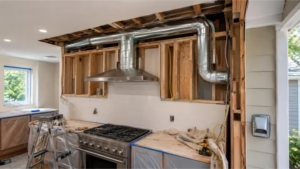
A range hood that vents to the exterior requires a duct path from above the range out through the exterior wall or up through the ceiling and roof. In a simple straight-line path, this is manageable. In a kitchen where the range is on an island, or where the duct path has to navigate around structural elements, the ventilation work is more complex. The direction — vented to exterior versus recirculating — needs to be established early so the rough-in scope is included in the estimate.
Surface and finish direction
Having a general sense of the intended surface and finish tier before requesting quotes allows contractors to use material allowances that reflect the actual project. An estimate built around mid-range quartz countertops and semi-custom cabinets is a different estimate from one built around natural stone and custom cabinetry — even if the kitchen is the same size and the layout is identical.
Countertop material category
Quartz is the most popular countertop material for kitchen renovations in this market and for good practical reasons: it’s non-porous, durable, consistent in pattern, and available in a wide range of appearances. Natural stone — granite, quartzite, marble — is more expensive in material and requires sealing. Laminate has improved significantly and remains a practical option at lower cost. Establishing which category is intended before estimates are requested allows the material allowance to reflect reality rather than default to a mid-range assumption that may be off in either direction.
Backsplash direction
Backsplash tile is less expensive than countertop in total cost but more visible and more consequential for the kitchen’s overall character. A simple subway tile in a standard layout is the cost baseline. A full-height backsplash behind the range, a statement tile in a pattern layout, or natural stone to match the countertop each add cost in material and labor. Tile labor is particularly sensitive to pattern complexity. Having a general backsplash direction — simple and clean versus a design statement — helps the estimate reflect the actual tile scope.
Hardware and fixture finish
Cabinet pulls, faucets, and lighting fixtures all carry a metal finish, and consistency across those finishes is one of the easiest ways to make a kitchen feel designed rather than assembled. Establishing a finish direction — matte black, brushed nickel, brushed gold, polished chrome — before the estimate is prepared allows the contractor to verify that the planned fixtures are available in that finish and to use realistic fixture pricing. A kitchen specified with premium brushed gold fixtures throughout costs more than the same kitchen with standard brushed nickel, and that difference should be in the estimate from the start.
Flooring relationship
If the kitchen flooring is being replaced as part of the renovation, it needs to be included in the scope. If existing flooring is being kept, the cabinet installation sequence needs to account for it — cabinets are typically installed before flooring in new construction but after flooring in renovations that are keeping the existing floor. Knowing which direction is intended affects how the estimate sequences the work and prices the flooring scope.
What homeowners often forget to think through
Cabinet lead times and project scheduling
Semi-custom cabinets have lead times of 4 to 8 weeks from order placement to delivery. Custom cabinets take longer. If cabinet selection isn’t finalized in time for the order to arrive before the intended project start date, the project is delayed — everything else waits for the cabinets. The practical implication: start thinking about cabinet direction early, before the estimate process begins, so the selection can be made promptly once an estimate is accepted and a contract is signed.
Appliance delivery and availability
Specific appliance models are sometimes on extended lead time, particularly for higher-end or specialty products. An appliance that’s listed as available may have a 6 to 10 week delivery window. If the cabinet layout is designed around specific appliance dimensions and that appliance is on extended lead time, the project schedule adjusts around it. Confirming appliance availability before finalizing the cabinet design avoids designing around an appliance that can’t be delivered in time for installation.
Workflow and daily use
The most common kitchen design regret isn’t about finishes — it’s about workflow. A kitchen that looks beautiful but requires the cook to walk around an island to get from the refrigerator to the range. A counter layout that doesn’t have landing space adjacent to the oven. A sink position that faces a wall and isolates the person doing dishes from the household activity. These are problems that don’t show up in a rendering and aren’t obvious from a floor plan. They’re discovered in daily use.
Before finalizing any kitchen layout, walk through the kitchen’s primary workflows: bringing groceries from the entry, moving from the refrigerator to the prep area, from the prep area to the cooktop, from the cooktop to the serving area. Does the proposed layout support each of those movements, or does it create obstacles? This is a conversation worth having explicitly during the design phase rather than discovering as a complaint about the finished kitchen.
Seating clearances for islands
An island with seating requires adequate overhang for knees — typically 12 to 15 inches depending on the counter height — and adequate clearance behind the seating for people to sit and stand comfortably. Standard counter-height seating (36-inch counter) needs at least 10 to 12 inches of overhang. Bar-height seating (42-inch counter) needs at least 12 inches. The total footprint of the island plus the seating clearance behind the stools needs to fit within the kitchen’s available floor area without compromising the required circulation clearance on the opposite side.
Realistic budget alignment
The most common reason kitchen renovation estimates come in higher than expected is that the homeowner’s mental model of the project and the contractor’s actual scope assessment are misaligned. The homeowner is imagining a mid-range cabinet refresh. The contractor is pricing a semi-custom full gut remodel. Or the homeowner is imagining a premium result at a mid-range budget, which isn’t a realistic combination.
Going into the estimate conversation with a rough budget range — even if it’s approximate — allows the contractor to identify whether the desired scope is achievable at that budget and where tradeoffs need to be made. A contractor who knows your budget can suggest where to invest and where to simplify. A contractor who doesn’t know your budget will either price the ideal project or make assumptions that don’t match your priorities. For a detailed look at where kitchen renovation budgets grow, our article on what adds the most cost to a kitchen remodel covers the main cost drivers.
What makes a kitchen quote more accurate
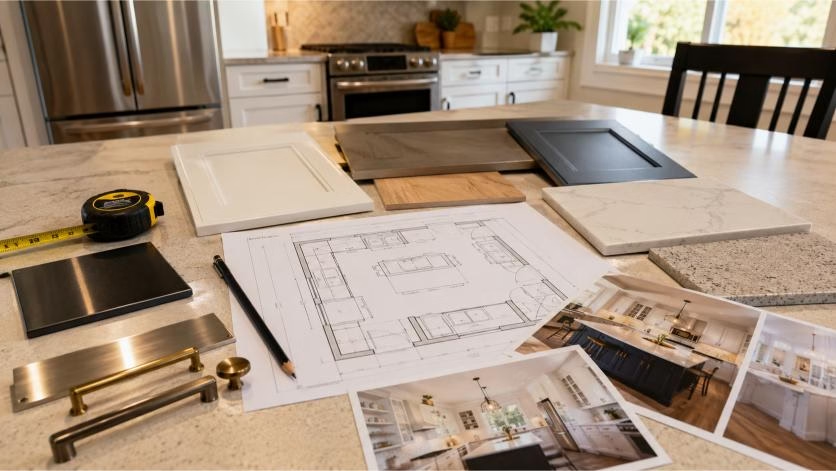
A contractor who visits your kitchen with clear scope information gives a more accurate and more useful estimate than one who has to assume the answers to every question. Here’s what actually helps produce comparable, accurate quotes:
- Layout: same or changing? — the single most important scope question. Even a provisional direction (“we want to keep plumbing in place” vs “we’re considering moving the sink”) changes the estimate significantly.
- Cabinet tier — stock, semi-custom, or custom? This is the largest single variable in kitchen renovation cost. If undecided, say so and the contractor can explain the difference; but having a general direction produces a more accurate estimate.
- Island: yes or no, and what functions? — seating only vs prep sink vs cooktop are meaningfully different scopes.
- Appliance direction — range size and fuel type, refrigerator depth, whether appliances are being kept or replaced. Specific models aren’t needed, but general direction helps.
- Countertop and finish tier — a general sense of the intended quality level (standard vs premium) allows realistic material allowances.
- Photos of inspiration — a photo communicates cabinet style, hardware finish, countertop direction, and backsplash intent all at once. They don’t have to match your kitchen exactly; they establish the design language and quality tier you’re aiming for.
- Dimensions if available — a rough floor plan sketch with approximate dimensions helps the contractor assess what fits before visiting, and makes the on-site visit more productive.
- Budget range — sharing a rough budget expectation allows the contractor to identify whether the desired scope is realistic and where the most useful tradeoffs are.
The goal isn’t a fully specified design before you meet with a contractor — that’s what the design process is for. The goal is enough clarity that the estimates you receive describe the same project and can be meaningfully compared. Our kitchen design page covers how the planning and design process works in the context of a real renovation.
Ready to start planning your kitchen renovation?
We work with homeowners throughout Bucks County, Montgomery County, Philadelphia, and Mercer County NJ on kitchen renovations of all scopes and budgets. If you’re at the early planning stage and want to talk through what the project involves before requesting a formal estimate — that’s exactly the kind of conversation we’re glad to have.
Call us at 609-712-2750 or request a free estimate online. We’ll come to the kitchen, look at the existing conditions and layout, and give you a practical assessment of what the project involves, what it will cost, and where the most useful tradeoffs are for your specific situation.


