
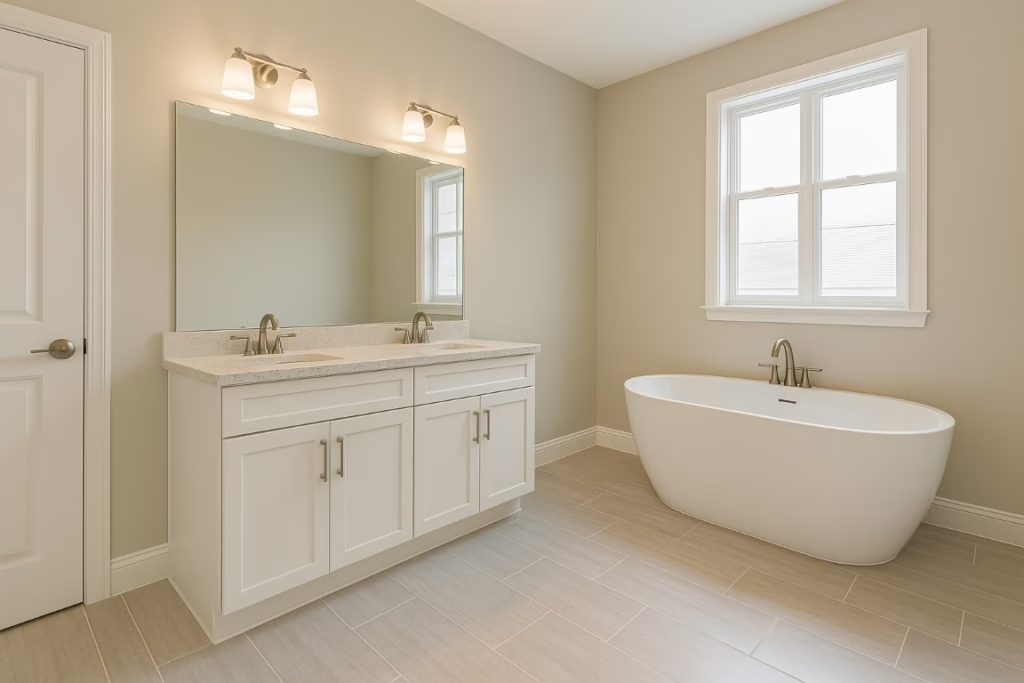
- By admin
- In Uncategorized
Essential Bathroom Blueprint Elements for Your Remodel
What to Plan Before a Bathroom Remodel — Layout, Fixtures, and Decisions That Actually Matter
The most expensive bathroom renovat ion mistakes don’t happen during construction. They happen before it — in the planning phase, when decisions that seem like they can be figured out later turn out to be decisions that had to be made before rough-in began.
A niche that’s in the wrong location. A toilet with the wrong rough-in distance for the fixture the homeowner bought three months into the project. A vanity that was ordered without confirming the door swing clearance. A shower valve roughed in at the wrong height for the rain head the homeowner selected after tile was already installed. Every one of these is avoidable with proper pre-construction planning, and every one of them has turned into a mid-project change order that added cost and delay.
This article covers the decisions that need to be made before a bathroom renovation begins — not technical drawing specifications, but the practical layout and fixture decisions that determine whether the finished bathroom works the way you intended. For the full scope of what a bathroom renovation involves and what it costs, our bathroom remodeling page and the bathroom renovation cost guide cover that in detail.
The planning decisions that have to be made before demo begins
A bathroom renovation proceeds in a fixed sequence: demolition, rough plumbing, rough electrical, waterproofing, tile, fixtures, finish. Several decisions in the planning phase set parameters that are locked in during rough-in and can’t be changed without reopening finished work. These decisions can’t be deferred until later in the project — they have to be resolved before the first wall comes down.
Shower or tub — or both
The wet area configuration is the foundational layout decision. Keeping the tub, converting to shower-only, or having both are structurally different projects. A tub-to-shower conversion requires relocating or capping the tub drain, adding a shower drain in the correct position, and reconfiguring the valve location. These are rough-in tasks that establish the shower footprint before waterproofing begins.
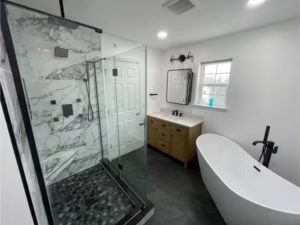
This decision also determines the wet area’s footprint and how the remaining floor space in the bathroom distributes. Knowing it before demo means the rough plumbing can be planned correctly from the start rather than improvised after the floor is already open.
Layout: keep in place or move plumbing
Keeping the toilet, sink, and shower or tub in their existing positions is the most effective cost control decision in a bathroom renovation. Moving any plumbing fixture requires opening the floor or walls, rerouting drain and supply lines, and patching back. Each fixture move adds $1,500 to $3,000 or more to the project depending on the routing complexity.
The question is whether the existing layout has a genuine functional problem that justifies the cost of moving things. If the toilet is in a location that works and the sink is reasonably positioned — keeping plumbing in place and investing in better finishes and fixtures produces an excellent result at meaningfully lower total cost than a full reconfiguration.
Vanity size and door clearance
The vanity size needs to be determined before demo because the rough plumbing for the sink supply lines and drain is set during rough-in at the vanity location. The vanity width also needs to be checked against the door swing before anything is ordered.
In most bathrooms, the door swings into the room. The arc of the door swing determines what’s achievable in the floor space in front of the vanity. A vanity that’s too wide for the door swing creates a clearance problem that affects every daily use of the bathroom. This is a measurement that has to be made in the actual room before any vanity is purchased.
Toilet rough-in distance
Toilets have a rough-in measurement — the distance from the finished wall behind the toilet to the center of the drain. Standard rough-in is 12 inches in most homes, but 10-inch and 14-inch rough-ins are common in older homes in Bucks County and Montgomery County. The rough-in distance is fixed in the floor and determines which toilets will fit without modification.
Buying a toilet before confirming the rough-in distance is a common mistake that results in a toilet that doesn’t fit, a return, and a delay. Confirm the rough-in dimension with the contractor before any toilet is ordered.
Medicine cabinet vs flat mirror
A recessed medicine cabinet needs to be framed during rough-in. The cabinet housing fits between wall studs, and the framing for the recessed cavity has to be done before drywall and tile. Deciding after tile is installed that a recessed cabinet would have been better requires opening the wall and adding framing — work that could have been planned upfront.
If a recessed medicine cabinet is part of the plan, it needs to be specified before rough-in. The decision between a recessed cabinet and a flat mirror needs to be made early, not treated as a finish-phase accessory choice.
Staircase configuration for shower niches and benches
Shower niches and built-in benches are framed and waterproofed as part of the shower assembly — before tile begins. A niche position that’s in the wrong location, or a bench that’s requested after waterproofing is complete, requires tearing out finished work to correct. These elements have to be specified during the design phase, not added when the homeowner sees a photo they like after demo has started.
Wet-area planning — what needs to be decided before waterproofing
The wet area of a bathroom — the shower and any adjacent splash zones — involves the most technically demanding construction in the project. Waterproofing is built up in layers before tile begins, and those layers have to be applied to the correct substrate in the correct sequence. Several decisions about the wet area affect how the waterproofing and framing are done and can’t be modified after the fact.
Shower footprint and dimensions
The shower’s interior dimensions need to be decided before the shower pan or mortar bed is installed. The drain position is set based on the footprint. The size of the glass enclosure is determined by the opening width. If the shower dimensions change after the drain is set in concrete, the drain has to be repositioned — which means cutting and repouring concrete, or opening the subfloor above a basement.
In practice: the shower footprint is one of the first decisions to finalize, because it determines everything that happens in the wet area sequence.
Niche size and position
A niche is framed between studs before waterproofing. The niche dimensions need to align with the tile module being used — so that tiles land cleanly at the niche edges without awkward cuts. If a 12×24 tile is being used on the shower walls, the niche depth and width should be sized in multiples of that tile format to avoid awkward cuts at every niche edge.
Niche position on the wall also matters. A niche on an exterior wall may hit insulation or structural framing and be more complex to build than one on an interior wall. A niche positioned at the showerhead end of the shower is less useful than one on the side wall at shoulder height. These are design decisions that need to be resolved during the planning conversation, not improvised during framing.
Shower valve height and multi-function systems
The shower valve rough-in height determines where the controls, showerhead, and any body spray connections are mounted. Standard valve height is typically 48 to 52 inches from the shower floor. A rain head mounted at the ceiling requires a supply line roughed in at ceiling height. Body spray connections require separate rough-in at the specified wall heights.
If a multi-head shower system is being specified — rain head plus handheld plus fixed body sprays — all of those rough-in positions need to be specified before waterproofing begins. Adding a rain head rough-in after the shower walls are tiled requires opening the wall or ceiling and is a significant disruption to finished work.
Glass enclosure type and opening width
The type of glass enclosure — frameless pivot door, sliding panels, fixed panel with entry opening — determines the opening width the tile setter needs to leave for the glass installer. The glass is templated after tile is complete and installed afterward, but the opening dimensions have to be correct when tile is installed.
A frameless glass enclosure that’s wider than the opening left by the tile requires removing and re-setting tile at the opening edge. This is avoidable by specifying the glass enclosure type and approximate opening width during the design phase so the tile layout is planned around it.
Fixture selection before construction — what matters most
Several fixtures need to be specified during the planning phase rather than selected during or after construction. The common thread is that each has construction implications that affect rough-in positions, framing, or electrical placement.
Shower faucet and valve brand
Different shower valve brands have different rough-in requirements — the position of the hot and cold supply connections, the depth of the valve body in the wall, and the trim plate dimensions. Switching valve brands after rough-in is done requires replacing the rough-in valve and possibly adjusting the wall opening. The valve brand should be specified before rough-in begins.
Vanity faucet and drain configuration
If the vanity has a single-hole faucet, the countertop or sink needs a single hole. If it’s a three-hole faucet, three holes are required. This seems obvious but is a common source of product return: the vanity is ordered with a specific hole configuration and the faucet selected doesn’t match it. Specify the faucet before ordering the vanity.
Lighting fixture electrical positions
Vanity sconces flanking the mirror need electrical boxes at specific heights on the wall. A bar light above the mirror needs a box at the centerline above the mirror. An LED mirror with integrated lighting needs a box behind the mirror position. These rough-in positions are set during electrical rough-in, before drywall.
If tile is going on the wall behind the vanity, the sconce positions need to be set before tile so the electrical boxes are at the right height relative to the tile layout. Adding a sconce after tile is installed at the wrong height requires cutting tile — work that leaves a visible patch.
How layout and planning choices affect cost
Most bathroom renovation cost surprises trace back to planning decisions that weren’t resolved early enough. Understanding which decisions drive cost helps homeowners prioritize the planning conversation and avoid the changes that cost the most to correct mid-project.
- Plumbing moves — each fixture relocated adds $1,500 to $3,000+ to the plumbing scope
- Shower size increase after drain is set — requires repositioning the drain, which means cutting and repouring concrete or opening the subfloor
- Niche added after waterproofing — requires removing completed work, reframing, and restarting the waterproofing and tile sequence
- Valve rough-in at wrong height — requires opening the wall to reposition
- Tile layout not planned around niche or glass opening — requires re-setting tile at the affected area
- Medicine cabinet added after tile — requires opening the wall and adding framing
The consistent pattern: decisions deferred to mid-project cost more to implement than the same decisions made before construction begins. For detailed cost ranges across different bathroom renovation scopes, see the bathroom renovation cost guide.
Common planning mistakes
Not measuring the door swing against the vanity width
A 36-inch vanity in a bathroom where the door swings past the 30-inch mark from the back wall creates a clearance problem. This is an obvious check to make when you’re standing in the bathroom, and a non-obvious mistake when selecting a vanity from a website. Measure the door swing arc against the proposed vanity width before ordering anything.
Buying fixtures before confirming rough-in dimensions
Toilet rough-in distance, faucet hole configuration, shower valve brand, and medicine cabinet width all have to match the actual construction configuration. Products purchased without confirming those dimensions frequently have to be returned. The return process — repackaging, arranging pickup, waiting for replacement delivery — delays the project on a fixed construction schedule. Confirm with the contractor before ordering any fixture.
Adding wet-area features after rough-in starts
A niche requested during tile work. A bench added after waterproofing is applied. A second showerhead specified after the valve rough-in is complete. These requests require undoing and redoing completed work, which adds both direct cost and schedule delay. Every wet-area feature needs to be in the design before demo begins, not decided during construction.
Not thinking about the room as a whole
A bathroom renovation produces the best result when all the major decisions are made as a system rather than sequentially. A vanity selected before confirming the door clearance. A tile selected without knowing the niche dimensions. A glass enclosure ordered without knowing the opening width the tile setter left. A medicine cabinet specified without knowing whether the wall can accommodate the recess. Each individual decision seems isolated, and the conflicts only become visible when they meet in the finished room.
The practical approach is to work through the full bathroom layout in one planning conversation before any product is selected or ordered. Where does every fixture go? What are the clearances? What are the rough-in positions? What does the wet area include? Answering these questions together produces a plan that actually works, rather than a series of individually reasonable decisions that conflict with each other.
Our bathroom design page covers how those decisions work together in the context of a real renovation. For small bathrooms where clearance and layout decisions are more constrained, our article on small bathroom remodeling covers what works and what doesn’t in tight spaces.
What to have clear before requesting an estimate
Getting a useful, accurate bathroom renovation estimate requires these questions to be answered before the contractor visits:
- Keep existing layout or move plumbing? — even a rough answer changes the scope significantly
- Shower only, tub only, or both? — the wet area configuration is the foundational decision
- Approximate shower dimensions? — this determines the drain position and the glass opening
- Niche and bench in the shower? — yes/no and approximate positions
- Vanity: single or double, approximate width, floor-standing or wall-mounted?
- Mirror or recessed medicine cabinet? — affects framing during rough-in
- Lighting type at the vanity? — sconces or bar light, which affects electrical rough-in positions
- Tile scope: shower walls only, or wall tile outside the shower as well?
- Glass enclosure type? — frameless, semi-frameless, sliding, or swinging
None of these need to be finalized to exact specifications before an estimate is requested. But having a clear direction on each one allows the contractor to produce an estimate that reflects what you actually want to build, not a range based on assumptions about what you might choose.
Ready to plan your bathroom renovation?
We work with homeowners throughout Bucks County, Montgomery County, Philadelphia, and Mercer County NJ on bathroom renovations from straightforward updates to full gut renovations. We’ll walk through the layout and planning questions with you before any estimates are prepared, so the quote you get reflects the project you actually want.
Call us at 609-712-2750 or request a free estimate online. We’ll come to the space, look at the existing bathroom, and have an honest planning conversation about what the project involves and what it will cost.


