
- By Saveli
- In Uncategorized
Basement Bathroom Cost and Planning in Pennsylvania
Adding a bathroom to a basement remodel sounds like a contained upgrade. In practice, it changes the entire project. A basement bathroom is not just a finish decision — it is a plumbing decision, a structural decision, and a sequencing decision that has to be made before framing begins, not after. Getting this wrong costs money. Getting it right makes the basement significantly more useful.
This guide covers what affects basement bathroom cost, what needs to be settled before construction starts, and the mistakes homeowners commonly make when they treat a bathroom as something that can be added on the fly.
Basement Remodeling Service Page.
The First Question: Does Your Basement Have a Rough-In?
Before anything else, find out whether your basement has a bathroom rough-in from original construction.
A rough-in means the builder ran drain lines and supply stubs to a capped location in the concrete slab when the home was originally built, anticipating a future bathroom. Many homes in Bucks County and Montgomery County built from the late 1980s through the early 2000s were built this way. Plenty of older homes were not. The presence or absence of a rough-in is the single biggest variable in basement bathroom cost.
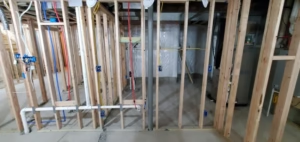
Checking is straightforward in an unfinished basement: look for capped PVC or ABS pipes extending at or slightly above the slab. There are typically two or three — a four-inch pipe for the toilet, a two-inch pipe for the sink drain, and sometimes a floor drain stub. If you have them, your plumbing access situation is substantially better than if you don’t. If you don’t see obvious stubs, have a plumber confirm whether anything is capped flush with the slab before assuming they’re absent.
What an Existing Rough-In Actually Gives You
A rough-in doesn’t mean the bathroom is half done. It means the infrastructure to connect to is there. You still need supply lines run, venting confirmed, and all the finish work. What you avoid is cutting the slab — which changes cost and project sequence in a meaningful way.
What Happens Without a Rough-In
Without a rough-in, new drain lines need to be installed below the slab level. That means cutting through the concrete, digging trenches to allow the required slope, running pipe, backfilling, and patching. It’s real construction work. It adds cost, adds time, and is far more disruptive if it’s done after framing is in place or after flooring has been laid.
This is the core reason bathroom location decisions must happen before framing, not after.
Slab Cutting: What It Actually Involves
When no rough-in exists, drain lines must go below the slab. Here is what that work looks like in practice.
The drain path is traced from the proposed bathroom location back to the main drain stack or nearest connection point. A concrete saw cuts the path, material is removed, and trenches are dug to allow the pipe to maintain the required slope toward the connection. Drain lines rely on gravity, not pressure — they need a consistent pitch of around a quarter inch per linear foot to flow correctly.
Once the pipe is placed and inspected, the trench is backfilled and the slab is patched. On a straightforward bathroom location close to the stack, this typically takes a day or two of work. The further the bathroom is from the main drain connection, the more cutting is required and the longer it takes.
When a Sewage Ejector Pump Is Needed
In some basements, a gravity drain to the main sewer isn’t achievable. This happens when the home’s main sewer exits the house at a point above the basement floor level, so a gravity drain from the basement can’t rise to meet it.
In these situations, a sewage ejector pump handles the bathroom waste. The toilet, sink, and shower drain into a sealed pit in the floor. The pump grinds the waste and pumps it up to the main sewer line under pressure. Ejector systems are reliable when properly specified and maintained, but they add upfront cost, require a dedicated electrical circuit, and need periodic service. Whether your basement requires one depends on the specific plumbing layout of the house and isn’t always determinable without a plumber’s field assessment.
Drain Lines, Supply Lines, and Venting
Drain Lines
The toilet needs a four-inch drain. The sink and shower need smaller lines — typically one and a half to two inches. All of them need to slope consistently toward the main stack connection. In a basement without a rough-in, this is the work that requires slab cutting.
Supply Lines
Hot and cold supply lines run from existing accessible supply to the new bathroom location. Supply lines can be run along walls or through framing rather than through the slab, which makes this part of the work less disruptive than drain installation.
Venting
Venting is the most commonly overlooked element in basement bathroom planning. Every drain in a plumbing system needs a vent — a pipe that connects to outside air and prevents siphoning of the water in trap seals. Without proper venting, drains slow, gurgle, and can allow sewer gas to enter the space.
In above-grade rooms, vents typically run up through interior walls and out the roof. In a basement, the two main options are tying into existing nearby vents that have capacity for the added fixtures, or running a new vent line up through the floor above into the existing vent stack. The right approach depends on proximity to existing vents and plumbing layout. How venting will be handled should be confirmed during the estimate phase, not discovered during rough-in.
Half Bath, Full Bath, or Shower Bathroom?
The type of bathroom being added has a major impact on cost and plumbing complexity.
Half Bath (Toilet and Sink)
A half bath is the simplest basement bathroom. One drain for the toilet, one for the sink, supply lines for both, and a relatively modest finish scope. It serves most day-use needs well — for a basement family room, entertainment area, or home office. It is significantly less expensive than a full bath and the right choice when the goal is functional convenience rather than a full bathing space.
Full Bath (Toilet, Sink, and Shower)
A full bath adds a shower and the complexity that comes with it: shower drain, waterproofing scope, exhaust ventilation, GFCI electrical, and substantially more finish work. A full bath makes sense when the basement will function as a guest suite, in-law space, or primary living area. For most of those use cases, the added cost is worth it — a basement with a full bathroom is meaningfully more useful and more valuable at resale.
Shower-Only Layouts
Toilet, sink, and shower without a tub is common in basement applications and loses little practical function compared to a tub configuration. For most basement bathrooms, this is the better balance between cost and usability.
Shower Choices and Waterproofing
Prefab Shower Units
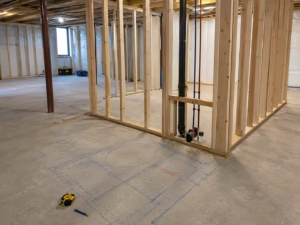
A prefab shower pan with a factory surround or framed glass enclosure is faster to install and less expensive than a custom tile shower. Quality prefab options available today look substantially better than earlier generations of the product. For a utilitarian basement bathroom or a project with tighter budget constraints, a well-specified prefab unit is a practical choice.
Tile Showers
A tile shower is more expensive but offers better long-term performance when properly waterproofed, greater sizing flexibility, and a finish that integrates more naturally with a higher-end bathroom. The critical element is the waterproofing layer behind and under the tile. Sheet membranes, topical liquid membranes, and foam pre-sloped shower pan systems are all legitimate approaches when applied correctly. Done properly, a tile shower in a basement outlasts a prefab unit. Done without proper waterproofing — which is a common shortcut — it fails in ways that are expensive to fix.
Ask your contractor specifically how the shower pan and walls are being waterproofed and what product system they’re using. If the answer is vague, push for specifics before work begins.
Glass and Fixtures
A frameless or semi-frameless glass enclosure makes a tile shower feel more finished and is appropriate when the bathroom is being built for a guest suite or for resale purposes. For a basement gym or utility bathroom, a curtain rod is entirely adequate. Fixture quality — faucets, showerheads, toilet — is a finish level decision that affects cost but not function.
Ventilation and Electrical
Exhaust Ventilation
A basement bathroom needs a properly sized exhaust fan, and that fan must vent to the exterior of the home — not into the ceiling cavity, not into the joist space. Below-grade spaces have no natural ventilation. Humidity from a shower or bath has nowhere to go without mechanical exhaust. In a basement environment, uncontrolled moisture is a significant problem. An undersized or improperly routed exhaust fan addresses the code box but not the actual function.
Electrical
At minimum, a basement bathroom needs GFCI-protected outlets near water sources, lighting on a dedicated circuit, and a circuit for the exhaust fan. If an ejector pump is part of the scope, it needs its own dedicated circuit as well. If the existing electrical panel is already running near capacity, these additions may require an upgrade before the circuits can be added. This is something to raise during the estimate, not discover at rough-in.
How Bathroom Location Affects Framing and Layout
A basement bathroom location is not arbitrary. Several factors constrain where it can reasonably be placed, and those constraints need to be resolved before a floor plan is finalized.
The most important factor is proximity to the main drain stack and the path drain lines need to travel. The shorter the drain run, the less slab cutting, and the fewer complications with achieving proper slope. A bathroom location that seems logical on a sketch may be substantially more expensive than an alternative three feet in a different direction if the drain path is much shorter from the second location.
Venting access also influences placement. A bathroom on or near an exterior wall may allow venting through the rim joist or foundation, which is simpler than running a vent line up through the floor above.
Ceiling height near the shower location matters if there are ducts or beams in that area. This is especially relevant in older Pennsylvania homes where the space between the first floor joists and the top of the basement wall is often occupied with mechanical runs.
All of these factors should be walked out by a plumber on-site during the estimate. Bathroom placement decisions made without field assessment of the drain path regularly result in scope changes once work begins.
Permits and Inspections in Pennsylvania
Adding a bathroom to a basement requires permits in virtually all Pennsylvania municipalities. The typical permit set includes a building permit for the construction work, a plumbing permit for the drain, supply, and vent work, and an electrical permit for wiring and GFCI requirements.
The key inspection for a basement bathroom occurs after rough plumbing is installed and before walls are closed — the plumbing inspector needs to see the drain, supply, and vent connections while they’re accessible. This has a sequencing implication: framing around the bathroom and wall closure can’t happen until the rough-in inspection passes.
Projects that skip permits avoid this sequencing requirement, but they also have no inspection record and create a disclosure problem at resale. Finished basement bathrooms are specifically asked about by buyers’ agents and inspectors in this market. A legitimate contractor obtains all required permits and manages the inspection process as part of the project.
Realistic Cost Ranges for a Basement Bathroom in Pennsylvania
The figures below reflect what basement bathroom additions in southeastern PA and nearby NJ typically cost as part of a larger basement finishing or remodeling project. These are planning ranges — final pricing depends on field conditions, rough-in status, drain path distance, finish level, and local permit fees. A bathroom added to an already-finished basement as a standalone project typically costs more than the same bathroom added during an active finishing project.
Common Mistakes Homeowners Make
Planning the Bathroom Too Late
The most frequent and most costly mistake is deciding to add a bathroom after framing has started — or after it’s complete. Drain lines that should have been cut into the slab during rough work now require opening finished walls, pulling up flooring, and cutting the slab with finished work in the way. The plumbing cost is largely the same; the disruption and remediation cost is not. If there’s a sixty percent chance you want a bathroom, decide before framing begins.
Assuming the Basement Already Has a Rough-In
Many homeowners assume their late-1980s or 1990s home includes a basement rough-in. Some do. A meaningful number don’t. Verify before scoping a project around existing infrastructure that may not be there.
Ignoring Venting
Venting is easy to overlook during planning because it’s less visible than drain and supply work. But it determines whether the drains function correctly and whether sewer gas stays out of the space. Confirming the venting approach during the estimate is not optional — it’s part of understanding what the bathroom will actually cost to build correctly.
Selecting Fixtures Before Confirming Plumbing Constraints
Choosing a specific shower configuration, toilet, or freestanding tub before the plumber has assessed drain location and ceiling height can mean spec changes once actual constraints are understood. Confirm the rough plumbing plan first, then select fixtures within what the space can accommodate.
Finishing Walls Before Drain Layout Is Confirmed
This follows directly from bathroom location decisions made too late. The correct sequence is: confirm drain path and location, then frame, then wall. Reversing any step in that sequence creates expensive rework.
Adding the Bathroom Now vs Roughing In for Later
If a full bathroom is not in the budget for this project but is likely within the next several years, roughing in the drain lines now is worth considering seriously.
During an active basement finishing project, while the slab is accessible and trades are already on-site, running drain lines and capping them at the planned bathroom location costs a fraction of what the same work costs later. Supply lines and venting don’t need to be finalized at this stage. The drain rough-in captures the most disruptive and expensive part of future bathroom work while access is easiest.
When you’re ready to finish the bathroom in a future project, the slab work is done. You’re adding supply, venting, and finish — not reopening floors. For homeowners who know they’ll eventually want a bathroom but aren’t ready to commit to the full cost now, this is a practical way to hedge.
Frequently Asked Questions
How much does it cost to add a bathroom to a basement?
Cost varies based on rough-in status, how much slab cutting is needed, and what type of bathroom you’re adding. In the southeastern Pennsylvania market, a half bath with an existing rough-in starts in the $8,000 to $14,000 range. A full bath requiring slab cutting and finished with a tile shower can reach $30,000 to $40,000 or more at a higher finish level.
Is it cheaper if my basement already has a rough-in?
Yes, significantly. An existing rough-in eliminates slab cutting for new drain lines, which is one of the most disruptive and costly parts of the scope. The savings depend on how much cutting would otherwise be required, but the difference commonly ranges from $5,000 to over $10,000 depending on the project.
Can you add a shower to a basement bathroom?
Yes. Options are a prefab shower pan with surround or glass enclosure, or a custom tile shower. A tile shower performs better long-term when waterproofing is done correctly and allows more design flexibility. Ceiling height at the shower location and proximity to the drain connection both affect what’s feasible at any given spot in the basement.
Do I need a permit for a basement bathroom in Pennsylvania?
Yes, in virtually all Pennsylvania municipalities. Building, plumbing, and electrical permits are each typically required. The plumbing rough-in inspection occurs before walls close. A responsible contractor obtains all permits and manages inspections as part of the project. Work done without permits creates a disclosure problem at resale.
Can a basement bathroom be added after the basement is finished?
It can, but it costs more than adding it as part of the original finishing project. Adding to a finished basement requires cutting the slab, which means removing finished flooring in the drain path and potentially disrupting walls and ceiling where plumbing runs. Planning for the bathroom during the original project is significantly more cost-efficient.
What is the biggest cost driver in a basement bathroom?
Drain line access — whether an existing rough-in is present and how much slab cutting is required if it isn’t. After that: bathroom type (half bath vs. full bath with shower), shower type (prefab vs. tile), and whether a sewage ejector pump is needed.
Plan the Bathroom Before You Plan the Basement
If you’re planning a basement remodel in Bucks County, Montgomery County, or the surrounding area and want to include a bathroom, the right starting point is a walkthrough that evaluates what’s already there. BMR Belmax Remodeling assesses rough-in status, drain path options, plumbing constraints, ceiling height, moisture conditions, layout, and permit requirements during every estimate visit. The more that’s understood about existing conditions, the more accurate the scope and the fewer surprises during the build.
Call 609-712-2750, email sales@belmaxremodeling.com, or request a free estimate online. We respond within one business day.


